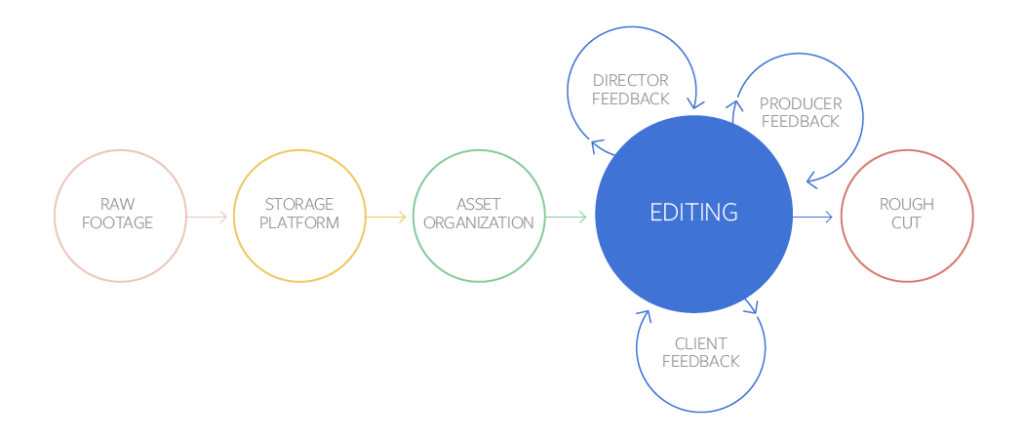
In this guide to post-production workflows, we'll show you how to move smoothly from raw footage all the way to final output
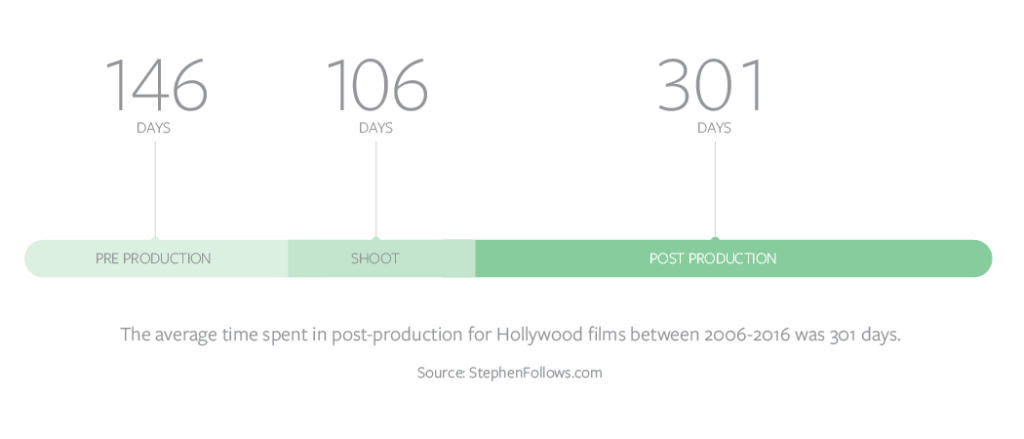
Post-production is one of the most critical and complex parts of making the creative vision come to life. But it is also one of the most administratively laden elements of production. Between dumping footage, labeling clips, managing the project file, controlling versions, and collecting feedback, the process is burdened with tasks that create friction. In this guide, the MediaSilo by EditShare team will show you how to move smoothly from raw footage all the way to final output, and even start preparing it for marketing and sales.
Remote, but connected
Over 94% of MediaSilo’s customers say they are doing their post-production work either fully remote or semi-remote. With production and post-production becoming more complex and intertwined, modern workflows have to be re-thought in order to keep up with and take advantage of new technologies. This has created the need for new tools that help manage your assets, share work-in-progress, get approvals, and even facilitate pitching and selling your projects. And those tools need to work whether on set, in the office, or at home.
Stage 1: From Camera to Editing Bay
Lights. Camera. Action. Import.
A critical step in the post process is one of the first ones — importing shoot footage. Dailies need to be reviewed quickly and across multiple roles and departments. Often this process involves input from not only the director, but also from the producer(s), the editor, and sometimes the representatives of the studio, network, or client.
Remote viewing of dailies has become increasingly more global in the post-pandemic world. Having everyone on the team able to access the dailies as soon as they are available, whether on-set or remote, means that input can happen while there’s still time to address any issues.
Complexity in these early stages comes from more than just reviewing dailies. It is about importing footage in a way that is easy to find later, like ten versions from now when someone asks, “Remember that scene we shot and there was a take when he stepped forward and not back? Can we see that?” Being able to put your hands on this clip quickly, even weeks out from the import stage, is essential to keeping the team efficient and indispensable.
To stay organized, you need to import with purpose. You must design an organizational architecture that allows for multiple projects, clips, project files, assets, and multiple ways to search to find it all at your fingertips, in seconds. Tagging, adding meta-data, and creating naming conventions is possible when using a remote collaboration platform. And it’s not possible on less sophisticated cloud-based tools that may be cheap, free, or outdated.
“I think most people realized that as long as you can receive the footage in some way, you don’t need to be face-to-face to be able to create a finished video.”
— MediaSilo Customer
Along with the footage itself, there are often camera logs and script supervisor notes that correspond to the footage. Keeping all of these assets where anyone on the team can review them is invaluable and can save enormous amounts of time throughout the life of the project when key documents are constantly referenced and needed.
Using a platform like MediaSilo allows you to upload dailies directly into your account and instantly share files with your collaborators, while allowing commenters to leave feedback directly on the files, or send private links for more contained review sessions.
With a robust asset management and storage solution, relevant files can be organized in one place, allowing producers, project managers and anyone on the team to add, revise, delete, and update any documents as needed so that the entire team is always working from the most current version of the materials.
Stage 2: From Raw Footage to Rough Cut
Ready. Set. Rough.
The rough cut or offline edit is where your show, commercial, or film starts to come together as a story. Typically, this is a complicated process as the editor needs to review all the footage and determine how to best tell the story while maintaining the vision of the team. Carefully logged and tagged footage helps in this stage as it makes the work of the editor more efficient. With less time spent searching for clips and director’s notes, the editor has time to think creatively about the story arc.
In some cases, there may even be more than one editor working on a project, with various scenes divided up amongst several cutters and assistants. Having multiple editors can create issues staying on the same page while handling review and input from stakeholders. As with any collaborative project, clear communication and organization is key.
After the first pass is created, often using smaller low-quality files called proxies, the editor and director may collaborate to create a “director’s cut.” Easily being able to share project files for review with the director is essential so he or she has a broader view of the footage available.
Once the rough cut is complete, it is sent to other team members to review. At times, the team reviewing the cut can be large, and global. Using a tool that allows collaborators to make timestamped comments ensures smoother communication. All of the comments and input need to be collected and tracked, so that revisions can be made efficiently and in a way that takes all feedback into account.
“By creating proxies and sharing material internally, we were able to work remotely having great results. Then, we shared rough cuts to directors and clients for a more secure way to get feedback.”
— MediaSilo Customer
Finding a place for placeholder assets
The rough cut phase is also where temporary or placeholder graphics, sound elements, music, visual effects, and color correction are introduced for reference. These assets can be sourced from font libraries, stock footage collections, music libraries, and sound effects catalogs. Keeping track of these assets is critical to the success of the rough cut.
As all editors know, every cut has versions that use different assets, takes, or edits to achieve the ideal finished product. Versioning can be a challenge, as keeping track of subtle changes is tricky and often requires diligence and attention to detail.
A well-thought-out naming convention is a crucial, albeit complicated, aspect of any post-production workflow. While it’s sometimes seen as superstitious, many post-production veterans will tell you that you should never name a version “final” — nothing guarantees another round of edits more reliably. But there is also a practical reason for that. Small errors are caught and changes must be made, making it very difficult to tell which final version is actually final.
“Collaboration platforms make it easy to access files between teammates especially in remote conditions because it makes sending files more efficient.”
— MediaSilo Customer
Instead, using a naming convention that incorporates dates, revision numbers, and sometimes even colors, can help manage a project that has had a large number of changes made to it.
Finally, when all of the elements are in place and agreed upon in the rough cut, the cut is locked. This “picture lock” stage means that there will be no more changes made to the overall structure of the edit, and that it’s time to move on to finishing.
With MediaSilo’s versioning features, you can keep track of all of a file’s versions easily in one place. Shared links automatically update with the newest file, and reviewers can easily toggle between old and new versions to see changes and resolve comments.
Stage 3: The Post Production Team
Who’s Who
While getting to picture lock in the offline edit or rough cut is a huge part of the post-production process, there is still a lot of work to be done before the project is completed. Many details still need to be finalized, and finishing touches need to be applied to various aspects of the piece to create a finished work. Imagine an art gallery, in which all of the pencil sketches on the walls will soon be replaced with real paintings.
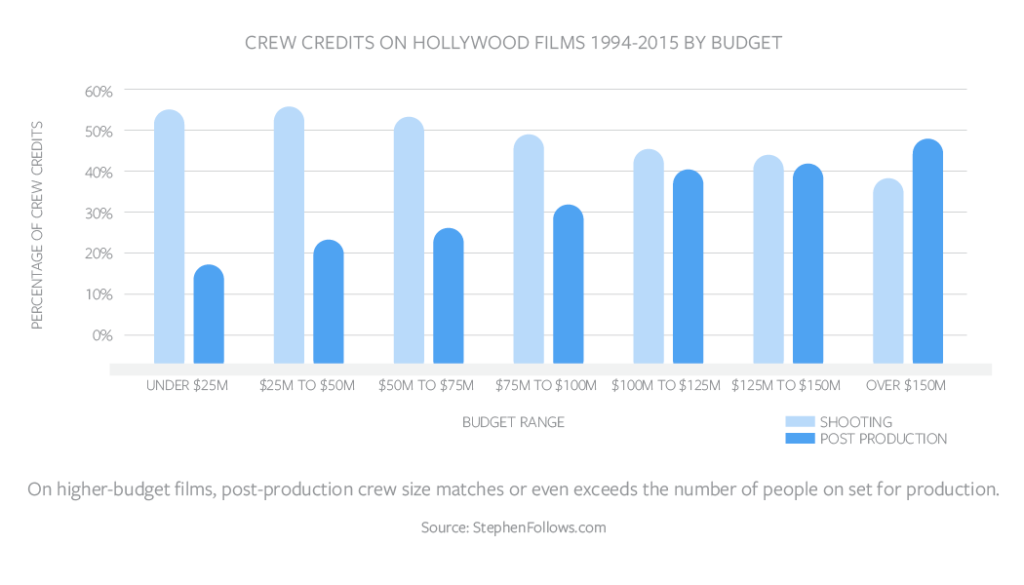
To create the final masterpiece, many people and players fall in and out of the workflow. It takes a village to make a movie! When watching the credits roll at the end of a film or TV show, you’re reminded of all the human touchpoints within the post-production process. Keeping track of all of them and assigning user roles at this stage is critical to ensuring that the appropriate people have access to the correct cuts at the right time.
Editors / Finishing Team / Artists – The online editing process, or “conform”, is usually when the original, full-size footage files are accessed again, and inserted into the cut in place of the smaller proxies. Close collaboration between the offline editor and the finishing and online artists is critical. When working remotely, everyone will need access to the same elements in order to accurately transition from locked rough cut to final online conform.
VFX – The creation of visual effects is a detail-oriented process that may require working on each frame of the footage individually. Tiny details, such as shadow and lighting, can throw off the realism of the effect for even the most casual viewer. And often a particular visual effect, or piece of CGI work, will go through multiple rounds of revisions and approvals before being inserted into the online edit.
Graphic Designers – The online phase of post-production is when the final type treatments are discussed, fonts and logos are designed and chosen, and overall composition is determined for any graphic elements. Often an entirely separate company may be in charge of the titles and graphics. They will provide options for the graphics work to the entire team and input will be given by the team, just as in the other phases of the cut. Once reviewed and approved, usually remotely, the finished elements will be placed in the final piece.
“Clients and directors are adapting and trusting the post-production process more and more every day. They are using technology to their advantage and shortening reviewing time by getting the videos right in their phones and computers having the opportunity to watch them anytime, anywhere.”
— MediaSilo Customer
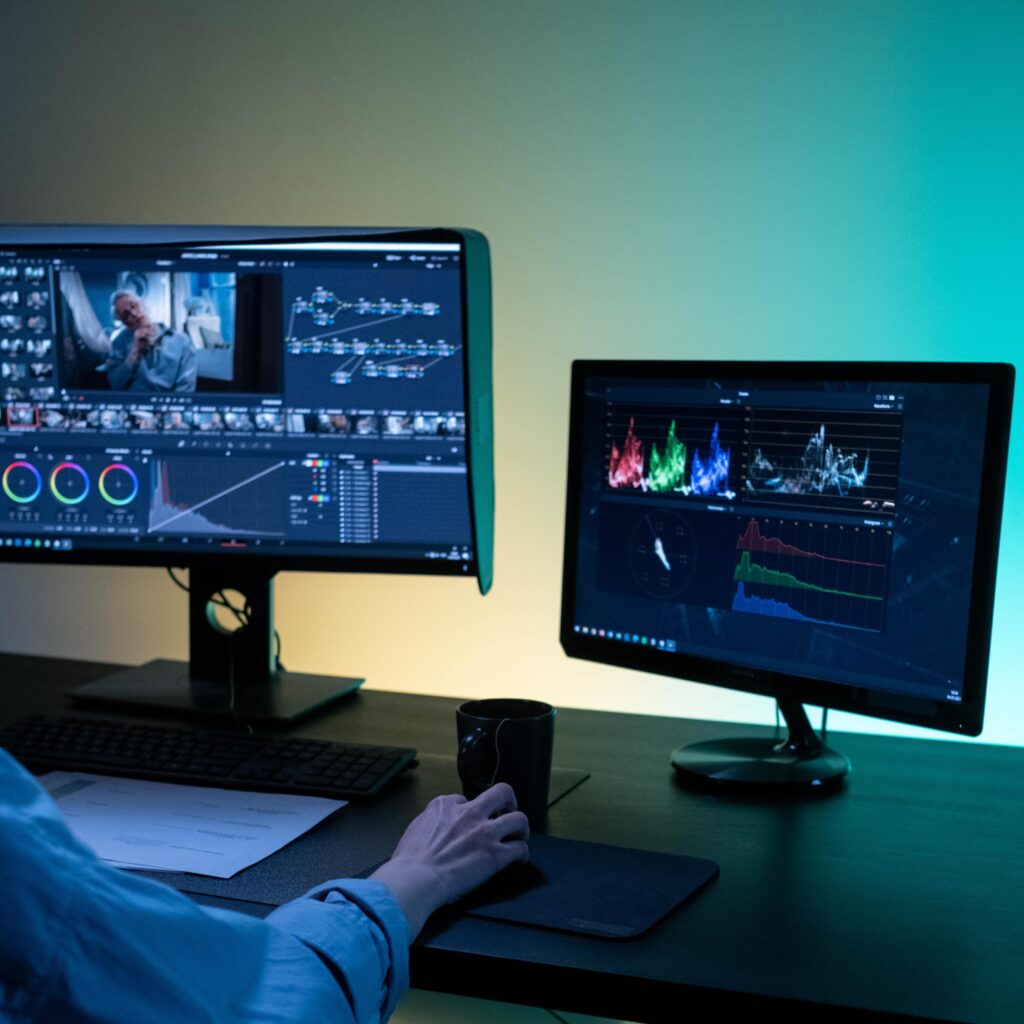
Colorists – Careful color grading makes a film more cohesive by better matching footage from different days and places, and under different lighting conditions. This helps the finished piece feel more like a uniform whole and sets the mood and tone for the entire film. It’s always a good idea to view the work on a variety of monitors of all sizes and qualities, to simulate the experience of different viewers using all kinds of personal devices. What might seem pleasantly dark and moody on one device, may simply be impossible to see on another.
Musicians and Composers – Music is one of the most powerful components of a film, tv show, or ad. When the editor first starts composing the rough cut, temporary music or a “scratch track” is often used to give a general sense of how the scene will feel with music in place. But once the picture is locked, final music needs to be locked down, too. If stock music or an existing song is to be used, the rights must be secured. If original music is to be created, the composer will begin scoring to the picture. This process can often include several rounds of compositions and revisions for each piece or scene, and tracking the versions is key, as is sharing files remotely.
Sound Editors – Sound design can play an important element in bringing a film, television show, or commercial to life. Sound design can be as simple as enhancing or adding footsteps to a scene in which a character is walking, or as complex as creating an entire auditory language for a cinematic world. Naturally, no two filmmakers will choose the same elements for a particular sound, so choosing sounds is quite a creative endeavor, and having the team review and agree on them is also an important part of the post-production workflow.
During the finishing process, an entire ecosystem of different users can focus their energy on specific elements of the ad, show, or movie — but they must all be seamlessly integrated into the process in order for the end product to be effective. Keeping track of versions, examining minute details, and providing access to those who need it (when they need it) is crucial in creating an elegant and seamless workflow.
MediaSilo’s user permissions allow you to easily control who has access to your content and exactly what they can do with it. Use one of our standard user roles, or create your own custom roles for each team member.
Stage 4: After the Final Cut
One for Me, One for You
Once the picture is locked and the masterpiece has been fully developed, it feels like the end of the line. But, wait, there is still more. Two important final steps are needed to complete the finished piece: delivery to a host of other teams, departments, and vendors who need to begin the sales and distribution process, and archiving in a media storage system.
Delivery
When post production ends, a whole new phase of the process begins. Before signing off on a project, an editor or post production supervisor must ensure that the project is delivered to any other team that might need it. This could include internal departments or outside vendors, depending on the size and scope of the production.
Marketing and distribution teams will need to generate promotional materials, that may include trailers and promos, photographic assets, printed posters and artwork, or press kits. While many of these will have been in the works throughout the post process, they are often subject to versioning and team approvals just like the film. Because the content is so closely intertwined with the film, the versions and input need to be centralized where team members can always access the latest materials.
Captioning and localization is often handled by a third-party vendor, who will need full access to audio and video files to complete their work. For an international release, the film or tv show may need to be captioned in a variety of languages, dubbed, or even reformatted entirely to fit the specifications of international distribution platforms.
Traffic managers or broadcast business managers might oversee the process as the piece gets sent to networks, studios, theaters, digital portals, or other final users. And each is likely to have his or her own preferred specifications. Some will request files in a particular file size, format, or compression algorithm that is best suited to their own systems. Security will have to be maintained for any projects that might be proprietary or attractive to eager fans or competitors.
The threat of content leaks and piracy is a huge concern for pre-release materials. MediaSilo has built-in SafeStream technology for both visual and forensic watermarking, keeping your content safe while you share to all of your vendors.
Archiving
In addition to outputs, all of the elements that went into making the piece, including the original camera footage, camera logs, XML files of metadata, sound elements, visual effects elements, graphics, and any versions of the masters will all need to be prepared for storage and archiving, so they can be found and accessed later if needed. A cataloging and naming convention is a good idea, since it’s often difficult to remember all the little things that were done months or even years later. A versatile and robust storage platform is critical to being able to find what you need for later revisions, and to create future files as needed.
Non-Traditional Workflows
While we’ve talked about how things are typically done, each project has its own unique needs, and post-production workflows can be created based on the way a particular project comes together. Today’s increasing use of remote collaboration makes non-traditional workflows even more common, and adds new challenges to designing them. Flexibility is often critical in making things happen efficiently. In some cases, a phase of post-production may start before the typical preceding ones are complete. For example, time-consuming visual effects may have to be underway before the picture is locked. Or music may be composed before the shoot is even complete, so that it can be played on set and the characters can react specifically to it. The key to managing an unconventional workflow is organization. Without it, a huge amount of time and work can be wasted. So it becomes even more important to have a well-synchronized team and a solid post-production structure when using a non-traditional workflow.
Conclusion
Today’s post-production workflows bear almost no resemblance at all to how things were done
20-30 years ago in the days of tape-to-tape editing and processing actual film. And post-production continues to change every day, as new technologies and needs arise. With an increasing percentage of production being done with all or part of the team operating remotely, up-to-date sharing solutions and digital collaboration are more important than ever.
“I think this will be the way to work from now on. I don’t think we will ever go back to the way it was.”
— MediaSilo Customer
We can already see significant changes coming, such as dumping footage from cameras to post tools, VR and AR formats, new finishing considerations for virtual production, and finishing platforms that seamlessly combine offline, online, and color grading capabilities for users of all levels.
What will never change is the need to be organized, team-oriented, and collaborative when undergoing a post-production project. New technologies will only bring new complexities and building a foundation for an elegant workflow will serve you now, and… to infinity and beyond.
Find out how MediaSilo by EditShare can help your post-production team get projects reviewed and approved faster. Contact us to get started.
Have more questions? You can reach out to Product Support for technical issues or our Customer Success team for more information about your specific account.
MediaSilo’s panels for Adobe Premiere Pro, After Effects and DaVinci Resolve Studio* make uploading a breeze
Sometimes, at the end of a long editing session, you just want to hit “export” and call it night. But everyone has experienced waiting for exports to complete, then initiating an upload to a review platform, and then waiting for that to complete. Then, you have to wait for the transcode to complete. Then, you have to ensure it plays right and the watermark is applied. Then, you have to send emails to producers and directors. Next, you wait for their comments.
The next day, editors try to figure out how to match the comments from emails back into their timelines. Then, you have to be careful because making changes affects the timecode, which throws off another set of comments where a reviewer typed in the timecode in a Slack message. And so on.
MediaSilo’s Panels for Premiere Pro, After Effects and DaVinci Resolve Studio solve this whole mess for editors. Let’s investigate the panels and see how they can save you time and grief.
MediaSilo Panel for Premiere Pro and Resolve
The MediaSilo panel gives you access to assets in MediaSilo right within your NLE. It also allows you to export a timeline with a single click and have it uploaded into the right project folder on MediaSilo. You can choose your upload settings and identify the people who need to be notified. Once the team has made notes in MediaSilo’s review mode, you can immediately import those comments as markers into your sequence.
Those features streamline so many manual steps in the review and approval process. Basically, the MediaSilo panel gets you home in time for dinner.
DaVinci Resolve Studio
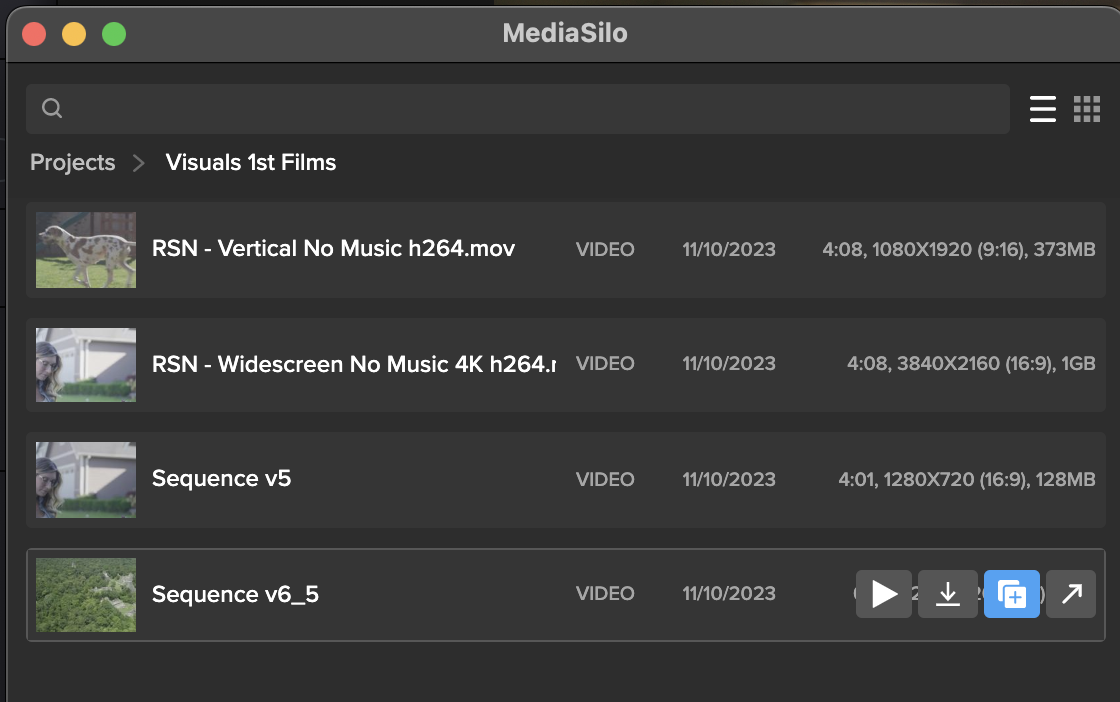
Once the panel is installed, Open DaVinci Resolve Studio and go to Workspace -> Workflow Integrations -> MediaSilo. A floating window appears with your projects. It uses a helper app called “Electron,” so don’t quit it. Your assets appear in the projects. When you float your mouse over each asset, you can preview (Resolve only), download, create a new version, or Open in MediaSilo.
Premiere Pro
Install the MediaSilo Panel from the Creative Cloud desktop app. Go to “Stock & Marketplace” and search for MediaSilo. Once the extension is installed in Premiere, open the Window menu > Extensions > MediaSilo.
After Effects
Install the MediaSilo Panel from the Creative Cloud desktop app. Go to “Stock & Marketplace” and search for MediaSilo. Once the extension is installed in After Effects, open the Window menu > Extensions > MediaSilo.
Downloading assets into your project
If you want to include one of your MediaSilo assets in your local project, just drag it into the media. If you prefer to download a proxy version, click the download icon and select “Proxy” from the drop-down menu. Proxies are smaller, lower-resolution versions of the original footage. They are handy when you are putting together a rough cut. And when your project is ready for color grading, you “conform” it to the original, high-resolution clips.
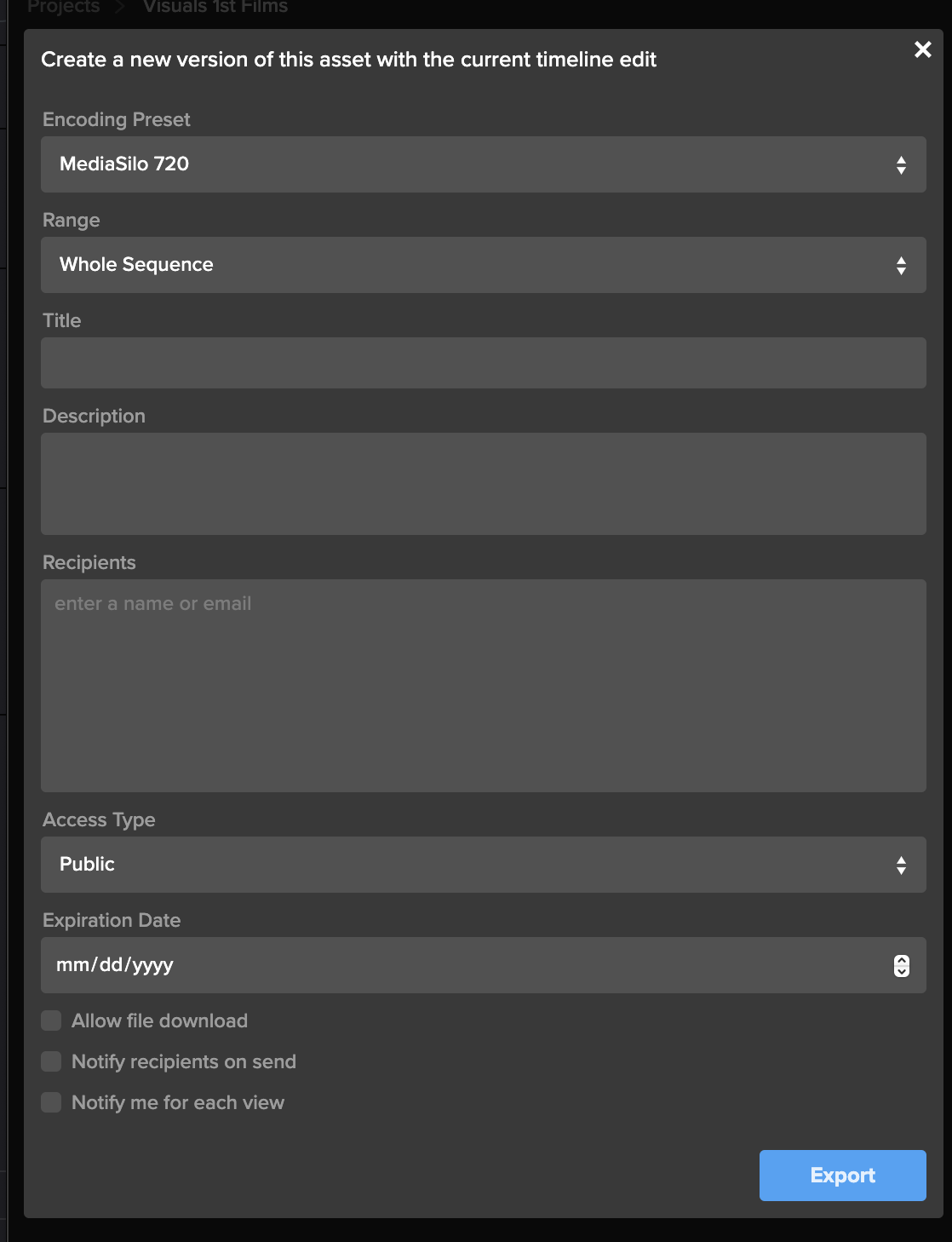
Exporting your timeline directly to MediaSilo is a breeze with the panel. Once you’ve completed your cut, click “Export Timeline” (Premiere says, “Export Sequence”) in the MediaSilo Panel. The “Export Sequence/Timeline” window opens up. You can choose your encoding preset based on your needs. Sometimes, you need the highest quality version to go up, and sometimes, you just need a lower-resolution version for quick approval. Choose the whole sequence or just from the In/Out points. You can specify a title and add a description that will appear in MediaSilo.
“Upload Location” is the next option. Start typing the project name, folder or asset with which this upload should be associated. This step is important because an editor may work on projects with different security levels.
The “Recipients” field saves you the hassle of waiting for an upload to complete before notifying reviewers. Enter the names of the individuals who need to receive a review link, and they will be notified once the asset is ready for viewing.
Create a new version of your timeline
Typically, when I’m ready to output a new version of an edit, I export it from the timeline. If the service I’m using for review and approval (non-MediaSilo) keeps track of versions, I usually just cross my fingers and hope it picks up on the new file coming in. Most of the time, I just append a “v2” or “v3,” and then manually identify it as a new version once the upload has completed. Then, I send a message to alert the reviewer.
The MediaSilo panel takes a different, more efficient approach. This feature is so simple that it took me a moment to understand how it works.
This process applies if you have already exported your timeline once and you need to export another version after some changes have been made. Select the clip in the panel and click on the button to share a new version.
This will bring up the export window. Rather than simply exporting the asset, all these options are designed to help you streamline creating a new version of the asset. This way, you can give the new version its own title, and MediaSilo will keep it associated with the initial version. This means the links that you have previously sent out will continue to work.
You can even change the access on the new version, and reviewers will be notified when it is ready. You’ll also receive a notification when they view it. This little box saves so many steps in the process of exporting compared to the process I outlined at the beginning of this section.
Encoding Presets
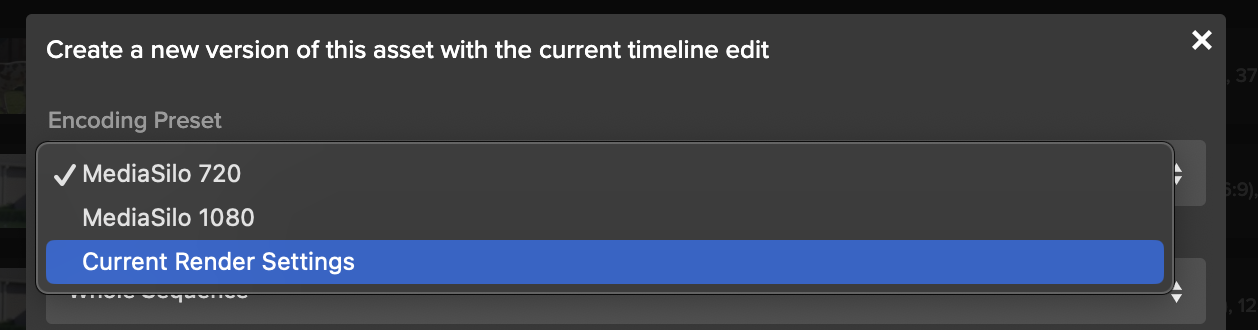
The encoding presets section allows you to choose the resolution for your upload. Sometimes, you need to get a change up quickly or share a low-quality version with a collaborator. So you can choose a lower-resolution setting. If you need to upload at a higher quality, choose your “current render settings.”
Watermarking and security
If you have watermarking turned on with your project, that will get automatically applied in MediaSilo. This is really helpful for editors because they don’t need to turn on and off a watermark within their NLE. In addition to the visible watermark, MediaSilo supports forensic watermarking with SafeStream. This technology ensures that any leaks can be traced back to their source.
MediaSilo also supports the ability to use your own custom email server for email notifications and 2-factor authentication — to ensure an even higher level of security.
Support articles
MediaSilo offers support articles for Resolve, Premiere and After Effects that show you how to install and use the panels in detail.
Conclusion
The MediaSilo panels in DaVinci Resolve Studio and Adobe Premiere Pro will save you time and energy. They help to make collaboration, review and approval a much more streamlined process.
*Note: The MediaSilo + DaVinci Resolve Studio integration is only available on the DaVinci Resolve Studio paid tier. You can find their pricing here.
Please complete the form below and we’ll get in touch!
When you send large video files, you can encounter all sorts of challenges. When your team is collaborating on a video project, you often have to send multiple versions, track review and approval comments, and make sure everything is secure. However, video collaboration workflows are more demanding than your typical cloud-based file-sharing workflows. This can be even more challenging when the creative team and the IT team propose different solutions for sharing video files.
Here are 10 of the top ways to share large video files and their pros and cons. I’ll also share things I wish IT knew about the unique demands of video review and approval processes. So, let’s dig in to find out which solution is best for your video collaboration workflow.
WeTransfer
WeTransfer’s simple interface makes it easy to share files up to 2GB. To upload larger files, you’ll need to upgrade to Pro or Premium.
WeTransfer uses a web browser interface for uploading. With some browsers, like Safari, you can run into an issue where the browser will time out before your large upload is complete. This isn’t the case when apps feature an app that installs on your local machine.
While WeTransfer Pro does a great job of sharing your final exports in the delivery phase of your project, it lacks review and approval features, so it might not be the right tool for collaborating during the post-production phase.
The other major drawback is that WeTransfer does not recover well from an interrupted file transfer. You’ll need to re-initiate if your transfer is interrupted (maybe due to a bad WiFi connection). If your upload is a large file, this can mean a significant amount of lost time, and you still won’t know if it will complete on a second go-around.
Dropbox
Dropbox is well known for its ability to sync files between the cloud and your various devices. But since DropBox Business Plus caps file sizes at 250GB, it runs into similar constraints as WeTransfer Pro. DropBox does feature “Replay,” which allows for commenting on videos, but it is not available on the least expensive plan. Additionally, the replay feature is limited to 10 file uploads on their top plan.
While Dropbox offers reliable syncing, it can be confusing when working with two different organizations. It tends to demand that both parties upgrade. That makes it confusing when you are trying to figure out who is hosting which files. A common question that arises is, “If I delete this file on my computer, will it vanish from yours?”
Post-production professionals need to know that they can deliver files without confusing mismatched subscription tiers between vendors. So, if you find yourself dealing with multiple projects and multiple clients, getting everyone to collaborate through Dropbox is a tall order.
Box
Box enjoys a solid reputation for handling lots of smaller files well. Their lowest tier caps file sizes at 250MB. (The highest tier caps out at 150GB per file). This gives you an idea of where their emphasis lies. There are no review or commenting features associated with videos.
Box is a great example of the difference between typical workflows that IT supports vs. media workflows. While an IT team may be accustomed to supporting petabytes of small files, this is different from workflows that have a smaller overall footprint, but the individual files are larger.
Google Drive
Google knows how to sync and send large files. Google Drive is inexpensive and reliable. Google offers a web interface and a downloadable app that syncs locally. The downloadable app is more reliable than the web interface for large transfers.
However, by many accounts, Google Drive is slower than Dropbox. My personal experience is that Google will eventually get your file uploaded. But sometimes, you can run into a frustrating scenario where interrupted syncs hang. This causes Google to stall out until Google Drives figures out that a file has been moved or renamed. This can put a halt to your other uploads.
Google also changed how sharing works between paying and free users.
If everyone within an organization is on a paid tier, then file sharing works well. But if you are sharing between organizations, Google will basically push both sides to upgrade. It is frustrating because you cannot know whether the person on the other side of the share has a paid account. I just ran into this a couple of weeks ago. I had a paid version, and the other team had free accounts (but I didn’t know this). The other team had to get their CEO to join the shared folder to accept my shared folder because he had a paid account.
Post-production pros need to know that the delivery of their assets is friction-free. You don’t want your client hit with promotional “nag-ware” when you are trying to deliver your final assets.
OneDrive
Microsoft enjoys a solid reputation with IT teams for good reason. Their products cater to the needs of corporate users. Microsoft places an emphasis on security and integration with Windows.
However, OneDrive is not oriented toward post-production. It lacks features oriented toward video review and approval and version tracking. This makes it a good solution for sharing graphics and project files, but it isn’t great for managing video projects.
Vimeo
Vimeo has been the champion for preserving video quality for films delivered to the web. Vimeo is a great tool for the distribution of assets online, where video quality trumps workflow efficiency. It works well for embedding your finished project on your website. In the past few years, Vimeo has also been adding collaboration, AI, and live-streaming features.
However, in my personal experience, I have found uploading to Vimeo painfully slow. Transcoding also seems to take longer than other services. It will be interesting to see if Vimeo’s performance can keep pace with their aspirations.
Resilio
Resilio uses P2P technology to facilitate the syncing of large files between multiple collaborators. This is a powerful technology, but it does require the app to be installed on the computers of both the sender and the recipient. This means Resilio is a nice solution for frequent collaborators. However, it’s really a no-go for client work where somebody just wants to click a link, quickly compare versions, and leave some comments.
Frame.io
Adobe’s frame.io platform is a popular solution for review and approval. It features integration into popular NLEs, and tools for managing versions. Adobe is working to incorporate AI features into frame.io as well.
However, my experiences with frame.io over the past year have been challenging. They’ve acknowledged these challenges and reported that they are working on an overhauled version of their software.
Infrastructure solutions: Aspera, Signant, and EditShare EFS
IBM Aspera and Signant Media Shuttle are robust solutions that integrate your team’s IT infrastructure. They’re often used by broadcasters to move large files. However, many teams are finding challenges with these solutions. And they are expensive.
EditShare EFS has built-in file acceleration for large transfers from one EFS system to another. This can be particularly advantageous to customers who have multiple facilities and the transfer software is included in the standard EFS license – no additional costs are involved.
MediaSilo
MediaSilo delivers a platform designed specifically to tackle the challenges of video collaboration. It integrates right into Adobe Premiere Pro and DaVinci Resolve. This allows editors to save huge amounts of time when exporting, uploading, and versioning.
MediaSilo allows users to upload through the browser or the desktop app. MediaSilo’s robust uploader gives you real-time feedback on the speed and progress of your uploads. If you’re connection is interrupted, MediaSilo does a great job of completing the transfer when you are reconnected. It is also easy to cancel an upload and clear the queue. This avoids the hangs and syncing issues that other solutions run into.
The SafeStream technology ensures that assets can be forensically tracked to individual users, and watermarks deter IP theft.
MediaSilo’s review and approval tools allow for easy commenting and versioning. This helps everyone on the team to know if specific notes have been addressed. It is easy to send your collaborators a MediaSilo link, and they don’t have to worry about having an account, what tier they are on, or sync settings. MediaSilo’s strength is wrapping powerful features in a simple interface. If you need to send a collaborator a video file for review, it doesn’t get easier than MediaSilo.
Conclusion
Moving around massive video files is a challenge without the right tool. Sometimes, you just need to send someone a file, but other times, you need to gather notes, compare versions, and intelligently group assets. Video files present challenges that are different from syncing a bunch of documents. Tools like MediaSilo, and EditShare EFS can smooth out your workflow and simplify remote collaboration.
Data breaches are costly – creatively and financially. Trust your content to a product that values data security. With just a few clicks, you can easily protect pre-released or confidential content, ultimately protecting creative impact and revenue potential.
Users can now watermark images and documents with email, name and/or custom text with SafeStream technology at the Workspace, Project or Review Link level. Whether you’re trying to protect scripts, key art, screenplays or call sheets, we help keep your projects safe and sound. Sleep better knowing you don’t have to worry about waking up to a catastrophic content leak.
Apply Watermarking Requirements to Your Workspace
As an administrator, you can require visible image and document watermarking for every new project created in your workspace.
Start by clicking the gear icon in the left-side navigation bar, which will take you to the Administration page. In the SafeStream tab, select Watermark Settings from the menu to open your workspace-level watermark settings. Now, toggle on Apply Visible Image and Document Watermarking.
Next, use the dropdown menus under Image Template and Document Template and select your default watermark template to apply to new projects. You can choose a template that displays a viewer’s full name and email address, the viewer’s email address only or a custom template created for your workspace.
On all templates, the watermarks will be displayed in a “wallpaper” format, which repeats diagonally across the entire image or document.
Apply Watermarking to a Project
You can apply visible image and document watermarking to all images and documents inside a project, provided the files match our list of supported file types.
From the project settings, a project owner or administrator can find watermarking options in the SafeStream tab. Simply toggle on the Apply Visible Image and Document Watermarking tab and use the dropdown menu to select the template you want to apply to the images and documents in this project. Whichever template you choose, the viewer’s identifying information will be displayed in a “wallpaper” format, which repeats diagonally across the entire image or document.
Apply Watermarking to Unwatermarked Files in a Review Link
Applying watermarks to images and documents at the Review-Link level allows you to protect select items you’re sending without using those watermarks on the entire project.
Click the Advanced button in the bottom left in the Share for Review window, and toggle on the Apply Visible Image and Document Watermarking tab in the Watermarking section. The default templates chosen by your administrator will display automatically. You can keep these selections or choose a different template. Whichever template you choose, the viewer’s identifying information will be displayed in a “wallpaper” format, which repeats diagonally across the entire image or document.
If these watermark templates display a viewer’s identifying information, you must enter link recipients in the Audience tab on the left side of the share window.
Your choice of watermark template can affect the link’s Access setting.
If a watermark displays the viewer’s name, you must select Workspace users and enter workspace users as recipients.
If a watermark only shows the viewer’s email address, then you have the additional access options of Public and Password protected. When you select Public or Password protected, you can enter any email address in the recipients field, even if that email does not belong to your MediaSilo workspace.
For more detailed information, please visit our support page or contact us at sales@mediasilo for a demo.
In my last blog, I introduced the thinking behind our new workflow management layer, EditShare One. If you have not read that yet, you can find it here. In this blog I’ll explain how it is used in a real-world production.
Footage is shot, in a studio or on location. Those files are ingested into the shared storage, along with the metadata. That may include information from a production assistant on set, about good or bad takes and other details.
Depending on the nature of the production, a producer or director may want to make another decision on preferred takes, or an edit assistant will need to build bins making it clear to the editor which is likely to be the best material.
The editor then cuts the scene and hands it on for review. That may lead to rework later, or the scene may be locked ready for final assembly and finishing. In parallel, the sound designer will be mixing and sweetening the audio to match the cut.
The producer will be monitoring progress at all times and will be commenting on scenes as they are cut, giving notes to the editor and sound designer. The final cut will be passed to the colorist, and again the producer and director will make comments on the grade.
There may be other people taking note of the progress too. For marketing, there may be a second editorial team creating trailers and teasers, for example. Where an independent company is making programmes for a broadcaster, the executive producer will want to check progress.
The huge advantage of collaborative file-based workflows is that every stage is non-destructive. You can go back and tweak any stage of the post production until everyone is happy, because all of the material is still available in the shared storage.
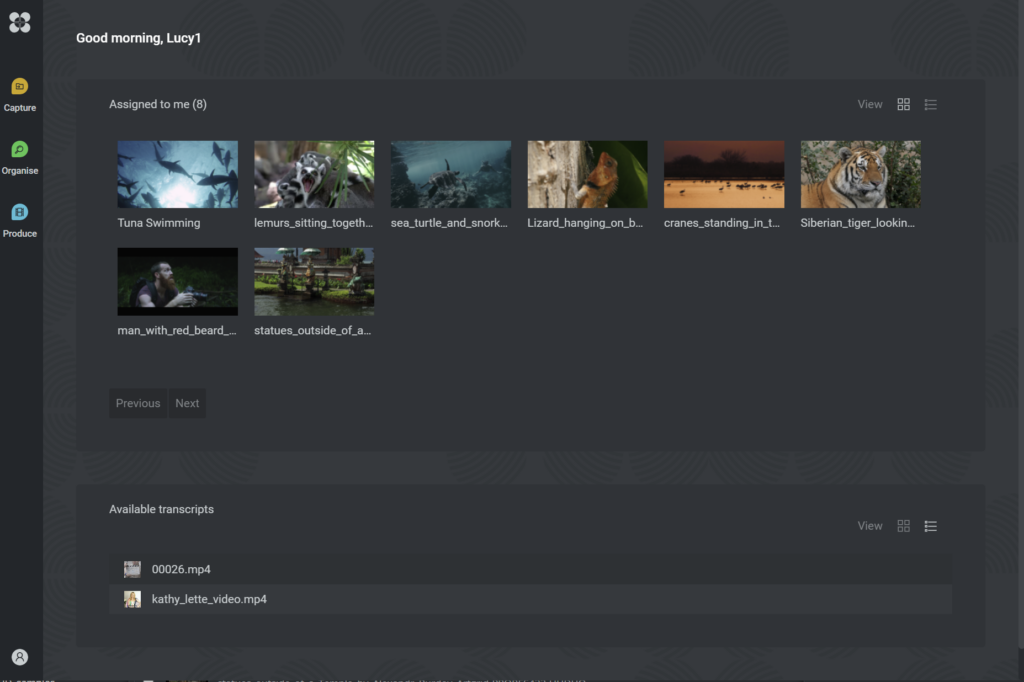
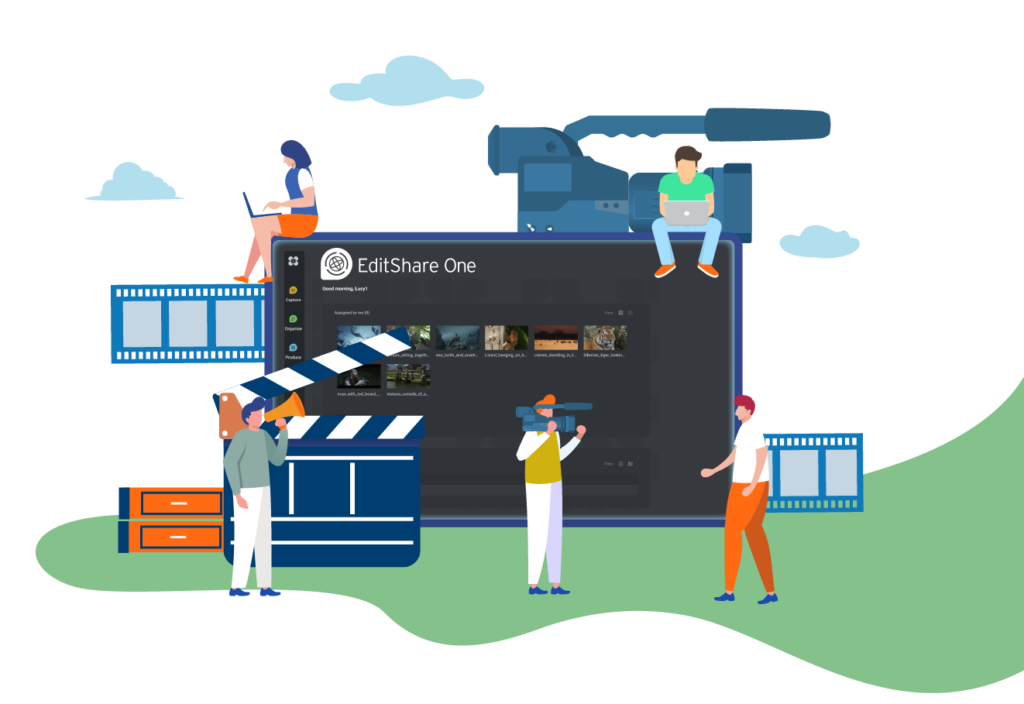
EditShare One and the Produce Tool provide access to the material throughout the process. There is a single sign-on to all the content and metadata, but each user has different requirements, and will be presented with different tools, different media and metadata, and different capabilities.
A producer could be alerted to new cuts that need to be reviewed and signed off. The user interface would simply offer the new material, a player, and a text tool for comments. No need to know how the underlying technology works, or even where the content is at that moment: just focus on the job at hand.
More generally, the Produce tool is a simple dashboard that saves time and potential confusion in searching through media spaces and folders. It is completely independent of all the other tools, so users simply see what is relevant to them.
For the editor, the EditShare One intuitive interface appears as a panel within the edit software itself. Editors are, of course, free to choose whichever software package works best for them, but within the Adobe or DaVinci user interface is a panel or integration tool which is linked to EditShare FLOW asset management and its management tools.
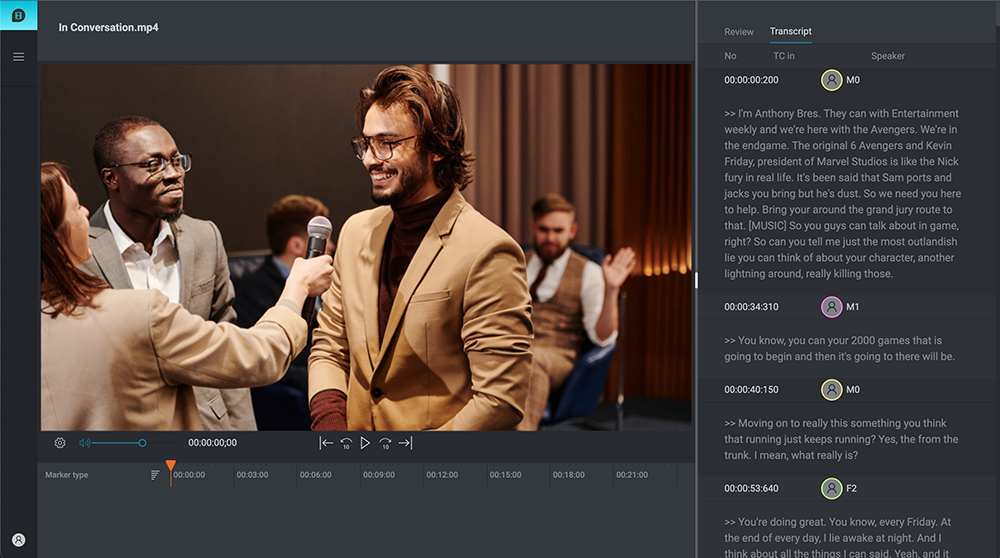
Producers can highlight interest points in transcriptions through EditShare One’s web-based UI, which editors can then import using the FLOW panel. Services, like AI speech-to-text transcriptions, can also be seen in the FLOW panel to speed up work even further. This automated process creates rough cuts or integrates selected clips into Adobe Premiere sequences, enhancing overall efficiency in the editing process.
Once the sequence or program is completed, the same simple user interface exports it as new material in the shared storage and drives it to other EditShare One users who need to see it.
The goal is to make it simple to create and expedite collaborative workflows, wherever the individuals are, by offering just the functionality and material each needs, at the time they need it. By simplifying everyone’s working environment, more time is available to concentrate on making great content.
Production workflows have become way more complicated than they used to for all sorts of reasons, but there are ways to keep the complexity under control.
The move from film or tape to files has had the incidental effect of massively increasing shooting ratios. It is simply easier to do more takes with more cameras, and keep them all, when they are “just” digital files.
It wasn’t that long ago when holiday-makers had to take one or maybe two rolls of 36-exposure film on a vacation and carefully choose the moments they wanted to capture. Now our cameras and phones get filled with hundreds, maybe thousands of pictures which we later need to sort out. The same has happened for the movie and television industry.
While shooting ratios have gone up, timescales have often been reduced. The goal is to get from set to screen as quickly as possible, especially to start recouping production costs.
More material; less time. We have to find a better way to work.
Many production workflows are still rooted in old, linear methods. Which is understandable: if you are trying to complete a project, then having proven and comfortable practices can be very reassuring. But it is definitely time to rethink the way we work.
The idea of having a central place for all the assets that make up a production is not new. All the material comes into a single server, and everyone who needs to access it can log in. Completed work gets written back to the same server, making the process convenient and streamlined.
This is great. But the challenge is that this “single server” might actually be a distributed set of storage nodes, on location, in a post house, at the production company, or in the cloud. The system that is tracking all the material needs a single database that covers all these locations.
Also, the content might come in different formats: the camera resolution (and there may be more than one camera type); the edit format (perhaps with a proxy for remote editing); and the delivery packages. Metadata needs to track not only formats and resolutions, but also the points at which value judgements are applied: quality control; editorial decisions.
But our main goal is to create the best possible television programme or movie, which means everyone, at every stage, needs to devote their energies on their part of the production without getting bogged down in the complexities of the underlying media management system.
The goal, then, is to have a high functionality, agile storage infrastructure that can handle multiple formats (and converting between them), is geographically diverse, and can manage metadata. That is exactly what EditShare FLOW was designed for.
But on top of that you need a simple, intuitive, role-appropriate user interface, so that each person in the creative team sees the information and content they need: no more; no less.
That is why we have developed EditShare One: the next generation of workflow management. One single sign-on; one place for capture, edit, review and deliver; one platform for production collaboration.
What makes this possible is a single user interface concept that is infinitely customizable. Every user has their own dashboard, showing them just the content and features they need. These dashboards are dynamic, so tasks can be assigned as needed, with all resources available.
We think EditShare One is a transformative leap forward in workflow management. It makes collaborative production environments practical and productive, and leaves creative people free to get on with creative tasks.
In my next blog I’ll look at a typical workflow, using the Produce Tool within EditShare One.