Scalable storage and content management on premises, at remote locations and in the cloud
Boston, MA – May 26, 2023 – EditShare®, the technology leader that enables storytellers to create and manage collaborative media workflows, will show visitors to BroadcastAsia 2023 how its storage and workflow systems and solutions fit seamlessly into modern, practical workflows, growing as the user’s needs increase.
Central to the success of EditShare’s solutions is that it matches its powerful and resilient storage systems with software that provides all the production asset management and workflow controls needed by any media enterprise. The solutions can be implemented centrally, they can embrace remote locations, and they can use standardized cloud storage and processing, to meet the specific needs of each project. Users can start with a single storage appliance and grow seamlessly and without downtime to networks of many petabytes.
Putting creativity and productivity at the heart of the operation, EditShare provides direct support for all popular professional editing platforms, including Adobe, Avid and BlackMagic. EditShare FLOW software ensures material is formatted and packaged to appear as bins in the appropriate workstations, wherever they are, so the editor wastes no time in set-up and preparation. Where needed proxies are automatically generated, and Swift Sync provides file acceleration to move required material.
Content storage can be spread across multiple locations and the cloud, to suit the operational needs of the user. FLOW maps all the content in every location and ensures it is ready, whenever and wherever it is needed. That includes cloud editing, with the preferred software tool running in the EditShare environment in AWS.
“While technology is moving forward very rapidly, we know that our customers want to focus on producing great content to tight timescales,” said Sunil Mudholkar, VP Product Management at EditShare. “What we will be showing at BroadcastAsia demonstrates that we provide strong underlying automation and intelligence, allowing creatives to focus on the results. We look forward to meeting many of our users from the APAC region and showing them how we continue to develop the most productive and practical infrastructures, whatever the size of the business and however they want to work.”
Demonstrations of EditShare’s proven storage solutions and workflow software can be seen at BroadcastAsia 2023, on stand 6J2-08.
EditShare is a technology leader that enables collaborative media workflows on-premise, in the cloud, or in a hybrid configuration. With customer and partner success at the heart of EditShare’s core values, our open software solutions and robust APIs improve workflow collaboration and third-party integrations across the entire production chain, ensuring a world-class experience that is second to none. The high-performance software lineup includes media optimized shared storage management, archiving and backup, and media management, all supported with open APIs for extensible integration.
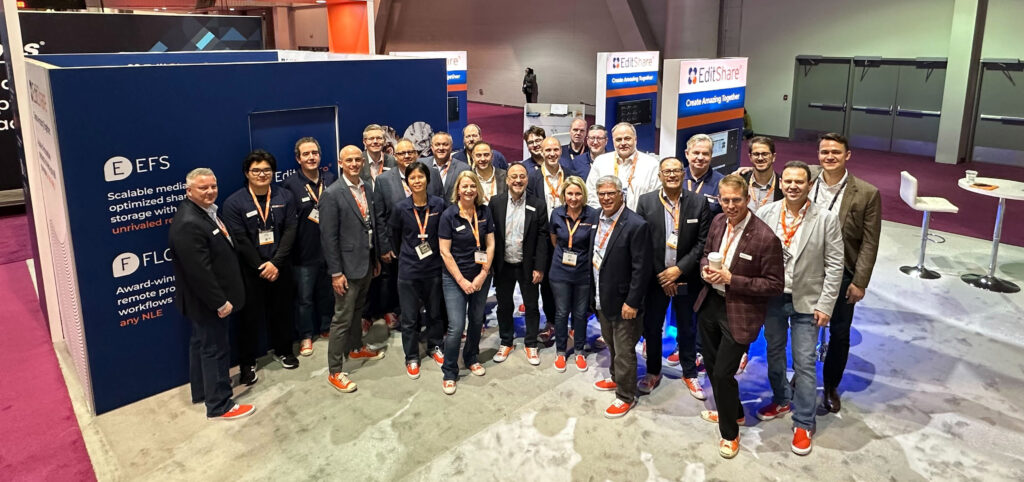
Like many of you, I’m taking a big breath following an exciting week in Vegas for this year’s National Association of Broadcasters (NAB) conference. As always, NAB provided a unique opportunity for us to connect with industry experts, showcase our latest products, get together as a globally-distributed team, and gather valuable feedback from our esteemed customers and partners. It was a great show – and we enjoyed seeing everyone who made the trip to our booth.
A few key themes seemed to dominate conversations during the show – this is what I noticed that kept coming up at NAB:
Collaborative Workflows: The importance of collaborative workflows in the media and entertainment industry has never been more evident. At NAB, we highlighted our latest innovations in collaborative workflows and shared storage solutions. Our new features, such as universal project sharing, enhanced metadata management, multi-site support and remote editing capabilities, were met with overwhelming positive feedback. We are proud to continue our commitment to providing cutting-edge collaborative tools that streamline media production workflows and foster creativity among teams. We continue to drive forward our strategy of creating amazing everywhere.
Hybrid Cloud-Based Solutions: As our CTO, Stephen Tallamy puts it, “everything seems destined for the cloud… eventually.” But the pace and sequencing of that move is different for every team. That’s still true here in 2023. While some teams are dipping their toes in the water, others are ready to take the plunge but aren’t quite ready to commit to moving all of their workflow to AWS just yet. As a provider of cloud-based solutions, we want to support customers who are ready to start their cloud journey while also acknowledging that the right first step looks different for every team.
At NAB, we showcased our latest advancements in hybrid cloud-based editing, media management, and storage solutions. Our hybrid cloud offerings give customers the flexibility, scalability, and cost-efficiency they need to meet the evolving demands of modern media production – sometimes that means a mix of on-prem and cloud, both in storage and media asset management. We’re excited about the possibilities that hybrid cloud-based technologies bring to the industry, and we’re committed to expanding our solutions to help customers stay ahead of the curve. If you’re thinking about a potential hybrid cloud strategy, we have more examples than ever about ‘what good looks like’ that we’d be happy to share.
We were also surprised by the number of those who have multiple EditShare deployments and are interested in connecting those workflows to create global efficiencies. This is an area where we are innovating and making investments, and we’re pleased that these investments were validated by the customers we spoke with. We’re going to continue investing here – check out our CTO, Stephen Tallamy, discussing our thinking on where hybrid is headed from the NAB floor here.
AI-Driven Media Management: Artificial intelligence (AI) has reached peak hype status, but it’s also transforming the way media assets are managed and monetized. At NAB, we demonstrated our latest AI-driven media management tools that leverage machine learning and automation to streamline media workflows, enhance search capabilities, and optimize media asset organization. Our customers were impressed with the increased efficiency and productivity that our AI-powered solutions bring to their operations.
While I was at NAB I also participated in the SET Future of Broadcast panel. Fernando Bittencort, former CTO of Globo moderated the panel. He kicked off the panel by reading the response he got when he asked ChatGPT “What is the future of Broadcast?”. We can debate the quality of ChatGPT’s answer to his question, but the fact that this is even possible should cause us to stop and recognize two things: (1) The world has changed, and (2) our industry is not exempt. The possibilities for what it can do – from search ability to documentation to customer support to how we test our products – the limit of how we apply AI and machine-learning technology to the problems media creators face. And I’ll leave it to smarter guys than me to talk about the limits and governance that should be placed on it.
The most encouraging part of NAB? Our industry is back. We had 120 channel partners in attendance from all around the world. We had more than double the product demos vs. 2022. Leads and opportunities coming out of the show were also up. Things are moving in the right direction.
As we reflect on this year’s NAB conference, we are energized by the opportunities and challenges that lie ahead. We remain committed to our mission of Creating Amazing Everywhere by empowering media professionals to create, collaborate on, and deliver exceptional content.
Thank you for your continued support of EditShare. We look forward to spending more time together in 2023.
Augments presence with customers & partners in the region and sponsors inaugural Manufacturer Awards
Boston, MA – May 04, 2023 – EditShare®, the technology leader that enables storytellers to create and manage collaborative media workflows, will showcase its latest productivity and creativity developments at CABSAT 2023 (stand S1-E20, Dubai World Trade Centre, 16 – 18 May). This will be the company’s largest presence at CABSAT to date. Underlining its commitment to the event and to the MENA region, EditShare is also supporting BroadcastProME’s inaugural Manufacturer Awards at the show as a silver sponsor.
The demonstrations will show what can be achieved with EditShare’s market leading EFS storage devices, available both as on premises servers and as cloud technology. The creativity and workflows are provided by FLOW, the software layer which provides asset management and system control.
The strong movement in production and post at the moment is towards decentralization: remote production; multi-site post; and hybrid on premises and cloud storage. The latest developments from EditShare reflect these changes, including FLEX for fast cloud implementations and Multisite, which provides the intelligence to ensure that media is available where it is needed, moving content from location to location, or from the center to a remote worker, to minimize downtime.
Also boosting productivity is direct support for all the popular professional edit packages: Adobe, Avid, BlackMagic and others. Material relevant to each project will appear as bins in the right workstations, wherever they are, eliminating set-up time and waiting for content transfers. Swift Sync from EditShare provides file acceleration to move material as quickly as possible, over any path.
“The Middle East is a really important, and very successful, region for EditShare, thanks in no small part to our dedicated Channel Partners” commented Said Bacho, CRO at EditShare. “We always ensure that we have a strong demonstration of our latest capabilities at CABSAT, and the conversations we have with the media community in the region are very important to us, guiding future developments.
“As the leading storage and asset management specialists, we know how important it is for the industry to maintain strong innovation in creative tools and the rest of the content chain,” he continued. “When CABSAT and Broadcast Pro ME magazine set up a Manufacturer Award program, we wanted to give it our full support, which is why we are the silver sponsor. I look forward to seeing the innovations which the awards will spotlight.”
Demonstrations of EditShare’s proven storage solutions and workflow software can be seen at CABSAT 2023, on stand S1-E20.
EditShare is a technology leader that enables collaborative media workflows on-premise, in the cloud, or in a hybrid configuration. With customer and partner success at the heart of EditShare’s core values, our open software solutions and robust APIs improve workflow collaboration and third-party integrations across the entire production chain, ensuring a world-class experience that is second to none. The high-performance software lineup includes media optimized shared storage management, archiving and backup, and media management, all supported with open APIs for extensible integration.
Continuing developments driven by user experiences
Boston, MA – April 25, 2023 – EditShare®, the technology leader that enables storytellers to create and manage collaborative media workflows, is bringing its latest productivity and creativity developments to the Media Production & Technology Show (stand D40, Olympia London, 10 – 11 May). All the new functionality is designed with user experiences in mind for even greater creative freedom and simpler workflows.
EditShare provides both powerful content storage devices and the management layer to control workflows and track assets. This allows media to be stored on premises, at multiple locations and in the cloud, ensuring that users can work the way that is most convenient for them.
FLOW is the asset and workflow management software, supplemented with FLEX for fast cloud implementations. New at MPTS this year is Swift Sync, which gives users a way to share media across different EFS storage systems, with FLOW multi-site software automating the tasks of generating proxies and ensuring content is available where it is needed.
A major boost for productivity and creativity is the ability to support all the popular professional edit packages – Adobe, Avid, BlackMagic and others – directly. Editors will see the material relevant to their project appear as bins in the edit software, eliminating set-up time and the wait for material to transfer. Thanks to EditShare’s unique Universal Projects cross-platform tools, edit assistants can create bins and even rough cuts without even knowing which edit software will be used to finish the job.
“The great value of an event like MPTS is the chance to show just how sophisticated and supportive our architecture really is,” said Said Bacho, CRO at EditShare. “We have time to talk through a user’s real requirements, and show how our software can be used to link EditShare storage nodes and deliver the workflows, securely and productively. Ultimately, our users just want to get on with creating their work, and our continuingly evolving software automates the underlying management and transfers to achieve just that.”
Demonstrations of EditShare’s proven storage solutions and workflow software can be seen at MPTS 2023, on stand D40.
EditShare is a technology leader that enables collaborative media workflows on-premise, in the cloud, or in a hybrid configuration. With customer and partner success at the heart of EditShare’s core values, our open software solutions and robust APIs improve workflow collaboration and third-party integrations across the entire production chain, ensuring a world-class experience that is second to none. The high-performance software lineup includes media optimized shared storage management, archiving and backup, and media management, all supported with open APIs for extensible integration.
Technology has the ability to shape the way we work, sometimes for the better, sometimes for the worse. With the introduction of new technology, such as cloud-enabled editorial tools, it can be an opportunity to consider a better way of working.
The Evolution of Video Workflows: From Bespoke Hardware to Cloud Operations
It is worth reminding ourselves that up until maybe 10 years ago, all the equipment we needed for media production depended upon bespoke hardware. You bought a box to do a job, and your workflows were defined by the boxes you owned and how you connected them together. That applied whether you were shooting in the field, in the studio, or in post.
The twin-pronged revolution came when processing power developed to be able to handle video in real time, and when standards were established to share content as data files, replacing SDI (which of course also required bespoke hardware). By opening the option to use standard hardware and open standards, video workflows became more accessible and the ability to process video in software made these workflows more flexible.
Virtualizing Post Tools: The Benefits of Cloud Editing
The next step was to virtualize the software, and build systems on microservices. In simple terms, we have moved from connecting boxes that we happen to have into assembling the precise functionality we need, in precisely the order we need. With the infinite scalability of the cloud, the architecture can flex to do what we want without the requirement for large capital investment.
And that is why we have the opportunity to take a completely fresh approach. We need to decide what it is we are actually trying to achieve, and how best to do it.
Take editing, for example. Online editing has meant a largish room in a post house, with room for clients to sit around. That costs a lot in real estate, and power, and catering, and security, on top of the salary for a top editor and the cost of the equipment.
It is the way we have always done it, because it was the only way we could make it work. But if we are starting with a blank sheet of paper, is it the best way?
Collaborating Remotely: Enhancing Productivity and Saving Time and Money
At EditShare we talk a lot about how post tools, like editing, can be virtualized alongside the storage network and asset management platform. These are the industry standard tools that editors expect: tools from Avid, Adobe, DaVinci and others. With remote desktop access technology such as PCoverIP, the editor will work exactly the way they are used to, whether the processing and storage is in the machine room in the basement or in an AWS data centre hundreds or thousands of kilometres away.
The logical extension of that is that the editor doesn’t have to be in the expensive edit suite in the city centre post house. They can be anywhere which is convenient for them. The idea of editing high-value content on someone’s kitchen table has always been a security nightmare, but with cloud editing the video never leaves the central, controlled environment in the cloud.
But of course an editor rarely works in complete isolation. Producers and clients want to know what is going on, and directors may well want creative input. That is why the expensive edit suites have large couches for all these collaborators. And having everyone in the room may be right for some projects.
But for others, producers, directors and other collaborators will need to understand progress and approve material, without watching the whole process. With cloud-based tools it is easy for remote contributors to securely access proxy versions of rushes and cuts for comment. . If you need real time collaboration, there is no reason why you cannot use Zoom as the communication tool.
That saves time for producers and the rest, who are not sitting around while the dull parts of the job happen. They focus their attention where it matters most. And they save time and money by not travelling to the post house.
Balancing Work and Life: The Importance of Staff Welfare in Cloud Operations
The travel point is becoming increasingly important. Commuting every day, only to sit alone in a darkened room until late into the evening to meet a deadline can be demotivating and sap creativity and productivity. Connecting with people in person undoubtedly improves a quality of life, so it’s a balance of travelling when it counts. With the ability to start work in one location and continue somewhere else helps address work/life balance whilst still keeping to commitments. .
The cloud could, and should, be transformative for video creatives. It should be boosting staff welfare, business economics, and creative collaboration. That is why it is important to draw up a list of what is important to your facility, and fit the technology around it.
Want to find out more? click here to book a demo, or a chat with your local EditShare team member.
When you’re in a business like EditShare, the start of a new year means the time to think about what is going to be important in the coming 12 months. What are users going to talk about, what capabilities are they going to need, how will they challenge us?
Here is my view: this is going to be the year that hybrid production comes to maturity. Hybrid in the sense that it will be part on location, part remote; part using traditional tools onsite and part in the cloud.
Why 2023?
Before I explain why I think it is going to be important, let me just say why 2023 is the year when it is going to happen.
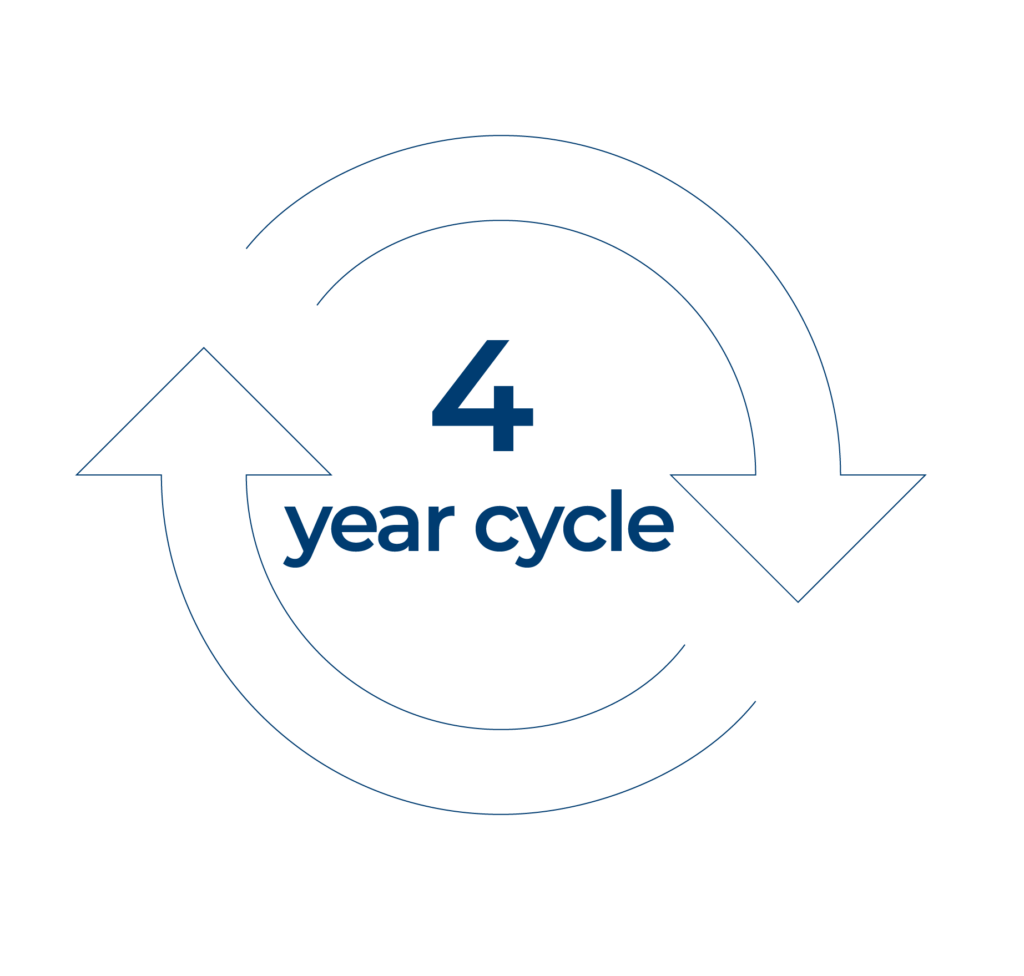
In media, we have a well-established four year cycle, driven by external forces, mainly sport. In 2024 and every four years from then on we have the Olympics (and a US presidential election). In 2026 and every four years we have the Winter Olympics plus the FIFA World Cup. In 2025 we have the European football championships. But in the other year of the four year cycle – like 2023 – we do not have any big events. So we have time to think, to develop sensible plans.
Think about this: there is no one size fits all post production workflow. If you are making a nature documentary you may be accumulating footage over years; but investigative journalism might be shooting almost up to the time of transmission. Movies will allow months for post production; sports broadcasters will want a fresh highlights package every time there is a break in play.
If you are planning a major sports event like the Olympics, or a major location-shot reality show that needs daily coverage, do you want to ship your post production team off to the location – where you will have to build facilities and pay for food and accommodation – or do you want to keep them back at base where they have set up their rooms just as they like them, and they know the quickest route to the best coffee shops?
Fast connectivity has changed everything
There are no right answers to any of these questions. But what has happened is that we have built workflows because, in the past, they were the only way that the technology allowed us to work. Now, thanks to fast connectivity around the world, we can take a step back and decide what is the best way to work on each individual project.
The cloud, of course, is central to all of this. That is not to say that it is compulsory: there will be plenty of workflows where traditional, in-place post is the best solution. The major nature documentary series I talked about earlier is a good example: getting all the content to a post facility for editing and finishing at a considered pace is probably the way to go (although you might want a security archive in AWS S3).
But if you do put all your content in the cloud, then you can access it from anywhere. You can call up processing resources when you need them, for instance for batch creation of proxies, or to do large-scale transcoding.
The real transformative technology, though, is cloud editing. All your media is in the cloud, as is all the metadata. With EditShare FLEX, you can host the edit software – whichever platform is your preference – within the storage network. If the post-production storage network is in the cloud, so too is your edit software. Remote desktop technologies like PC-over-IP (PCoIP) means you have the look and feel of a traditional edit suite, but it is all happening at some distant location.
You can access huge resources without the cost or time of moving large amounts of content. With good, automated proxy generation you can work with even a modest broadband connection.
Cloud editing is not for everyone, or for every project. That is not the point. What it does is open up new avenues and new workflows. You can take a step back and decide what is the best way for you to work on this particular project: what is best for staff welfare, for business economics, and for creative collaboration. Workflows your way.
The return of conferences and exhibitions in 2022 has finally given us all the opportunity to sit down and talk to industry professionals from around the world to discuss what’s working and where the current challenges lie.
Many of the conversations I’ve had at these events relate to the industry hot topic at the moment: remote production. This topic takes on many forms depending on the needs of the production and so to tackle them in a single blog would be ambitious (for me to write and for you to read). So instead, I thought I would cover a more specific scenario to show the sort of challenges I’ve heard and illustrate some of the techniques that can be applied to other scenarios.
Take for example a production company responsible for a popular reality TV show. Let’s say it’s set, and shot, in the south of France, although the production company itself is based in Paris, 500km to the north.
Like all reality shows, it generates a huge amount of content from many cameras running non-stop. It also has an extremely fast turnaround, with audiences expecting high production values in programs reflecting the action that took place on site within the previous few hours.
To meet these two requirements, the production company could have set up a large server network on site. Let’s explore some of the implications of this and what alternatives could be used to improve the workflow.
On-Site Production Challenges
In a single storage network scenario the program would have to base a team of editors at the location. This would add substantially to the production budget: these editors, edit assistants and edit producers would need accommodation and food over the months that the program was in production. Space would have to be rented to house the edit suites. Travel costs would be high because editors may not want to be away from home for extended periods of time, therefore they would be constantly rotated in and out.
What the production company needs is the ability to edit story packages, and packages into programs, within the facilities they already have in Paris (close to the homes and favorite restaurants of the editors and producers). However, the content is hundreds of kilometers away.
Bring On The Proxy
I’ve written before about how you should embrace the proxy. When content is ingested into EditShare storage nodes it can automatically generate a proxy, at a bitrate determined by you, but small enough to be regarded as portable.
This means that users anywhere with the right privileges can log in, view the proxies, add comments if necessary, and manage the content. In this application, producers responsible for each story strand could log in, from Paris for example, whether from a computer or tablet, and review all the footage available. They could very quickly identify what material to use and drag it into an appropriate bin. This can all happen in a web browser using the FLOW media asset management system. We are nowhere near an edit workstation yet.
An edit assistant could then go through the selected sequences for the story and set up the bin structure for the editor. Again, this is still in a web browser, at any location, using the proxy.
When everything is ready, the relevant clips are loaded into the edit software. We are completely agnostic: we can preload bins and projects into Adobe® Premiere® Pro, Avid Media Composer and Da Vinci Resolve. The editor can start cutting straight away.
Stay In Sync
With EditShare EFS we recently introduced a new feature called Swift Sync. This is designed to synchronize content between multiple locations. It incorporates file acceleration which can move media files, over a leased line or a VPN tunnel, as much as ten times faster than Rsync.
It also is extremely flexible in what it synchronizes. In an application like the reality show example, there may still be too much raw content to reliably move, even after the selections have been made. We have smart segmentation in mind during this process as it’s not necessary to synchronize absolutely everything. The key is to synchronize what’s required, automate and optimize. So the editor can cut on the proxies, and only when the story is complete, will Swift Sync move the required clips with handles. It can even conform the edit in the server node at the location and just move the finished story as one file.
Savings Abound
This is the architecture that can deliver huge operational savings for the reality show, while maintaining quality and boosting productivity. The same ideas are applicable for other situations too.
You do not need to have physical storage nodes in both the remote location and back at base. One or both of them could be in the cloud, using EditShare FLEX software and the AWS Backbone to move material as needed.
If you are shooting a drama in 4K Ultra HD, or even higher resolutions using RED cameras, it might even be most efficient and cost-effective to edit using proxies and deliver the selected raw clips back to base on disk drives using FedEx.
At EditShare we see our mission as supporting producers to create amazing everywhere. Proxy workflows are a practical and very flexible way of achieving that.
Want to find out more? click here to book a demo, or a chat with your local EditShare team member.