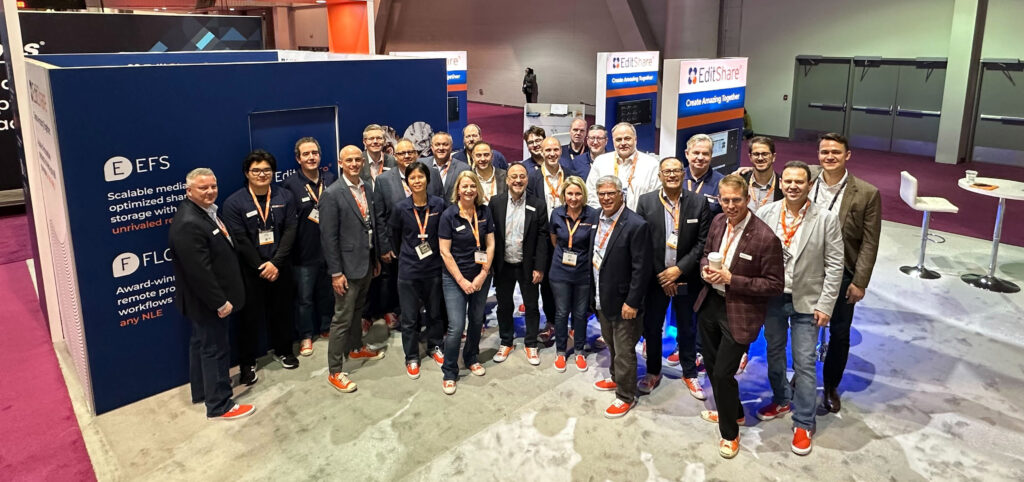
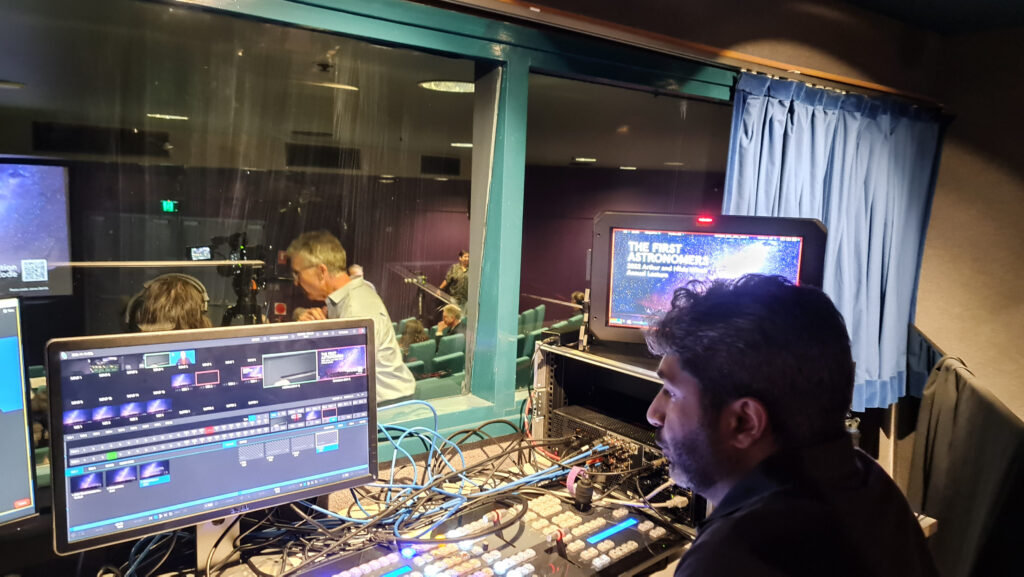
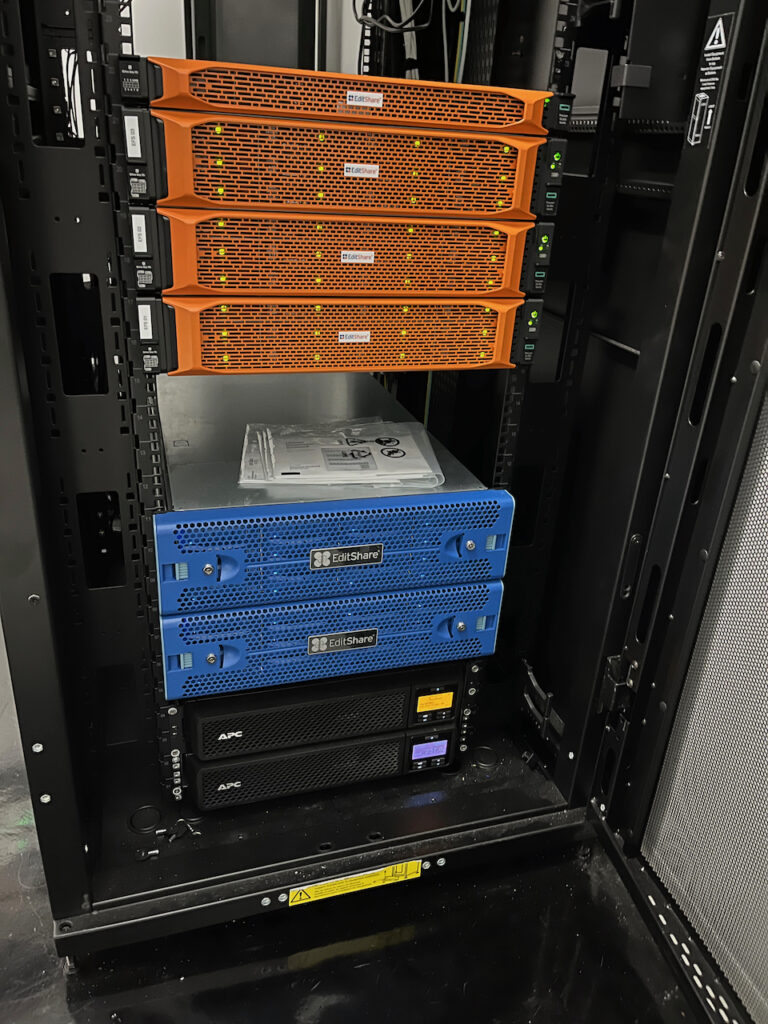
Like many of you, I’m taking a big breath following an exciting week in Vegas for this year’s National Association of Broadcasters (NAB) conference. As always, NAB provided a unique opportunity for us to connect with industry experts, showcase our latest products, get together as a globally-distributed team, and gather valuable feedback from our esteemed customers and partners. It was a great show – and we enjoyed seeing everyone who made the trip to our booth.
A few key themes seemed to dominate conversations during the show – this is what I noticed that kept coming up at NAB:
Collaborative Workflows: The importance of collaborative workflows in the media and entertainment industry has never been more evident. At NAB, we highlighted our latest innovations in collaborative workflows and shared storage solutions. Our new features, such as universal project sharing, enhanced metadata management, multi-site support and remote editing capabilities, were met with overwhelming positive feedback. We are proud to continue our commitment to providing cutting-edge collaborative tools that streamline media production workflows and foster creativity among teams. We continue to drive forward our strategy of creating amazing everywhere.
Hybrid Cloud-Based Solutions: As our CTO, Stephen Tallamy puts it, “everything seems destined for the cloud… eventually.” But the pace and sequencing of that move is different for every team. That’s still true here in 2023. While some teams are dipping their toes in the water, others are ready to take the plunge but aren’t quite ready to commit to moving all of their workflow to AWS just yet. As a provider of cloud-based solutions, we want to support customers who are ready to start their cloud journey while also acknowledging that the right first step looks different for every team.
At NAB, we showcased our latest advancements in hybrid cloud-based editing, media management, and storage solutions. Our hybrid cloud offerings give customers the flexibility, scalability, and cost-efficiency they need to meet the evolving demands of modern media production – sometimes that means a mix of on-prem and cloud, both in storage and media asset management. We’re excited about the possibilities that hybrid cloud-based technologies bring to the industry, and we’re committed to expanding our solutions to help customers stay ahead of the curve. If you’re thinking about a potential hybrid cloud strategy, we have more examples than ever about ‘what good looks like’ that we’d be happy to share.
We were also surprised by the number of those who have multiple EditShare deployments and are interested in connecting those workflows to create global efficiencies. This is an area where we are innovating and making investments, and we’re pleased that these investments were validated by the customers we spoke with. We’re going to continue investing here – check out our CTO, Stephen Tallamy, discussing our thinking on where hybrid is headed from the NAB floor here.
AI-Driven Media Management: Artificial intelligence (AI) has reached peak hype status, but it’s also transforming the way media assets are managed and monetized. At NAB, we demonstrated our latest AI-driven media management tools that leverage machine learning and automation to streamline media workflows, enhance search capabilities, and optimize media asset organization. Our customers were impressed with the increased efficiency and productivity that our AI-powered solutions bring to their operations.
While I was at NAB I also participated in the SET Future of Broadcast panel. Fernando Bittencort, former CTO of Globo moderated the panel. He kicked off the panel by reading the response he got when he asked ChatGPT “What is the future of Broadcast?”. We can debate the quality of ChatGPT’s answer to his question, but the fact that this is even possible should cause us to stop and recognize two things: (1) The world has changed, and (2) our industry is not exempt. The possibilities for what it can do – from search ability to documentation to customer support to how we test our products – the limit of how we apply AI and machine-learning technology to the problems media creators face. And I’ll leave it to smarter guys than me to talk about the limits and governance that should be placed on it.
The most encouraging part of NAB? Our industry is back. We had 120 channel partners in attendance from all around the world. We had more than double the product demos vs. 2022. Leads and opportunities coming out of the show were also up. Things are moving in the right direction.
As we reflect on this year’s NAB conference, we are energized by the opportunities and challenges that lie ahead. We remain committed to our mission of Creating Amazing Everywhere by empowering media professionals to create, collaborate on, and deliver exceptional content.
Thank you for your continued support of EditShare. We look forward to spending more time together in 2023.
Augments presence with customers & partners in the region and sponsors inaugural Manufacturer Awards
Boston, MA – May 04, 2023 – EditShare®, the technology leader that enables storytellers to create and manage collaborative media workflows, will showcase its latest productivity and creativity developments at CABSAT 2023 (stand S1-E20, Dubai World Trade Centre, 16 – 18 May). This will be the company’s largest presence at CABSAT to date. Underlining its commitment to the event and to the MENA region, EditShare is also supporting BroadcastProME’s inaugural Manufacturer Awards at the show as a silver sponsor.
The demonstrations will show what can be achieved with EditShare’s market leading EFS storage devices, available both as on premises servers and as cloud technology. The creativity and workflows are provided by FLOW, the software layer which provides asset management and system control.
The strong movement in production and post at the moment is towards decentralization: remote production; multi-site post; and hybrid on premises and cloud storage. The latest developments from EditShare reflect these changes, including FLEX for fast cloud implementations and Multisite, which provides the intelligence to ensure that media is available where it is needed, moving content from location to location, or from the center to a remote worker, to minimize downtime.
Also boosting productivity is direct support for all the popular professional edit packages: Adobe, Avid, BlackMagic and others. Material relevant to each project will appear as bins in the right workstations, wherever they are, eliminating set-up time and waiting for content transfers. Swift Sync from EditShare provides file acceleration to move material as quickly as possible, over any path.
“The Middle East is a really important, and very successful, region for EditShare, thanks in no small part to our dedicated Channel Partners” commented Said Bacho, CRO at EditShare. “We always ensure that we have a strong demonstration of our latest capabilities at CABSAT, and the conversations we have with the media community in the region are very important to us, guiding future developments.
“As the leading storage and asset management specialists, we know how important it is for the industry to maintain strong innovation in creative tools and the rest of the content chain,” he continued. “When CABSAT and Broadcast Pro ME magazine set up a Manufacturer Award program, we wanted to give it our full support, which is why we are the silver sponsor. I look forward to seeing the innovations which the awards will spotlight.”
Demonstrations of EditShare’s proven storage solutions and workflow software can be seen at CABSAT 2023, on stand S1-E20.
EditShare is a technology leader that enables collaborative media workflows on-premise, in the cloud, or in a hybrid configuration. With customer and partner success at the heart of EditShare’s core values, our open software solutions and robust APIs improve workflow collaboration and third-party integrations across the entire production chain, ensuring a world-class experience that is second to none. The high-performance software lineup includes media optimized shared storage management, archiving and backup, and media management, all supported with open APIs for extensible integration.
Continuing developments driven by user experiences
Boston, MA – April 25, 2023 – EditShare®, the technology leader that enables storytellers to create and manage collaborative media workflows, is bringing its latest productivity and creativity developments to the Media Production & Technology Show (stand D40, Olympia London, 10 – 11 May). All the new functionality is designed with user experiences in mind for even greater creative freedom and simpler workflows.
EditShare provides both powerful content storage devices and the management layer to control workflows and track assets. This allows media to be stored on premises, at multiple locations and in the cloud, ensuring that users can work the way that is most convenient for them.
FLOW is the asset and workflow management software, supplemented with FLEX for fast cloud implementations. New at MPTS this year is Swift Sync, which gives users a way to share media across different EFS storage systems, with FLOW multi-site software automating the tasks of generating proxies and ensuring content is available where it is needed.
A major boost for productivity and creativity is the ability to support all the popular professional edit packages – Adobe, Avid, BlackMagic and others – directly. Editors will see the material relevant to their project appear as bins in the edit software, eliminating set-up time and the wait for material to transfer. Thanks to EditShare’s unique Universal Projects cross-platform tools, edit assistants can create bins and even rough cuts without even knowing which edit software will be used to finish the job.
“The great value of an event like MPTS is the chance to show just how sophisticated and supportive our architecture really is,” said Said Bacho, CRO at EditShare. “We have time to talk through a user’s real requirements, and show how our software can be used to link EditShare storage nodes and deliver the workflows, securely and productively. Ultimately, our users just want to get on with creating their work, and our continuingly evolving software automates the underlying management and transfers to achieve just that.”
Demonstrations of EditShare’s proven storage solutions and workflow software can be seen at MPTS 2023, on stand D40.
EditShare is a technology leader that enables collaborative media workflows on-premise, in the cloud, or in a hybrid configuration. With customer and partner success at the heart of EditShare’s core values, our open software solutions and robust APIs improve workflow collaboration and third-party integrations across the entire production chain, ensuring a world-class experience that is second to none. The high-performance software lineup includes media optimized shared storage management, archiving and backup, and media management, all supported with open APIs for extensible integration.
There is no doubt that, with ChatGPT making waves with immediate writing capabilities and stable diffusion enabling creatives to create incredible imagery based on simple prompts, artificial intelligence is the hot topic of the moment. Making sense of it all is quite a challenge, especially for us in the media and entertainment industry.
The talk at the moment is about the “creative” capabilities of AI. But that raises a lot of ethical questions for content producers. Who is in charge of the work? Where are the boundaries between fact and AI generation? What are the intellectual property implications? When AI can create completely convincing images from a brief text description, what is truth, and when does it matter?
These ethical dilemmas can make media businesses a bit uneasy, but let’s not forget that AI can be a lifesaver in some areas. It’s like this: people are great at the fun, creative stuff, while computers excel at the dull, repetitive tasks. AI is just another example of this age-old truth.
It’s all about the metadata
Asset management is the way we find stuff in our content stores. We describe the content using metadata, and the more detailed the metadata, the easier it is to find what we are looking for. Indeed, with really good metadata – and maybe some AI help in the search – we may find content that will take our productions off in a new, unexpected and delightful direction.
At EditShare, we’re all about helping you keep track of your content. Whether you’re producing blockbuster movies or TikTok videos, our FLOW asset management software bundled with our storage systems is the way to go. One fundamental truth with all asset management platforms is the better the metadata the easier it is to find the raw material to tell your story.
The real timesaver: Intelligent software
Completing good, detailed metadata is a time-consuming business and sometimes, it is not an especially rewarding task – which can lead to human fatigue and, in turn, errors. Spending hours or even days in a darkened room manually tagging hours of video can be tough, but it is needed if you want to be sure you can later find the people, places and items you need; to sort the best takes from the OK; to find new and informative B-roll to tell the story.
But computers are good at repetitive tasks, so this is an ideal application for AI. If the software is intelligent enough, it can reliably tag objects, people, locations, and even emotions. It can process audio, transcribe the speech and lock the script to timecode, so that users can quickly jump to the part of the clip they need. Processing audio and video together helps fine tune the script tracking and understanding of emotions.
This all sounds great in theory – a real timesaver at the point of ingest, and throughout the extended life of the content. But can it be done in practice?
FLOW AI for Superhuman Vision
At EditShare the team studied the market, and saw that a start-up based in Berlin had all the right vision coupled with an incredibly powerful technology stack. The company is called Mobius, and their AI platform is called Superhuman Vision, which is pretty much what we wanted to achieve.
Facial recognition
So we have integrated it into our FLOW asset and workflow management system. We call the add-on FLOW AI. It adds yet another layer to our already highly automated environment. FLOW AI can process content for keywords in a scene, automatically tag people based on facial recognition and improve the post environment with intuitive scene and detection algorithms.
One of the operational considerations in AI is that it has to be trained to know what you know. FLOW AI is supplied with a lot of basic knowledge already in its database: as soon as you plug it in it can recognize more than 5000 objects, emotions, actions and even 10,000 famous people. And you can teach it more – you can add people to the database, for instance, and it will index them every time they appear in your archive.
Detailed image analysis
FLOW AI also includes intelligent support when searching for content. User requests can be very specific or quite vague, and the retrieval system will suggest relevant clips beyond the usual, so that stories become more interesting.
Obvious applications are systems with a high throughput of content, like newsrooms and sports broadcasters. Say a golfer hits a hole in one: you can quickly find all the other times this golfer has done it; or it has been achieved on this hole; or even disastrous triple bogeys at the same place.
It is a powerful tool for other users, too. Say you are producing a multi-part drama serial, and you need some cutaways to manage the pace of the story. By framing your request by mood, weather, time of day or people in shot, you can help the editor by offering clips that will match and flow seamlessly. For post houses versioning content for different markets, it can help by identifying the points which may need conformance editing, like nudity or swearing.
The partnership with Mobius is already proving very worthwhile. The algorithms in their software not only save time but offer more accurate, richer results, and as users get into the capabilities of FLOW AI, the benefits continue to grow. Object detection is just one string to our AI capabilities, with other integrations including speech to text and translation, but that’s something for a future blog!
It is said that AI is a powerful tool when used to support human decision-making. That is why we see FLOW AI as a great enhancement for our storytelling platform.
Want to find out more? click here to book a demo, or a chat with your local EditShare team member.
Continuing enhancements deliver a great leap forward for productivity
Boston, MA – February 2, 2023 – EditShare®, the technology leader that enables storytellers to create and manage collaborative media workflows, will use NAB2023 (booth N2100, Las Vegas Convention Center, 16 – 19 April) to unveil its latest productivity and creativity enhancements. The continuing development of EditShare core functionality is targeted at creative freedom and simpler, more resilient and secure workflows.
EditShare’s workflow solutions are driven by its market-leading EFS Storage and FLOW media management – these are combined in FLEX for fast cloud implementations. By integrating post-production storage on premises, at multiple locations and in the cloud, connectivity is at the heart of the workflow and serves multiple market verticals and applications in broadcast, production, post, education, sports, news, corporate/enterprise, and houses of worship.
Swift Sync gives users a way to share media across different EFS systems in the cloud, on prem or in between. Users can select all or some of their media spaces in any location and bring it into their workspace, whether they are in a facility, working at a remote location or using cloud editing via a desktop emulator. FLOW provides support for multiple streams of multiple codecs. In addition the latest EFS release delivers as much as a 60% increase in throughput for certain codecs/configurations from the previous hardware/software.
Editors use the tools of their choice because FLOW and FLEX integrate with software from Adobe, Avid, BlackMagic and others without having to change screens. Included in this spring release are a number of features and improvements to our FLOW Panel for use with Premiere® specifically. Collaborative teams can easily connect with each other using EditShare’s unique Universal Projects technology, providing a seamless means of exchanging projects between post production users and platforms.
EditShare’s advanced set of open APIs means it’s easy to integrate tools from partner companies and third-party vendors, whether that is capture software from Cinedeck, workflow orchestration from Helmut, cloud hosting from AWS, AI capabilities from Audimus and Mobius, NRCS systems and more, many of which will be demonstrated at the show.
To ensure that mission critical content flows – like channel playout or fast turnaround editing – are never compromised, users can now manage storage access bandwidth to guarantee quality of service for each workstation, user or group with EditShare’s new bandwidth control capabilities in EFS. The latest release also moves to streamline and simplify still further the new web user interface in FLOW, and to make FLEX Cloud Edit+ easier to deploy through intuitive user interfaces without the need for cloud specialists.
“At EditShare, our goal is always to let creative users get on with the storytelling, by making the technology transparent” said Sunil Mudholkar, VP Product at EditShare. “The more we make the infrastructure & services intuitive to use – whether it is on premises, in remote locations or in the cloud – then the greater the availability, the reliability and the productivity. That is what our users tell us they want, and that is what we are striving to deliver.”
The latest versions of all of EditShare’s proven storage solutions and workflow software can be seen at NAB2023, on booth N2100.
EditShare is a technology leader that enables collaborative media workflows on-premise, in the cloud, or in a hybrid configuration. With customer and partner success at the heart of EditShare’s core values, our open software solutions and robust APIs improve workflow collaboration and third-party integrations across the entire production chain, ensuring a world-class experience that is second to none. The high-performance software lineup includes media optimized shared storage management, archiving and backup, and media management, all supported with open APIs for extensible integration.
When you’re in a business like EditShare, the start of a new year means the time to think about what is going to be important in the coming 12 months. What are users going to talk about, what capabilities are they going to need, how will they challenge us?
Here is my view: this is going to be the year that hybrid production comes to maturity. Hybrid in the sense that it will be part on location, part remote; part using traditional tools onsite and part in the cloud.
Why 2023?
Before I explain why I think it is going to be important, let me just say why 2023 is the year when it is going to happen.
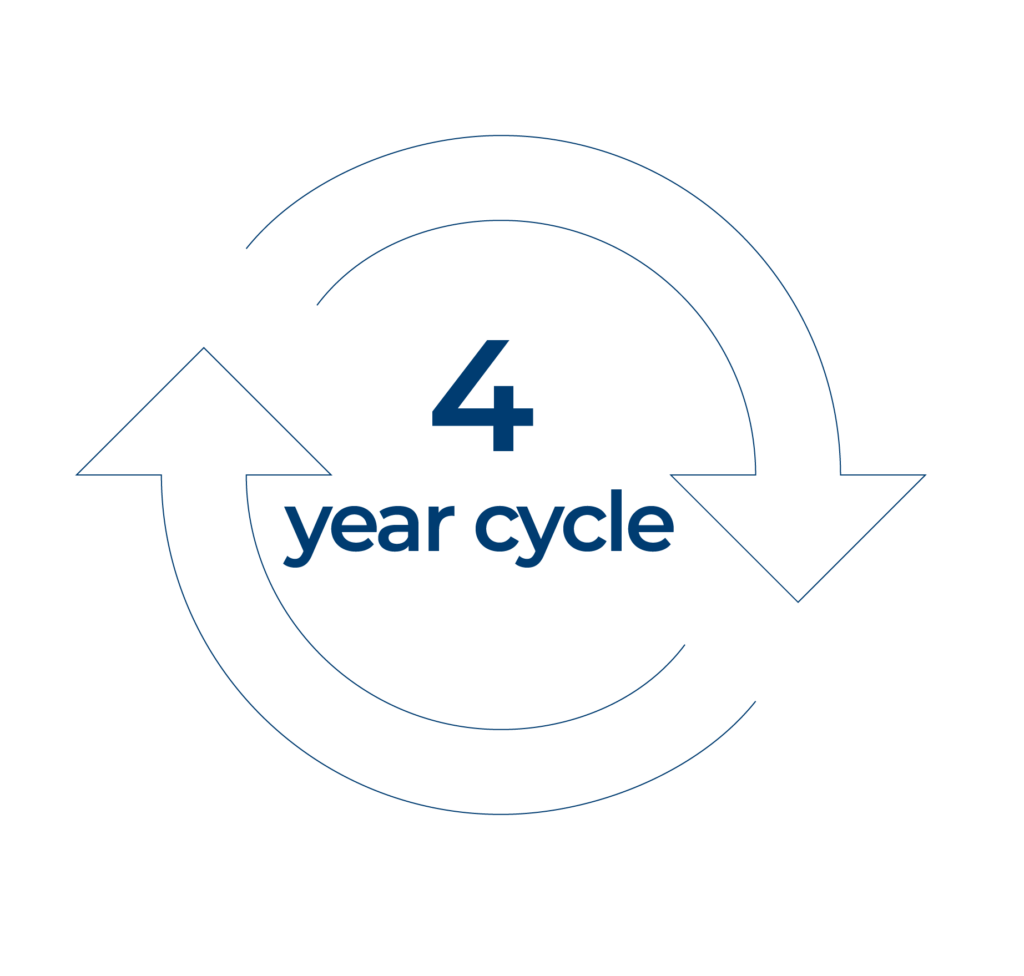
In media, we have a well-established four year cycle, driven by external forces, mainly sport. In 2024 and every four years from then on we have the Olympics (and a US presidential election). In 2026 and every four years we have the Winter Olympics plus the FIFA World Cup. In 2025 we have the European football championships. But in the other year of the four year cycle – like 2023 – we do not have any big events. So we have time to think, to develop sensible plans.
Think about this: there is no one size fits all post production workflow. If you are making a nature documentary you may be accumulating footage over years; but investigative journalism might be shooting almost up to the time of transmission. Movies will allow months for post production; sports broadcasters will want a fresh highlights package every time there is a break in play.
If you are planning a major sports event like the Olympics, or a major location-shot reality show that needs daily coverage, do you want to ship your post production team off to the location – where you will have to build facilities and pay for food and accommodation – or do you want to keep them back at base where they have set up their rooms just as they like them, and they know the quickest route to the best coffee shops?
Fast connectivity has changed everything
There are no right answers to any of these questions. But what has happened is that we have built workflows because, in the past, they were the only way that the technology allowed us to work. Now, thanks to fast connectivity around the world, we can take a step back and decide what is the best way to work on each individual project.
The cloud, of course, is central to all of this. That is not to say that it is compulsory: there will be plenty of workflows where traditional, in-place post is the best solution. The major nature documentary series I talked about earlier is a good example: getting all the content to a post facility for editing and finishing at a considered pace is probably the way to go (although you might want a security archive in AWS S3).
But if you do put all your content in the cloud, then you can access it from anywhere. You can call up processing resources when you need them, for instance for batch creation of proxies, or to do large-scale transcoding.
The real transformative technology, though, is cloud editing. All your media is in the cloud, as is all the metadata. With EditShare FLEX, you can host the edit software – whichever platform is your preference – within the storage network. If the post-production storage network is in the cloud, so too is your edit software. Remote desktop technologies like PC-over-IP (PCoIP) means you have the look and feel of a traditional edit suite, but it is all happening at some distant location.
You can access huge resources without the cost or time of moving large amounts of content. With good, automated proxy generation you can work with even a modest broadband connection.
Cloud editing is not for everyone, or for every project. That is not the point. What it does is open up new avenues and new workflows. You can take a step back and decide what is the best way for you to work on this particular project: what is best for staff welfare, for business economics, and for creative collaboration. Workflows your way.
Shared storage environments are critical to the successful operation of all modern-day education institutions. At the top of that tree are some of Australia’s oldest and most prestigious universities, including the University of Sydney and the University of Technology Sydney (UTS), both of whom use EditShare storage solutions supplied by Digistor.
EditShare shared storage solutions in use at the University of Sydney
The University of Sydney’s Manager, Media Production, Deputy Vice-Chancellor Indigenous Strategy and Services, Tom Cavdarovski, explained, “Our media team has grown over the last few years and our postproduction workflow has changed to meet the growing demands. We use EditShare systems and find them particularly suitable for a growing production slate.”
The University of Sydney’s Manager, Media Production, Deputy Vice-Chancellor Indigenous Strategy and Services, Tom Cavdarovski
UTS’ Client Computing Manager Faculty of Arts and Social Sciences, Simon Prowse, agreed saying, “The Faculty of Arts and Social Sciences (FASS) runs courses in communications including journalism and production. These courses include sound production, film and animation. In the past FASS used a different shared storage solution but decided to move to a more open environment for production workflows. UTS has now been using an EditShare solution for around 9 years has recently acquired new EFS storage and FLOW licences for student off site usage for editing.”
EditShare shared storage solutions in use at the University of Technology Sydney
For the University of Sydney, the requirements were centred around a secured, robust, 4K editing storage solution with Cavdarovski adding, “We have huge amounts of 4K data that needs to be accessed across multiple editors. Our content is captured on country with drones, C300 and DSLR cameras. We also produce multicamera live stream events, so having a post-production system workflow that integrates with creating pre-packaged content, is an important part of our workflow.”
In UTS’ case the university required a sizeable amount of storage capacity and bandwidth to handle up to 60 concurrent connections for editing from personal and group project spaces on the server.
Prowse said, “This time around we chose 10GB Ethernet with 20GB link aggregation to a 10GB switch. Since COVID there is more need for flexibility and a need for more students to work remotely. We also have students studying remotely overseas so the need for working from the server remotely was important. As most of the editing is done with Adobe, the Premier plugin was desirable.”
UTS’ Client Computing Manager Faculty of Arts and Social Sciences, Simon Prowse
It’s clear for both universities that the EditShare solutions for education shared storage environments are a vital part of their courses and day-to-day operations as Cavdarovski explained, “The EditShare system Digistor installed has RAID redundancy, integrates with existing university infrastructure and allows our editors to work in various 4K resolutions seamlessly.”
Prowse echoed this sentiment saying, “It’s a flexible arrangement for constantly changing circumstances. Openness and flexibility of the solution is important and EditShare meets this perfectly. Courses and requirements change and we can easily add capacity, bandwidth or capabilities with plugins.”
The University of Sydney uses a 98TB EFS 300 system with 8 clients PC connections. These are both Mac and Windows computers, all connected via 10Gb network ethernet connections and all editors are able to open Adobe Creative Cloud projects at any time.
EditShare’s cloud platform EditShare FLEX has evolved to a suite of turnkey, ready-to-go solutions for remote collaborative workflows and video editing in the cloud. Users of EditShare FLEX choose the modules they need – including edit in the cloud and multi-premises synchronisation – and implement them in their own cloud account. This gives users an easy opportunity to implement cloud solutions which education institutions often consider the best way to utilise a combination of on-premise and cloud storage and editing.
There are many on premises and cloud solutions at UTS. They run an animation render farm for the faculty that is on server blades in the data centre and processing of jobs is distributed to around 300 lab computers. UTS also has an HPC environment as well an Isilon which is widely used across the university. The faculty EditShare EFS can backup to Isilon which represents a cost saving to leverage other products in the EditShare solution.
Workflows are obviously at the core of these solutions as Cavdarovski explained, “We have a mix of projects throughout the year, some are quick turnaround with a single producer and editor, while others are 12 months in post and up 50 individual videos with shared resources across multiple editors.”
Prowse added, “We keep our workflows reasonably basic. EditShare is the file server for students’ media work. The workflows involve group spaces for group projects and these have a set folder structure. Students also have personal scratch space with quotas. Class materials are in spaces accessible to students from either the lab and suite facilities or on their BYO devices accessible from home via the client and VPN or on campus.”
A UTS shared storage workflow may also involve students borrowing faculty sound, lighting and video equipment and doing a shoot. They will then upload content to EditShare via a lab or studio computer.
It’s clear that both Cavdarovski and Prowse are big fans of the EditShare solutions for education shared storage environments they purchase from Digistor as Cavdarovski highlighted, “We have used smaller storage solutions in the past, but found they are very limited and lacked performance beyond one or two concurrent users compared to the EditShare solution we now have. We really like the FLOW application that we purchased as part of the EditShare package. It allows the team of editors to log content easily, accurately and create proxies for working offline and working flexibly. FLOW helps to ensure that we can always store, retrieve and broadcast the appropriate content.”
Whilst Prowse said, “We feel that EditShare has a flexible and futureproofed product that is not proprietary or rigid. It’s modular so we are not paying for capabilities that we do not need now but have the option to add capability, licences or services going forward. Lots of storage capacity in the EditShare solution is important and being on premise, we can leverage the fast network for connections, transfers and backup.”
When asked to explain what edge using the EditShare solutions Digistor provided gives their university Tom Cavdarovski concluded, “The EditShare system enables our team to work more efficiently, reducing menial tasks and streamlining complex workflows. This frees the team up to work in more creative and innovative space, which in this industry, is a what customers and partners want from content producers. Our experience with Digistor has always been very professional, I have been purchasing postproduction systems for over 20 years and they understand how to work with clients who work in large complex organisations, like a university.”
Whilst Simon Prowse concluded, “We have had excellent experiences with both EditShare and Digistor. This is our third renewal of hardware over 9 years and the sales and project process has been smooth each time. Any support issues are dealt with promptly and professionally too. My IT team has to be across a huge amount of knowledge to effectively manage all of the moving parts in this complex university environment. Hence, we need to rely on good support for specialised solutions, applications and facilities. Thus, the great confidence we have in Digistor and EditShare is a very important factor for us.”
EditShare is a technology leader that enables collaborative media workflows on-premise, in the cloud, or in a hybrid configuration. With customer and partner success at the heart of EditShare’s core values, our open software solutions and robust APIs improve workflow collaboration and third-party integrations across the entire production chain, ensuring a world-class experience that is second to none. The high-performance software lineup includes media optimized shared storage management, archiving and backup, and media management, all supported with open APIs for extensible integration.
EditShare’s cloud-enabled remote editing and project management technology was recently recognized by the National Academy of Television Arts and Sciences (NATAS) with a prestigious 2021 Emmy® Award for Technology and Engineering.
About Digistor
Managing Director Andrew Mooney founded Digistor in 1990. His experience designing, installing, and maintaining services for broadcasters and post-production houses had made it clear to him that the industry needed a group of experts who could look at things objectively. The result is a company that for over 30 years has been providing elegant solutions to leading organisations in the most technically demanding application areas. Digistor provides solutions for the creation, management, storage, and distribution of digital assets. From post-facilities to broadcast operations, from single studios to collaborative, networked environments operating across a room or across the world, Digistor empowers its customers through smarter technology and service solutions.
For more information on Digistor, please visit the website at www.digistor.com.au