As COVID-19 (Coronavirus) spreads across the globe, it is clear that its spread will not be limited to isolated outbreaks and is developing into something much more widespread. So it makes sense that governments, corporations, and individuals take reasonable precautionary measures appropriate to stop its propagation.
At EditShare, we have watched with concern as the human and economic toll has continued to rise. We have been asking what can and should we do to help. As technologists, scientists and engineers, our response should be directed not just to limiting the effects of the current outbreak, but to considering how we can protect ourselves, our livelihoods and our industries today, and in the future should this happen again. It’s now very clear that a novel virus can appear unexpectedly from anywhere, putting the world on alert, and, in the process, cause significant disruption.
Of course, a degree of inconvenience is not only tolerable but completely acceptable if it saves lives and avoids mass discomfort. But a safe, stable and liveable society depends on a functioning economy. There is no way around this. Managing the situation so that lives can return to normal only happens if essential parts of the economy keep going.
Luckily, the last few years have seen a very significant shift in our ability to work remotely, and that could be the key to minimizing future outbreaks. Digital communication is at the heart of this and video conferencing via Skype, Zoom, and FaceTime are part of many people’s lives – especially when they are spread across a city, country or the entire planet. We’ve not only learned to embrace and leverage these technologies through work but also to keep connected with friends and families around the world.
At EditShare, we have an entire collaborative video production workflow in the cloud, and in the future, all of our products will scale geographically across the globe and move from bare metal servers in the office to the most abstracted and virtual systems in the cloud.
But it’s not just the physical ability to transcend distance and work remotely that matters. It’s also that telling stories – whether through traditional or digital media – has more influence on the way a society changes than almost everything else. In times of crisis, there is an additional responsibility on storytelling enablers: the technologists that build the real and virtual means to create stories and get them delivered to their audience. To keep workers, friends and families connected and functioning in society at a time when they most need to be.
We don’t want to make this an opportunistic shout-out for our technology. Far from it. We want to be open and to work alongside all our friends, colleagues and competitors in the industry and beyond, to make sure that during this episode and whatever comes next, we help to keep things going, keep our businesses moving, keep our lives connected, share our stories and learn from this experience in ways that will make us a stronger and more connected society in the future.
To support remote collaboration across the creative community during this challenging moment in time, EditShare is making its FLOW media management solution available for free now through July 1, 2020. FLOW enables individuals as well as large creative workgroups to collaborate on story development with capabilities to perform extensive review approval from anywhere in the world. Complete this form and one of our FLOW experts will follow up.

At the same time that many of her peers prepared for college finals, Audrey Ember released a video explaining why she had decided to quit school for the second time. For a while, she admits, going back to college was Plan C, but the plan had been scrapped again. “Sorry mom,” she says to the camera with a grin. It’s a moment typical of Ember — honest, personal, reflective of that place between adulthood and owing your parents answers.
The twenty-year-old YouTube creator has been doing things her way for a while now. After pursuing a film degree for two years, Ember decided to focus full-time on her YouTube channel, where she creates content specializing in cinematography, video production, and the creative process. (more…)
Collaboration has always been a key theme at EditShare and since our launch back in 2004 we have worked hard to enable editors to share both media files as well as NLE projects. After all, making films and videos is usually a group effort, and the whole process is much more efficient when everyone on a production team can work from the same common canvas. That’s why over the years we have developed our own sharing solutions and we have also supported any native sharing capabilities that are baked into the various NLE applications.
So naturally we are very excited about Adobe’s new “Productions” feature that gives editors the best Premiere Pro “project sharing” experience ever.
I am pleased to report that over the past two months, EditShare has been testing a beta version of this new feature, and this very significant upgrade for Premiere Pro users does indeed work flawlessly with our EFS shared storage.
“Project Sharing” is a rather broad term, and for those of you who may not be familiar with the concept, I thought it might be helpful to explain it in some detail, so that you can appreciate the somewhat different approaches taken by NLE developers.
Project sharing is a collaboration system that divides up larger non-linear editing (NLE) projects into smaller mini projects, each of which represents a part of the whole. For instance, if a group of editors and assistants is editing a large documentary, they might create individual mini projects for “Rushes”, “Assemblies”, “The Show Open”, “Act 1”, “Act 2”, “Act 3”, “Conclusion”, “Fine Cut”, “Effects”, “Sound Mix”, etc.
As soon as a user opens up one of these mini projects with write access, Premiere Pro creates a “prlock” file next to the project file, effectively “locking” that project to ensure that other Premiere Pro editors on the same project are automatically flagged to open the mini project as read-only, so that they can’t overwrite or corrupt someone else’s work in any way.
When the user with write permission closes the project, the prlock file goes away and now the project becomes available for editing by another user. The system allows users to see each other’s work and collaborate safely. Avid has had a similar sharing feature for a long time, called “bin locking”, and it has been widely used for big projects that require large scale collaboration. In the Avid environment, bins are files on disk inside a project folder, so it’s possible to set permission on each bin file independently. In Premiere Pro, bins are virtual folders inside projects – so you have to do the locking at the level of an entire project file.
EditShare was the original pioneer of “project locking” for non-Avid NLEs back in 2009. Our objective was to enable editors to collaborate in a similar way to Avid but using Final Cut Pro 7 and Premier. At the time, the capabilities were not available in either Apple or Adobe. So we developed our own concept of dividing projects into multiple mini projects (it was mind shift in the way editors needed to think about their projects) and then we created two different systems for ensuring that only one user at a time could get write access to a project.
In our first system, we stored Final Cut Pro 7 and Premiere Pro project files in “User folders” to ensure that only that user had write access to anything inside, and we provided a way to move project files between user folders.
In our second system, we made an automated way to change permissions on a project file as soon as a user opened it, so only that user could write to the project. These were pretty effective solutions to the collaboration problem. But they weren’t native to the applications and couldn’t support some of the features that are desirable in project sharing.
Adobe introduced its own version of project sharing in 2017, but it had some drawbacks. For example, each user had to enable “project locking” in their own project settings. If one user forgot, projects could get locked for some users but not for others.
And one user couldn’t open another user’s sequence and copy a small part of their timeline into their own project, because Premiere wouldn’t let them set in and out points on a timeline from a read-only project. Users had to import the entire sequence into their own project, which also resulted in every clip of the sequence getting imported into their own project space. This wasn’t ideal.
Adobe listened to user feedback and came back with a massively improved method for project sharing, called Productions.
With the new feature, when the first user creates a “Production”, this makes a top-level folder inside which everyone now puts their related projects. Just beneath the Productions folder, you also get some master settings files – specifying things like the location for media and scratch folders. Every Premiere Pro project created inside the Production will now inherit these same settings – so you get total continuity across all parts of the project.
Perhaps most significant, you can now copy small sections of sequences from one project and paste them into other projects, without unwanted clips being copied to the destination project.
Premiere Pro projects created inside a Production also understand the relationship between projects, and what items came from where. So, if you match frame on a clip that was copied from another project, and then reveal the file for the match frame, Premiere will open up the original project where the clip was located – just like Avid does with bins. Adobe has even added a feature that notifies editors when a project opened as read-only has been updated by a read-write user, prompting the read-only user to refresh their view of the project to make the latest changes visible.
The new Productions feature is a major improvement for users of Premiere Pro and we are excited to see this built into Adobe’s editing product. Best of all for EditShare users, we have tested this new feature extensively with EditShare EFS storage and can assure our customers that Adobe’s new method of project sharing works flawlessly with our native Windows and macOS file system client.
EditShare EFS + Premiere Pro continues to be a winning combination!
For a sneak preview of how we support this new feature, visit us at NAB 2020 or contact us at sales@editshare.com.

Emily VanDerWerff is tripping out on voices. She recently learned, for example, that male and female voices aren’t all that different. In terms of pitch, voices considered feminine fluctuate between 100 and 525 Hertz, while voices considered masculine typically stay in the 65 to 260 Hz range. A voice in the overlapping zone — around 100 to 260 Hz — could go either way.
(more…)

For the first time in Academy Awards history, two women were nominated for Best Director at the 2021 ceremony, with Chole Zhao taking home the statue for “Nomadland.” Only seven women filmmakers have ever been nominated in this category, with Kathryn Bigelow being the only other female to earn the title in the ceremony’s nearly 100-year history.
Despite being underrepresented in these awards programs, the percentage of women working as film directors on independent movies has doubled since 2008, rising to 38 percent in 2020. And, women directed 16 percent of the top 100 most profitable films in 2020—the highest recorded—up from 12 percent in 2019.
While there is much ground to cover on the road to equality, the increasing momentum, along with the growing number of resources and champions supporting women filmmakers, is inspiring.
Shift has compiled a list of some of the top resources, women filmmaker associations and collectives, networking and mentoring opportunities, film festivals, and more to help change the ratios by increasing the number of women in film.
Professional and Membership Organizations
The Alliance of Women Directors (AWD) provides hands-on craft enrichment, mentorship, and education to women and gender nonbinary directors who directed at least one long- or short-form narrative film, television program, documentary, commercial, or new media program aired publicly by an established film festival or distribution company.
“Although the current statistics show that women make up a small percentage of working directors, we are hopeful about the future of the industry because we know firsthand the tenacity and dedication of our members. Change is inevitable,” Nikki Braendlin, vice president of AWD, wrote in an email. “We are also encouraged because of companies like NBC, CBS, Disney, Canon, and Fotokem who have partnered with AWD and understand and respect the intrinsic value of the voices of our members.”

Mary Lou Belli, honorary board member of the Alliance of Women Directors, teaches “How to Prep: Television Directing.” Credit: AWD
New York Women in Film & Television (NYWIFT) advocates for equality and supports women at every stage of their film and TV careers. It offers training and professional development programs, scholarships and grants, and a supportive community of peers. It also has a group called The Writers Lab that helps develop narrative feature screenplays written by women over the age of 40. NYWIFT is part of a network of 50 Women in Film chapters across North and South America, Europe, Africa, Asia, Australia, and New Zealand. Check each chapter to see which services and programs it offers.
The Couch Film Collective also offers grants, workshops, mentorship, and social events for women filmmakers. The organization works to get women and nonbinary people in front of and behind the camera at all levels of production. It’s an intersectional group that produces and supports equitable and inclusive projects that hire at least 51 percent of people who self-identify as women or non-binary, 35 percent people of color, and are LGBT inclusive.
Opportunities and Funding
Women in Film (WIF) offers funding, scholarships, a screening series, mentoring, workshops, and more.
“The industry is in a moment of genuine transition, finally beginning to understand that the media we create must reflect the world we live in and that its current structures and systems also need to transform to accommodate that,” Maikiko James, WIF’s director of programs, wrote in an email. “WIF is excited to be at the frontlines of this movement. We’re committed to these transformations at both the structural level and through elevating the incredible talent of the community we support.”
Women Make Movies supports women producers and directors through all phases of their careers, planting the seeds for a diverse and inclusive filmmaking landscape. In addition to being the world’s leading distributor of independent films by and about women, it offers a production assistance program for women working in independent media. Verizon also continues to support its Future Fund, setting aside $5 million to support female-led entertainment projects. Those who receive funding will also get access to Verizon 5G Labs across the United States and the Verizon Media RYOT 5G Studio in Los Angeles.

From L to R, Kimberly Cooper, Catherine Day, and Evette Vargas speak at the VR pioneers panel. Credit: Women In Film
Chicken and Egg Pictures supports women nonfiction filmmakers at various stages in their careers. Since 2005, it has awarded $8 million in grants and thousands of hours of creative mentorship to more than 300 filmmakers.
The Sundance Institute offers the excellent Inclusion Resource Map, a searchable database of opportunities and programs available to U.S.-based artists from underrepresented communities.
More locally, New York City-based women working in film or theater can turn to the Mayor’s Office of Media and Entertainment, which offers grants, speed funding, and a screenwriting competition. For members of Women in Film & Video Washington, D.C., Carolyn’s First Decade Fund has a professional development grant designed to help advance the careers of women in their first decade of working as media professionals and provide them with access to a larger film community and continuing skills development.
Female-Focused Film Publications
Women and Hollywood highlights women filmmakers and agitates for increased opportunities for them. CherryPicks compiles film reviews written by women from across the web, creating a score based on their reviews.
Women Under the Influence shares the stories of cinema directed by women through events and media. Check out their fantastic watchlists of female-directed films, such as “Sweet Dance Movies” and “Films of Resistance.”
Film Festivals
There are many festivals that cater to women filmmakers. Here’s a small sample:
- Rocky Mountain Women’s Film Festival, the longest-running women’s film festival in North America, showcases documentary, narrative, shorts, and animated films.
- St. John’s International Women’s Film Festival, established in 1989, is more than a festival. It offers film screenings and forums, workshops and master classes, youth filmmaking camps, mentorship programs, and advocacy work throughout the year.
- LUNAFEST, a 20-year-old festival by and for women, presented by LUNA Bars, raises funds for women’s causes while providing a global stage for female filmmakers.
A few female-focused, genre-specific festivals include:
- Reel Sisters of the Diaspora, an annual two-day film festival showcases movies directed, produced, and written by women of color.
- Ax Wound Film Festival, the official film festival of Women in Horror Month, features a diverse selection of horror films written and directed by women from around the world.
- Broad Humor Film Festival screens “smart, sexy, and unapologetically funny” short films, web series, and features written and directed by women.
Inclusion Research and Advocacy
The Center for the Study of Women in Television and Film at San Diego State University houses the longest-running and most comprehensive studies of women in film and television. Dedicated to producing extensive and timely research, its studies provide the foundation for a realistic and meaningful discussion of women’s on-screen representation and behind-the-scenes employment.
Need statistics and reports on diversity and inclusion in entertainment? Turn to the Annenberg Inclusion Initiative. It produces insightful research papers and reports and develops targeted, research-based solutions for tackling inequality.
The Queen Collective program, developed in partnership with Procter & Gamble, Tribeca Studios, and Queen Latifah, seeks to accelerate gender and racial equality behind the camera. Its first act was funding short films by two directors whose work premiered at the Tribeca Film Festival and streamed exclusively on Hulu. One of the directors, B. Monet, said at a press conference for her film, “It’s not that [women] are not amazing, and dope, and all these kinds of stuff. We need the opportunities. We need people to take chances on us.”
Looking Ahead
While the last couple of years have been tumultuous for the creative community on several fronts, the years ahead look strong for not only female directors and creators but also others looking to introduce more equality and diversity in the industry.
With diversity comes more relevant content, vibrant stories, and unique perspectives that capture the essence of our world today and the experiences of those around us.
Shift has been focused on delivering the tools, resources, and content that creative teams in all industries need to perform and share their best work, and we invite you to subscribe to our blog to follow these and other trends.
If you are interested in learning more about the Shift platform and how it helps creative teams stay connected, enhance collaboration, and create exceptional work, we encourage you to sign up for a free two-week trial.

Networks and studios want reviewers to view and write about new shows and movies. Writers want an easy experience to access pre-release content. Both parties want to keep content secure. But despite these closely aligned goals, the relationship between content producers and reviewers can sometimes get contentious. The reason? Reviewers hate screening sites.
We reached out to 200 press writers, bloggers and reviewers and asked for their opinions about what they love and what they hate about screener sites. Through in-depth interviews and surveys, we learned about the current issues surrounding the screener ecosystem. Incredibly, only 9% of reviewers are somewhat satisfied with the current state of affairs and none are “very satisfied”. Clearly, there is nowhere to go but up in serving a key audience disillusioned with tools critical to performing their jobs.
Frozen Out
So what do reviewers dislike so much about digital screening platforms? Their number one complaint: Lack of reliability. In fact, 50% of reviewers said they have missed a deadline or failed to write a review at all due to technical issues with a screener.
“Often times, because there is so much television these days, it is a last minute thing when I am getting to a show,” explains Rob Owen, TV Critic of the Pittsburgh Post-Gazette. “And then to get to it, and not being able to watch because it stops every 10 seconds is very frustrating.”
“It’s assumed that screeners are going to be poor quality.”
Colleen Kelsey, Assoc. Editor, Interview Magazine
There are multiple reasons why a video might not work, with many on the user’s end including unsupported browsers, bad wi-fi connections and internet outages. But since most online screening solutions don’t offer dedicated support, reviewers are left to reach out to their PR contacts, who in turn must get help from their IT or operations department. If the issue happens after hours to a reporter on deadline—well, you can kiss that coveted coverage goodbye.
Log-in Chaos
The second most common complaint reviewers have about screeners is the need to juggle multiple logins and ways of accessing content. Half of reviewers have access to more than 20 screener sites, all of which require different URLs and usernames and utilize different password rotation and complexity requirements. The end result: frustrated reviewers and an alarming number of potential loopholes in security.
“Just managing the variety of ways you have to get screeners is now a huge part of the job for everybody…sometimes it’s like ‘how much trouble is this worth?”
Ellen Gray, TV Critic, The Philadelphia Inquirer
While distribution is increasingly going digital, press reviewers still get about 25% of their screeners via DVD. About half of those discs are never destroyed or thrown away. Even more worrisome, only 8% of reviewers use unique passwords stored in a password manager.
To manage the proliferation of screener destinations and credentials, the rest leave passwords scribbled on Post-It notes, keep the same password across all sites, store them in Google Sheets shared with colleagues, and use other less than desirable password management strategies. The end result? Many screening sites are shockingly susceptible to attack by enterprising hackers willing to cross-reference a reporter’s publicly posted email address with the latest password dump.
Relegated to a small screen
Critics are just like the rest of us – they prefer to watch shows and movies on a big screen, perhaps with a bowl of popcorn or beer in hand. Even though reviewers are paid to watch new content, they tend to do it after office hours; peak viewing time for screeners is between 8-9 PM in any given time zone.
“There are certainly some shows that you want to see on a bigger screen…viewing on a laptop is really not the ideal situation.”
Rock Ellis, Managing Editor, AllYourScreens
This viewing pattern has a few ramifications. First, reviewers are often accessing content when there is no longer any technical support available at the network or studio, should they run into a problem. Secondly, despite the fact that most people in the industry now have Apple TVs, Rokus, Fire TV Sticks, or other devices, most screeners are still only offered online and must be viewed on a PC, laptop or tablet. The lack of a compatible TV app was listed as the third most common pain point for reviewers.
“My main problem with any screener site is that it’s very difficult, if not impossible, to find ways to cast it on to regular television,” says Randee Dawn, entertainment writer for TODAY.com and NBCNews.com. “I’m not a huge fan of watching on my computer screen because I spend hours in front of my computer anyway. It’s kind of a turnoff for me in terms of trying to invest time to watch screeners.”
Is There A Better Way?
Reviewers want to give network content an honest, timely review and, as industry professionals, they’re just as concerned as creators about keeping pre-release content safe until premiere date. They’re even willing to jump through some additional hoops if the overall experience is easy and seamless.
“If the industry would adopt a centralized solution with everything in one place, I would happily accommodate much tighter security.”
Alyssa Rosenberg, Culture Writer, The Washington Post
Dawn proposes a potential solution: “What would be nice is having some sort of central site where you have just one log-in, and all networks have just agreed to use it.”
While the idea of a destination screening site seems radical, it’s reality for many reviewers today. Think about the problems a centrally managed site solves. Networks and studios are all doing duplicate work to achieve good playback. By banding together on one platform, content creators could ensure better quality of service and enterprise-level security, offered with 24/7 high-touch support. All while freeing PR and marketing professionals to develop relationships with reviewers and promote content, rather than troubleshooting technical issues.
The future of screeners is here. Screeners.com addresses all of the issues cited by critics, making it easy to view all of the content they’ve been invited to preview in one frustration-free destination. We’ve also taken the requests of PR and marketing teams (and the IT teams that support them) to heart, providing turnkey, branded screening rooms protected with industry-leading security.
World Class User Experience
Screeners.com provides critics and reviewers with a simple interface with a video player that just works. No buffering, no broken connections. And if for some reason your reviewers do have an issue, we provide industry leading customer support so that your team doesn’t have to field angry phone calls.
Simple and Secure
Leave your password log-in and security issues in the past. Screeners.com uses secure Magic Link technology so that your reviewers can just worry about watching your content: no passwords, no frustration. When combined with SafeStream visible and forensic watermarking, your PR team can be a hero to critics and the content security team.
Let Viewers Watch Where They Want To
The critics have spoken: give us the ability to watch on the big AND small screen. Screeners.com lets viewers watch your pre-release content on a native Apple TV app, cast to other connected devices, or watch on their PC or laptop. By giving reviewers a simple experience across platforms, you’ve eliminated the barriers to getting the coverage your content deserves and giving you a better shot during awards season.
Happy Press Reviewers = Good Reviews
Screeners.com keeps you in control of your content and brand, while keeping some of your most important viewers happy and engaged. It’s time to implement a simple, secure, and frictionless system for both you and your reviewers, and always keep them coming back the next time. The more barriers you can remove between your content and your reviewers, the better off everyone will be.
“I’m genuinely thrilled when something new pops up in Screeners.com rather than other screening sites.”
Jacqueline Cutler, Freelance Journalist
Learn more about sharing pre-release content with reviewers, critics, and other stakeholders with Screeners.com.
EditShare’s video workflow and storage solutions power the biggest names in entertainment and advertising, helping them securely manage, present, and collaborate on their highest-value projects. To learn more about how EditShare can help your video production team, contact us today.

Liza Cardinale is an in-demand editor for shows like Outlander, Orange Is the New Black, and Insatiable. Her father was a writer for shows like Family Ties, so she received her introduction to the world of television at a young age, with backstage visits affording a peek behind the Hollywood curtain. “[It] made me feel like, ‘Ooh, maybe I could do this. Maybe I have access somehow,’” she recalls.
While studying film theory at UC Berkley, she stumbled into editing on a tape-to-tape system without any formal training. Later, she would tag along with a friend who was a film assistant for Jonathan Demme on The Truth About Charlie. There, Cardinale met Carol Littleton, A.C.E. “[Carol] is just legendary. She’s amazing,” Cardinale says. “And she brought two cats with her to work every day. I thought, ‘These are my people.’” (more…)
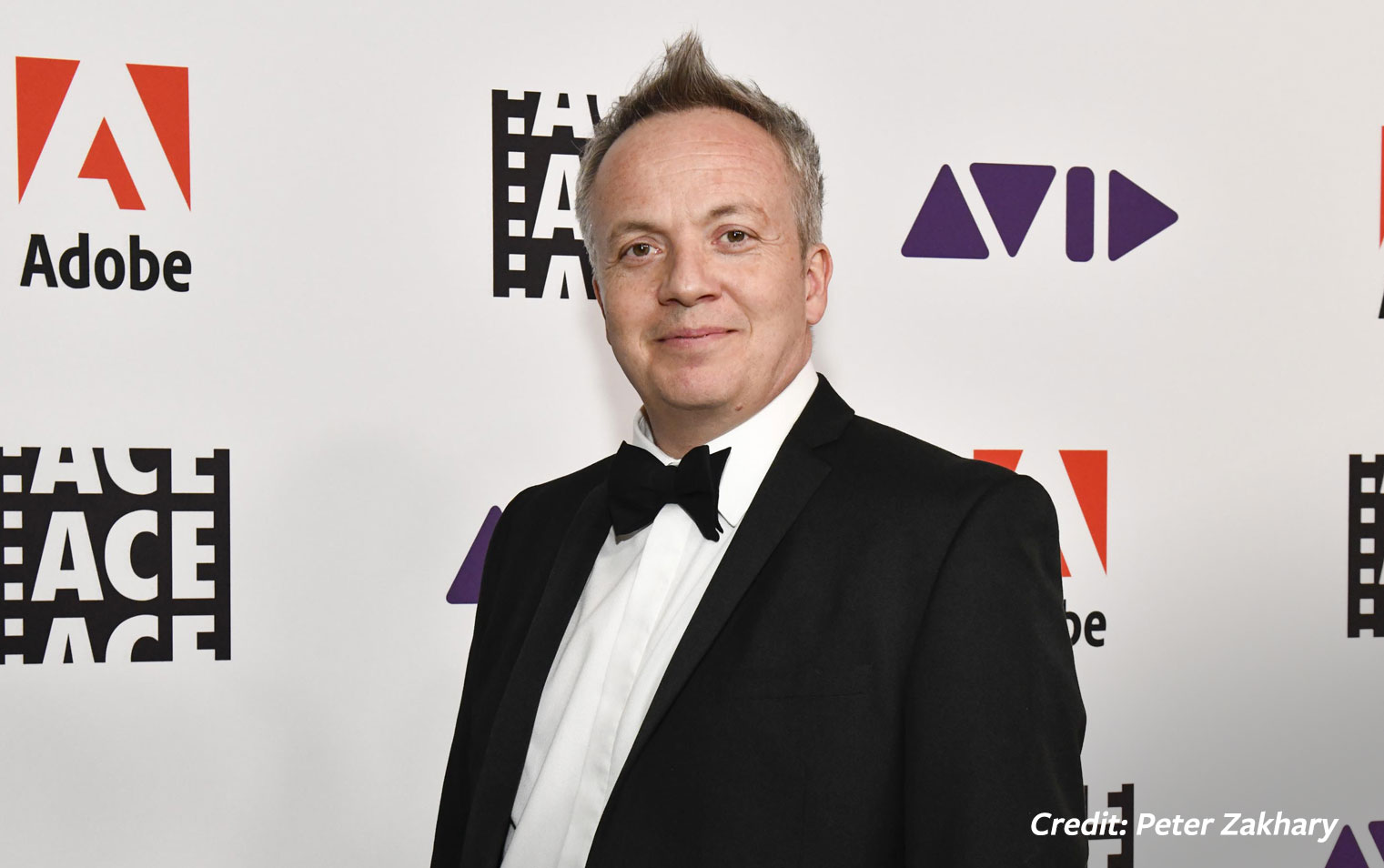
After being shut out in 2017, the second season of Fleabag swept all the major awards this year, including two Emmys and six Golden Globes. Auteur Phoebe Waller-Bridge, who also plays the titular lead, brings us the tear-jerking, wall-breaking tragicomedy, crowned by The Guardian as one of the greatest television series in the twenty-first century — and we’re only in the first two decades of the hundred-year span. That’s the kind of impact the show has had among critics and fans.
(more…)

Step into an indie comics convention, and you might find someone like Lamar Abrams. Unlike the spectacle that San Diego Comic Con has become, indie comics remains a relatively small, tight-knit community where everyone knows your name, and the conventions themselves have remained cozy. The work you’ll find is deeply personal — raw talent and emotional vulnerability reign supreme. The ‘zines, chapbooks, precious objects, and art prints you’ll see were likely assembled and stapled together with some friends on the floor of someone’s garage.
(more…)