If you’re unfamiliar with the church world, the extent of video production used in megachurches’ weekly services might surprise you. The definition of a “megachurch” is any church with a weekly attendance of 2,000 or more. They come in various denominations. In the United States, they are mainly protestant and often non-denominational.
Many of these churches actually use two video teams. One team runs the “live production” for the weekly service. This generally includes multiple cameras, image magnification (IMAG), live switching, slides, and streaming the service online. Furthermore, megachurches often employ a smaller “film crew” to create elements such as bumpers that complement the week’s message, commonly known as a sermon.
We’ll take a closer look at how the video teams of these houses of worship function and some of the challenges they face.
Video is a key medium for megachurches
It’s reported that 66% of megachurches “always or often” have video segments as a part of their services. Video helps these churches communicate a consistent message to their communities. Some churches meet at a single location with multiple services, while other churches have adopted a multi-site approach to their ministries. In either case, a core creative team usually helps produce design and media (with the help of volunteers) for the entire organization.
Live Production
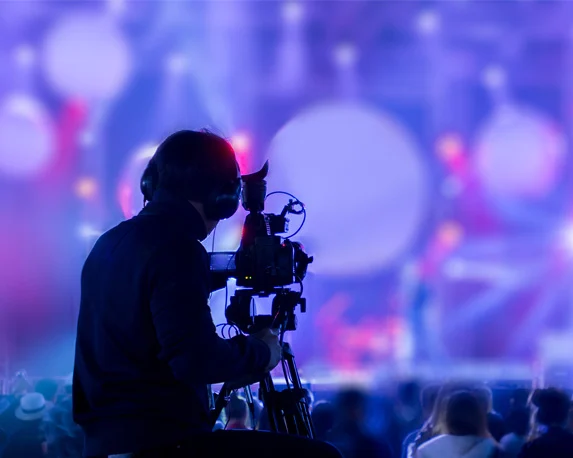
The “Live Production” video team helps to produce the Sunday service. 75% of megachurches use IMAGE (image magnification) technology to help the crowd get a better look at the speakers and worship leaders. This involves a multi-cam setup that generally employs professional cameras, broadcast zoom lenses, and support such as jibs, gimbals, and beefy tripods.
Volunteers trained by the staff on the live production team frequently operate the cameras. This also offers an excellent opportunity for students and older teens to get some hands-on experience with gear. Even though I didn’t attend a megachurch, I remember as a teen learning to work a soundboard, lavs, recording gear (cassette tape! It was the 90s!), and projectors, and I’m still using those skills today (well, maybe not the cassette tape skills).
These live production teams need to have a firm grasp on camera operation, running professional cabling through long runs, taking live direction over headsets, or even wireless focus pulling.
Over 90% of these churches also use streaming for their services. I was surprised to learn that 45% of Americans have viewed a church service online, even though many don’t attend church in person.
This actually produces a large amount of data that needs to be managed and referenced for special events, compilation videos, or social highlights. Increasingly, ministries have needed more robust digital asset management tools to help them disseminate these assets to their teams.
Multi-site megachurches
Many megachurches have adopted the multi-site model. In this model, there is a main campus and satellite campuses. Generally speaking, each satellite campus has its own set of volunteers and worship music leaders. The sermon may be live-streamed from the central location. Other times, the satellite locations use local pastors to deliver the message. There are multiple ways of executing this strategy and many times, the satellite locations grow into their own autonomous congregations.
Church film crew
In addition to the live production crew, megachurches often have a “film crew.” Typically, a smaller team focuses on producing pre-recorded material intended for playback during the service. In many ways, this parallels the setup of professional sports broadcasts or even “Saturday Night Live.” In both kinds of shows, there is a live presentation, and they also cut away to pre-recorded segments.
The teams that create these pre-recorded segments function as small film crews rather than broadcast teams. So they might use equipment such as cinema cameras, cinema lenses, and audio techniques more commonly found on a movie shoot.
The film crews could be volunteers or even contracted on an occasional basis. The sermon series “bumpers” could also incorporate motion graphics and 3D effects. The goal of these teams is to use the beauty of cinematography and the emotional impact of storytelling to touch their audience. These teams use aesthetics and story as an extension of the Sunday message. They try to find ways to visualize the text of scripture or the stories of their community.
Challenges of video production in a megachurch
Most of the time, church leaders aren’t media professionals. This leads to challenging situations around review and approval processes. All video professionals know that it takes a long time to do high-quality work. We also know that people outside of production have difficulty understanding the necessary timelines to deliver solid work. Sometimes, those mismatched expectations can lead to burnout. In the article, Life after Church, several filmmakers describe those challenges.
Communication is key to helping leadership teams and creative teams work together in healthy ways. Creative briefs, budgets, and time estimates can help align expectations regarding production.
When you enter post-production, the review and approval process can be tricky on any project. This is where tools like MediaSilo can come in and streamline the process. It makes it much easier to work together as a team.MediaSilo also makes it simple for teams to find and repurpose archival footage. This helps to keep the video team’s efforts valuable into the future so that you aren’t digging through hard drives looking for clips.
Streamlining review and approval
Church film crews (often just a couple) also cover things like international mission trips, fundraising videos, testimonials and more. When working on the road, it is common to need to “get something up so they can see something.”
However, WiFi networks can be slow and unreliable in the field. MediaSilo’s uploader is one of its best features. It gives you the percentage uploaded, the upload speed, and the estimated time for the upload to complete. If the upload is interrupted, MediaSilo will let you know. Then, it will continue where it left off once a connection has been re-established.
When you approach the end of a project, you can enter into a phase where you repeatedly upload versions and tweak a video. We all know how disappointing it is to attempt a large upload to a cloud provider and have it fail after partially completing the upload. You can waste hours trying alternative services, re-uploading, or changing formats.
MediaSilo features panels for Adobe Premiere Pro and DaVinci Resolve so that you can go right from your timeline into the cloud, and reviewers will be notified. This eliminates the frustration of a multi-step export, upload, checking the upload, and then sending out a review email/message. This automation can distinguish between getting home in time for dinner or getting stuck late in the edit bay on a Saturday night.
Churches and feature-length films
As filmmaking has become more accessible, churches have embarked on feature-length documentaries and even narrative films. The Kendrick brothers (Fireproof, Courageous, War Room) started their film career out of Sherwood Baptist Church. That experience helped them grow as filmmakers, and they eventually started their own production company, Kendrick Brothers.
The church has a complicated and evolving relationship with Hollywood. The award-winning documentary Reel Redemption, directed by film critic Tyler Smith, goes into the history of how the church has engaged Hollywood. Smith covers it all from the Hayes-code to the international hit, Passion of the Christ, to schmaltzy faith-based films, to the latest entrants that have sought to improve on the craft of filmmaking. It’s an insight deep-dive into this little known chapter of Hollywood history.
This system has provided a network where young people can start as volunteers on a live production team on Sundays and move up to bigger projects with larger audiences while growing their careers as filmmakers.
Conclusion
According to NPR, there are over 1,800 megachurches in America. Many of these are amongst the fastest-growing churches in America. However, the pandemic did have a substantial impact on in-person church attendance. But with over 60% of the US population attending church at least once a month, we will continue to see the importance of video production grow in the faith-based space.
In the same way, as we are seeing the cross-pollination of disciplines between television broadcast tools and film production techniques, we’ll see collaboration between live production and film crews in churches.
EditShare tools like MediaSilo and EFS can help facilitate that collaboration with solutions for on-site storage, remote collaboration, and review and approval.
It will be exciting to see this space continue to grow. And it will also be good to see it develop in its capacity to nurture artists while still faithfully sharing its message.
Broadcasters have been hard at work tackling the challenges of what the newsroom of tomorrow will look like. As broadcasters face the challenge of competition from social media, it’s become critical to look for new ways to collaborate remotely. There’s a tension between tried-and-tested workflows and the need for greater efficiency that comes through new technologies.
What are some of the key challenges facing broadcasters in this new era?
Cross-collaboration between industries
Dave Hoffman, business development manager for the Americas at Blackmagic Design, noted, “Broadcasters are starting to implement tools and techniques from cinema workflows like different effects and lenses, while production companies are implementing gear from the live streaming side, like switchers and routers, for multi-camera scripted shoots and virtual production.” Practically speaking, this means that film teams are broadcasting, and broadcasters are moving into cinematography. These changes bring new tools, skills and workflows to both sides of the equation.
Professional sports leagues are using more large sensor cameras to produce more cinematic images. Gimbals are showing up on the sidelines. Some shooters are experimenting with photo lenses and face-detection autofocus on cinema cameras. Mobile bonding wireless technology makes it possible to record in the cloud as well as in the camera itself.
Cinematographers who are used to working on images with a colorist in post now need to apply those grades on set as it is streamed to clients and producers around the world. Broadcast camera operators are embracing new kinds of optics, focus systems, and lighting demands. Learning new skills is always fun, but it can also be challenging when you are an expert in one discipline and a novice in another.
The great thing about this cross-collaboration is an openness to new tools and techniques on both sides of production and post. Production teams are streaming right from their cameras and post teams are incorporating new tools to accommodate new workflows.
Those new workflows produce a vast array of assets. Some platforms need widescreen deliverables, and some need vertical. Sometimes, you need to have captions delivered in a separate file, and sometimes, they need to be overlaid onto the video itself. And each of these variations needs to be reviewed and approved by multiple parties before they ship.
Asset management for multi-platform broadcasters
Broadcasters are no longer targeting a single medium. The increase in delivery platforms and the worldwide syndication of media means that the average video has to be delivered in multiple versions. Not only are numerous formats required, but each piece of media might have to be tailored to a geographical area, a demographic and a platform.
For example, All Elite Wrestling needs different specs for every show in every location and region. Pay-per-view, international partners, and in-arena LED assets are all different. With at least a dozen assets per talent and close to 200 wrestlers in their roster, it’s a lot.
All these assets need to be created, ingested, grouped, reviewed, revised, and approved. That’s where cloud-based tools like MediaSilo can really streamline workflows. Editors working in a shared environment now have the tools they need to work the way they want to and provide secure, reliable review/approval and presentation links.
A good example of this NLE agnostic approach in MediaSilo is integrations. If you use Adobe Premiere or DaVinci Resolve, you can install a panel right in your NLE. You can sync feedback on both platforms with MediaSilo so that your producers, directors and editors are always in the loop. If one collaborator is using Dropbox and another is Google Drive, MediaSilo can integrate with both (and others) so that you can avoid the hassle of uploading, downloading and transferring between multiple systems.
When you have hundreds or thousands of files, it’s important for your team to know how to find the right ones at the right time. Metadata tagging is a great way to keep track of assets and simplify searching. In addition to plaintext tags, you can now create categories like location, director, and client. Set your categories and tags and quickly find files with the advanced search and filters on every page.
Simplifying collaboration between broadcast production pros
Collaboration tools ought to respect the preferences of the creative teams while facilitating work with freelancers using other tools. For instance, some editors use Adobe, and many editors are adopting DaVinci Resolve for more than just the color grade. MediaSilo has panels for both of them. This “NLE agnostic” approach defines the workflow of MediaSilo. Users can choose to work on the operating system or NLE of their choice while working with others on a different system. Each team member has different needs, so it is important that collaboration tools support the whole team.
However, the challenge to unifying different tools is in tracking, versioning and securing your data. And there are really two sides to that coin. There are assets to track during production and post-production, and there is the versioning and secure presentation of assets during the review and approval process. MediaSilo takes care of both. You can see when someone has viewed a video, where they were viewing it from, and how much they watched.
Security is another major component. In the broadcast world, it’s essential to prevent leaks. Broadcasters want to be the first to break a story. SafeStream is MediaSilo’s powerful security technology. It applies visible and forensic watermarking. This means leaks can be tracked to their source, and potential leakers will think twice before sharing their work before it is ready for release.
Conclusion
With cross-pollination and collaboration between industries becoming so prevalent, new opportunities are abounding. The organizations that can marshall their forces to embrace change instead of resisting it will win in this ever-changing landscape. But the key factor in managing that change will be keeping people in the loop and on the same team. Collaboration tools like MediaSilo go a long way to bridging the gaps between remote teams scattered throughout countries and time zones. They help to deliver the flexibility that creatives need and the consistency that business demands.
MediaSilo allows for easy management of your media files, seamless collaboration for critical feedback, and out-of-the-box synchronization with your timeline for efficient changes. See how MediaSilo is powering modern post-production workflows with a 14-day free trial.
Reuben Evans is a director, an award-winning screenwriter, and a member of the Producers Guild of America. As the former executive producer at Faithlife TV, he produced and directed numerous documentaries and commercials. Reuben’s tools of choice are RED Cameras, Final Cut Pro, and DaVinci Resolve.
For every All Elite Wrestling (AEW) event, nearly a million enthusiastic fans from 6 different continents tune in and wait for their favorite wrestler to appear. The AEW graphics team creates 100s of assets each week that need to be distributed within the arena and to their partners worldwide before the show starts. There is zero time for errors, especially from their software. This is the high-stakes world of All Elite Wrestling, and they rely on MediaSilo to keep their workflow running smoothly and their extremely passionate fans satisfied.
Since 2019, AEW has built a loyal fanbase of over 41 million viewers worldwide by providing the most spectacular wrestling matches and entertainment anywhere. Their fans don’t just expect to stay informed on the latest news – they demand it.
With partners and fans relying on them for information, efficiency is critical, and software malfunction is not an option. Dealing with system-wide shutdowns caused by file sharing across borders could lead to delays and undeliverable assets. With incredibly tight deadlines, stalled delivery times would be unacceptable and quickly lead to frustration amongst the team and partners. With their fans’ near-insatiable appetite for content, the risk of losing engagement isn’t an option. They need a platform that can handle their international workload.
Adding another layer of complexity is the sheer number of assets the AEW team needs. Creating digital and social assets for multiple shows in multiple countries every week means keeping track of hundreds of unique file types and sizes, as well as the latest revisions. Collision assets are a different size than Dynamite assets; some international partners require unique dimensions and in-arena LED assets to consider as well. And the lack of detailed tagging made the process confusing and time-consuming. AEW sends hundreds of assets a week to twenty different partners, and they had no way of knowing if the files they sent were ever opened or viewed, leading to duplicated efforts of resending graphics that had gone overlooked or links lost in emails.
After researching multiple video collaboration platforms, a colleague showed them her MediaSilo workspace. They liked how straightforward our platform appeared and reached out for a free 14-day trial. From the price point, functionality, download capabilities and, most importantly, our reliability and customer support, they were sold.
“Since we switched to MediaSilo, we haven’t had a single issue of any person saying that this link is not working or I can’t download this file.”
We collaborated to simplify their workflow and gave them a single solution to manage and distribute their finished assets – one that always offers global coverage and consistency to everyone. Manually keeping track of delivered assets and links was also a thing of the past. Folders are created where the graphics team drops assets tagged by talent. Each file is tagged so that it’s easy for anyone to recognize the wrestler, where the match takes place and where it needs to be delivered. Unique links are sent to partners where MediaSilo’s Insights feature provides searchable analytics that track when, where and for how long any asset is viewed. Meaning AEW knows when it’s been opened and downloaded, reducing duplicative efforts.
Most importantly, they never have to worry about broken links or getting locked out of their system. “Since we switched to MediaSilo, we haven’t had a single issue of any person saying that this link is not working or I can’t download this file,” says one AEW employee. “We’ve even used MediaSilo on the fly to get assets from our production facility to the truck outside and into the arena, saving valuable time on event days.”
AEW has worked hard to test the limits of MediaSilo but has found nothing but success with this partnership. “We use this tool every week,” one AEW employee says, “and it’s been very reliable.”
They needed a powerful media management and distribution tool to stand up to their fast-paced international workflow. MediaSilo helps reduce excessive time and stress, allowing them to focus on what really matters – delivering quality content that keeps their fans engaged.
MediaSiloallows for easy management of your media files, seamless collaboration for critical feedback, and out-of-the-box synchronization with your timeline for efficient changes. See how MediaSilo is powering modern post-production workflows with a 14-day free trial.
My first few weeks as CEO, EditShare’s vision, and the evolving role of AI
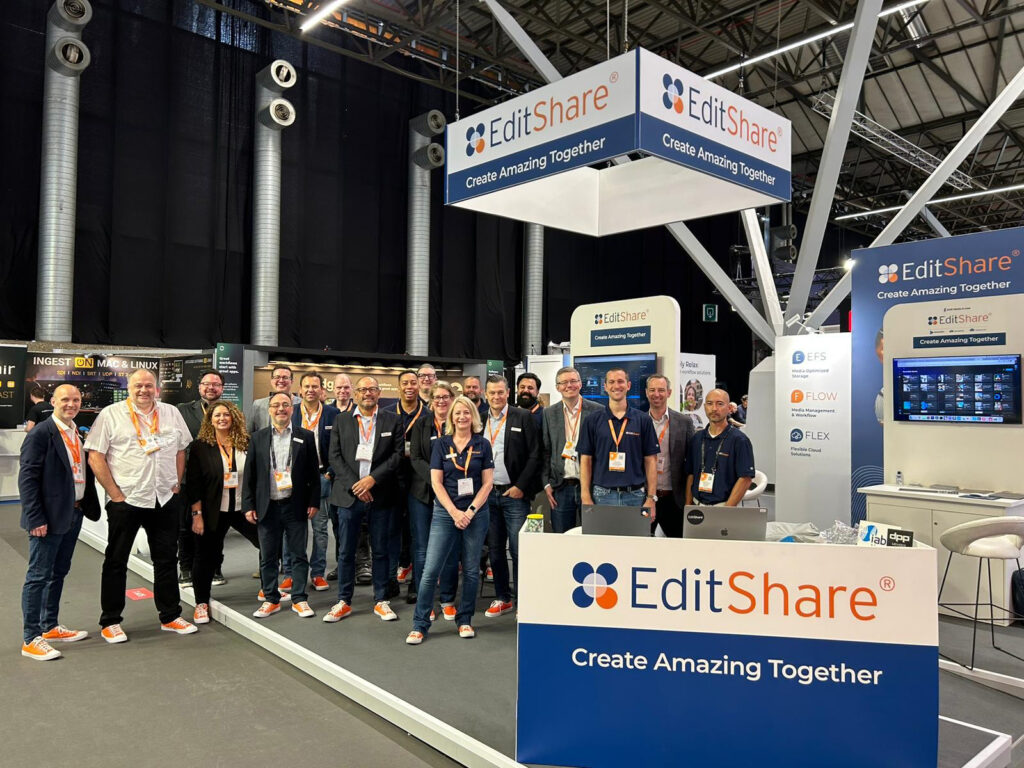
Towards the end of the show, a few folks asked me to sum up how it felt to see our team in action so soon after joining the company. The word I chose was “inspired.” I’ve come to appreciate the rich legacy of empowering storytellers that EditShare upholds, and seeing first-hand our team, products, and plan-of-attack coming together at such an important event, it’s hard not to feel wildly optimistic about what the future holds.
Where AI Is Headed
IBC 2023 also brought with it more and more conversation around the most compelling trend in our space today: the emergence of AI. In particular, we noticed an explosion of smaller AI-enabled companies aiming to streamline critical workflows within the content creation processes, from video editing to transcription and beyond. However, there’s a common challenge – harmonizing those workflows within one intuitive interface. I’m proud to say this is an area where EditShare is positioned to shine with the introduction of our new solution, EditShare One, which we unveiled at IBC 2023.
EditShare One, Transcription View
It’s been fun to hear the early feedback from customers and partners who have had a chance to see what EditShare One can do. We heard from more than a few people how useful the AI-integrated Transcription View will be to their producers – and the seamless integration we’ve built through FLOW into Premier Pro and Resolve also stood out at the show.
At EditShare, we’ve already made waves in post-production with innovations like Universal Projects, which lets teams work with whichever editing software they prefer. We’re pushing that idea of openness even further with EditShare One. My commitment to our customers is to keep building products that meet them where they are, and helping them balance the tension that comes with creating exceptional content within tight, demanding timelines. EditShare One is a natural next step in delivering on that promise, and we can’t wait to get it into the hands of more of our customers.
A Powerful Combination
As I look at our combined portfolio of products, I’m especially thrilled about the integration of the MediaSilo product into the EditShare ecosystem. We built MediaSilo to bridge the gap between creatives and non-creatives. It provides a platform where content can be effortlessly shared, organized, reviewed, and approved, unsticking collaboration between teams, with the security features such as watermarking and DRM to provide confidence that when media is shared, it is only being shared to the right eyes and ears.
This merger not only bolsters our commitment to providing comprehensive solutions but also opens up new horizons for creative professionals and organizations seeking to streamline their media workflows. It’s an exciting chapter in EditShare’s journey, and one I’m so excited to help shape in my first few months as CEO.
Thanks to everyone who stopped by to see us at IBC, and looking forward to meeting many more of you before we close out 2023.
Ramu Potarazu
With nearly three decades in video games marketing to his name, Stephen Hey is one of the most experienced freelancers in the business. His career includes Marketing Director for EA studio Chillingo, leading lifestyle PR for Ocean Software and Infogrames, founding a games creative agency, and now freelancing for the likes of Wargaming, Bossa Studios and Merge Games. Stephen started his own consultancy HeyStephenHey in 2017. Stephen helps developers, publishers, educational and government bodies, and other companies working in the games industry with their marketing strategy.
We gave Stephen some questions we’ve heard from our customers, and he provided his take on game trailers. He also set off to get the opinion of industry experts to find out exactly how far the role of game video assets have evolved, who’s involved, how to do it right, and what comes next.
HOW IMPORTANT IS A TRAILER THESE DAYS?
After nearly thirty years of video games, I can tell you the fact that the quality of the trailer can ‘make or break a game’ is still valid. We only really started making trailers in the mid-nineties for trade shows or sizzle reels, but now they are critical to any game campaign. Trailers changed and redefined games marketing.
What I think about these days is where we are now with trailer creation, especially given today’s insanely powerful graphics cards and game engines. With the ability for more developers to create at that ‘top-of-the-pyramid level’, there are still ways to generate a marketing breakout with the release of a couple of minutes of well-edited gameplay.
WHAT’S AN EXAMPLE OF A TRAILER WITH HIGH IMPACT?
When first-person footage of the PS5 Ride 4 breakneck speed, motion sickness-inducing motorcycle race went viral at the end of September 2021, it wasn’t because it was remarkably different from other actual action-cam footage. The difference was that it wasn’t real; it was from a game.
The gameplay from ‘Ride 4’, shot from a motorcycle riders’ point of view, was incredibly realistic and enthralling. As the viewer bolted around a rain varnished circuit lit by a gloomily overcast sky, you could feel every lean, the terror of near-misses and feel the wind rushing past. This was ‘next gen’ gaming doing what it was meant to do – deliver the photorealistic gaming that gamers have dreamt of for decades. This game was already delivering the astonished “Looks like GoPro footage” Tweets in the thousands.
HOW CAN A GAMES COMPANY USE A TRAILER TO REACH BEYOND ITS FAN BASE?
Releasing long-form gameplay like what happened with Ride 4 could be something to think about if you have an addressable market outside of the conventional games segments, in this case, motorsports fans. By releasing a trailer that focused on the accuracy of the simulation, developers may engage with that secondary audience of real-world fans and convince them to give the thing they love so much, IRL, a chance in the virtual world.
HOW NECESSARY IS IT TO PUSH THE VISUAL LIMITS OF PHOTOREALISM IN A TRAILER AND BROADER MARKETING CAMPAIGN?
Today’s tech can deliver photorealism, ‘like being in a movie’ — but is that what everyone wants? I’ve talked to many colleagues in the industry about this, including the founder of Atomhawk and co-founder of the new agency Big Thursday, Ron Ashtiani. Ron told me, “The world has shifted away from realism now. Ten years ago, it was enough to have ‘realistic’ looking graphics to wow the player, but today you need more. When the PlayStation 3 and 4 and the Xbox 360 came along, there was a substantial jump in ‘realistic’ looking graphics. However, these worlds were usually created using brown and grey colour palettes. But today, there is a shift towards realism combined with wild colour or stylistic choices. Cyberpunk 2077 is a great example of this with its highly contrasting colours and lighting in a realistically rendered world.”
While an array of technical issues hampered Cyberpunk 2077’s launch, the vivid yellow and neon blues of its marketing campaign, key art (the ‘pack front’ images used on digital stores) and out of home advertising did an outstanding job of conveying its look across all media. Using your aesthetic consistently across all your assets and metadata is especially important. When it looks as strong as this, it can aid discoverability on stores that are as densely populated as the PlayStation Store or Steam.
WHAT CAN MAKE A TRAILER BREAK THROUGH THE NOISE?
It takes a lot to surprise the games industry and its fans, but at 2021’s Gamescom (Europe’s largest games show, held annually in Cologne, Germany), an open-world adventure called DokeV from developer Pearl Abyss was on everyone’s lips. The game takes the established Pokemon genre but radically appears to shake it all up with a look and feel that feels genuinely unique, all communicated by an eye-popping three-minute trailer. Ed Thorn from games site RockPaperShotgun said, “Unlike everything else, which made some sort of sense, this game took a bold choice and made none. It made no sense at all. All we got was a barrage on the senses, and I respect that rogue attitude. Instead of opting for a PowerPoint presentation like its peers, it just blared K-pop at everyone for three minutes and then moseyed off like it was nothing.”
The intoxicating trailer for DokeV felt familiar yet stunningly different; the city looked like other cities in games, the characters weren’t radically different, the actual gameplay wasn’t anything especially new. But it was just like taking a visual cold shower and immediately went viral, with many journalists calling it the game of the show even though no one got to play it. It showed the power of a unique aesthetic and how a successful style and theme can become a crucial asset for a game, a valuable part of the IP.
THAT’S GREAT FOR HIGH-PROFILE STUDIOS, BUT WHAT ABOUT MORE MODEST-SIZED BUSINESSES?
More often than not, when a game surprises, intrigues, or delights me with a new look, it comes from an Indie studio rather than one of the vast developers or publishers. With up to 300 games a week now being published on PC games platform Steam, games need to work hard to have a point of difference, and style and theme is often key to this. AAA teams may be hundreds of people, many specialising in ‘micro’ niches like vehicle physics. Indie teams are made from much smaller groups of people who are used to being more flexible and turning things around to short deadlines.
I asked Bossa Studios’ Studio Art Director, Ben Jane, for his take on this; “You can take more risks in the Indie world because the production times can be shorter. You pay a premium with AAA because of the attention to detail and the quality of execution, and this takes so much more time, it’s harder to take risks. As an Indie, you can be more forgiving and reactive because your budgets are hundreds of thousands of dollars instead of millions.
However, AAA studios are pushing the boundaries, ‘Ratchett & Clank: A Rift Apart’ on PlayStation 5 is just jaw-dropping gorgeous and delivers a unique style,” said Ben.
IF THE GAME’S AESTHETICS ARE BECOMING AS SOPHISTICATED AND COMPELLING AS BIG-BUDGET FILMS, WHAT’S THE PURPOSE OF A TRAILER?
For marketing, trailers are still essential. A great new ‘breakthrough’ trailer sits at the top of the marketing funnel in creating awareness for your game.
I asked Sam Roberts, creative producer at game trailer house DoubleJump, for his opinion; “The cinematic game trailer is not dead; it is still absolutely the best way to sell a game. Two minutes of punchy editing, with clear, precise use of music and sound effects, will not be going away anytime soon,” he said.
But while a powerful ‘impact’ trailer is one of the most vital assets for a campaign, it is not the only video asset. Modern game campaigns will be made up of tens or even hundreds of pieces of video. Look at the official video channel for the incredible Forza Horizon 5, which lists about 30 video assets just on YouTube alone, ranging from deep dives into the recording of SFX to episodes of a Forza 5 Horizon magazine show.
And this isn’t just the big AAA titles; a roster of assets can be powerful for any game. Curating a community and building a tidal wave of support, even for the most ‘indie’ of titles, is vital in a market where 200+ games launch on Steam every week. So for campaigns to succeed, they need to have multiple videos, each with different objectives. An impact trailer will be about getting eyeballs, but then the engaged parts of that broad audience will want to know more about how a game plays. Interviews with developers and ‘making of’ mini-documentaries will bring your community closer to the developers and breed loyalty to the game. Unique gameplay mechanics can be demonstrated in shorter, focused ‘mechanics’ trailers, and you may want to spotlight the ‘craft’ behind your game with profiles of some of the team who created it. Again, these needn’t be the preserve of AAA — take this example for Creature in the Well.
HOW WILL EMERGING TECHNOLOGIES CHANGE THE WAY GAME TRAILERS ARE CREATED?
The new generation of consoles is now with us in the form of PlayStation 5 and Xbox Series X/S, and they are powerful machines. Their graphics capabilities are unique, including the much-heralded ray tracing, by which scenes are rendered by simulating the actual rays of light in a game. This technique makes for much more realistic looking games and has been used in the tv and movie production industry for years, and the new consoles can render scenes using ray tracing on the fly.
Lighting Directors have long been a part of tv and film making specialised in creating light and mood for each scene. Now we have similar capabilities in games, and we will see similar roles evolve here. It would not surprise me that game trailer creators move from being ‘editors’ to fully-fledged cinematographers. In this video promo for Call of Duty: Vanguard, actual war photographers were sent ‘into the game’ to capture stills, and the results were stunning. Send a movie director in instead, and you are going to get some earth-shattering footage.
To go with the new hardware, there are new tools.
Unreal 5 is the latest version of Epic’s mighty game engine and comes fully loaded with graphics capabilities that promise to take things to another level. We’ll start seeing Unreal 5 crafted games soon with ‘Redfall’, ‘Senua’s Saga: Hellblade 2’ and ‘STALKER 2: Heart of Chernobyl’ as well as many more on the way.
Epic has made Unreal 5 with cross-industry appeal, and Unreal has already been used in close to 200 movies and tv shows to date including ‘The Mandalorian’ and ‘Westworld’. I think this will breed more cross-fertilisation of both game and movie industries, with each learning from the other. We’ll see this reflected in games and the video assets we use to promote them and maybe a blurring of the lines resulting in productions that create both games and TV shows from AAA IP. If you invest in building a virtual world in an engine that can be used for games and tv, why not make both?
WHAT CAN STUDIOS AND PUBLISHERS DO TO MAXIMIZE THE IMPACT OF THEIR VIDEO ASSETS IN A GAME TRAILER?
Marketing starts at day one, it should be embedded in the game’s design, and this applies as much to a one-person Indie studio production as a 200 person AAA franchise. This should include the development of a style guide, including a colour palette branding, even the beginnings of the key art and UI design elements. The games that do this well are recognisable just from a screenshot, for example, ‘Cyberpunk 2077’, ‘Untitled Goose Game’ and ‘Hades’. The graphic language must be consistent across all assets, and this can only succeed where there is full collaboration between development and marketing.
If videographers are an entwined part of this, you give your game the best chance to have maximum impact. So work closely with them and bring them in earlier than you might think necessary to start thinking about how they could create that first ‘impact’ trailer or teaser piece.
Developers can go further still and add modes in games that allow professional game videographers to go into games like a cameraman would go into a warzone, as in the COD film mentioned earlier. Dedicated game video houses like DoubleJump and Big Thursday can explore a game from the raw build. They know how Unreal and Unity works and, if given the option, can go into the game to choose camera positions, light scenes, create tracking shots and capture incredible footage that is still ‘in engine’. This footage can then be used for video and static assets and allow the very best rendering of the game to be captured without taking valuable time from the developer team.
Finally, think about how the trailers will be consumed. When briefing in trailers and consumer videos or choosing footage, think of the devices
people will be watching them on. Very few people will be watching on the top-level equipment that edit houses and studios have. Often, these videos are being consumed on a phone screen (usually while the viewer is also doing other things on other screens). So don’t assume that the stunning visual detail and ear chewing audio will be experienced by everyone. Aim for the best scenario, of course, but imagine the worst!
ANY LAST WORDS OF ADVICE FROM YOUR 30 YEARS OF MARKETING GAMES?
Sure! Marketers and producers of game trailers should experiment, have fun, play with the tropes and challenge the preconceptions. Take inspiration from movie trailers, watch as many game trailers as you can and take note of the ones with lots of views even though the game may be relatively small or indie. Think about trailers and other assets from day one – even when concepting games because moving images sell games today more than ever and the trailer, those narrow slices of games, need to cut through more than ever before.
Remote collaboration during game development and publishing is chaotic. MediaSilo by EditShare was designed to help production professionals collaborate on video assets, and get work reviewed and approved faster. Get in touch with us today for a demo.