Scalable hardware platforms qualified to host and distribute FLOW roles and services
When you want to scale your video production capabilities, people first think about buying another camera. But for many teams, the bottleneck isn’t in production; it exists in post-production. However, storage for video assets falls into a strange in-between category for many organizations. It feels like an extension of video production, but camera experts usually aren’t IT experts. Seasoned IT pros are often slow to discover that the needs for video editing are fundamentally different from your typical workgroup.
The experts in the storage needs for video teams often arise from technically-minded video editors and post-production experts. This is because they had to figure out the challenges for themselves and explain the difficulties of post-production to their bosses and the IT staff. That’s my story, at least. Over the past few months, I’ve observed several cases where teams are willing to invest in expensive cameras and lenses but shy away from investing in the necessary post-production infrastructure to truly break the log jams in their workflow.
I found that an efficient post-production shared solution is the best foundation you can give to your team. It lets you keep all your most relevant footage at your fingertips. It provides the ability for quick collaboration between editors and motion graphics designers, and it enables you to scale. So, if you want to lay a foundation for real growth, let’s dig into how digital media production can quickly scale.
Free yourself from the sneakernet
If you’ve ever found yourself grabbing a hard drive off a shelf and passing it in between team members, only to run back over to the shelf to find the right drive, you’ve used the “sneakernet” to manage your projects. This process is fraught with difficulties, and you always have the sinking feeling, “I think I still have that footage.”
A shared storage solution keeps your most relevant assets “online” instead of “offline.” It connects to multiple workstations at the same time as well. This means that as you scale your production capability, editors and motion graphics artists have immediate access to all their work instead of having to hunt down a drive. Additionally, editors can access the same footage simultaneously since the shared storage is accessible to everyone. Finally, you don’t have to worry about wasting space by duplicating the same footage on multiple computers. Freeing yourself from the sneakernet is reason enough to deploy scalable storage like EditShare EFS.
Choose specialized storage
When it becomes evident that a video team needs a server for their footage, inevitably, somebody from IT pulls up a webpage from Dell or HP and starts to calculate the costs. This is the decision moment. If we were in a movie, this moment is the equivalent of the villain’s entrance. I’m serious. If this moment isn’t handled well, a video team can get saddled with an underperforming server solution that is worse than Sneakernet.
Consider the difference between an interstate and a main street downtown. Shared storage for media allows for sustained, smooth playback of raw video files, like an interstate. Normal servers are designed more like the traffic signals of a downtown, allowing for lots of little pieces of data to come and go. But if you have ever been stuck in traffic, looked over to a carpool lane, and seen cars zooming by, you have a good indication of the difference between a normal server and a shared storage solution. Video production storage allows for multiple video files to be played from the server to multiple workstations without interruption, and you can think of these files as big semi-trucks. These trucks need protected lanes to be able to go fast and move without hitting the breaks
If you can help your IT team understand this fundamental distinction in “traffic,” you can turn them into your biggest supporters. Why? Practically speaking, if they master this new area of IT for media, they will become more valuable to their organization, and their career will take on a level of specialization.
So why not optimize a generic server for “interstate highway mode?” Editors not only need the bandwidth for sustained “reads” of data, but they also need to write to project files on the server. Those project files require fast write speeds. If video files are like semi-trucks, project files are like mini coopers. This means that the shared storage solution has to be optimized for two ends of the spectrum, sustained reads and fast writes, while handling the different kinds of traffic going to and from the server. Video files aren’t PDFs.
I believe that if a video team can communicate this metaphor well, it can vault them into new levels of productivity. Video teams and IT teams can then collaborate effectively and understand each other’s needs much better.
Online, Nearline, and Cold Storage
When we talked about sneakernet, we learned about the difference between offline and online data. But what about footage that you need to access occasionally? We call this storage “nearline.” It doesn’t need to be on your high-performance storage, but it doesn’t belong on the shelf.
Active storage
You can save money when building your shared storage solution by identifying a specific capacity for your “online” or “active” storage. You might want this storage to be on SSDs or NVMe drives. These solid-state drives are lightning quick and work exceptionally well with high-resolution 4K, 8K, and VFX files. While this storage is quick, it is also the most expensive. (Some of that cost is offset by the fact that these drives use less power) Remote users can access an EditShare EFS volume with Swift Link, delivering remote performance that used to be available only in-house.
Nearline storage
If your most accessed files live in your online storage, place your infrequently accessed files on your nearline storage. This unit typically uses mechanical spinning disk hard drives. They work together in a configuration to ensure that you won’t lose your data if one, or even two, of them fail. This configuration is called a RAID configuration. A nearline storage unit with a group of hard drives won’t be as fast as your active storage, but it will be cost-effective. And if you have an intense project, you can always move data between your nearline and active storage.
Cold Storage
At a certain point, you can determine that you probably won’t be going back to the original footage for a project. But you don’t want to delete it all. This means your project is ready to move from nearline storage to cold storage. Some organizations may upload footage to the cloud or archive it on LTO tape.
I recently had to pull footage from Google Drive. My former team used Google Drive as cold storage. Man, was this a mistake! When you download large amounts of data from Google Drive it rearranges the folder hierarchy and appends suffixes to the file names. What a headache! I spent hours reconstructing the file structure of the REDCODE RAW files. I had to delete the suffixes that Google Drive appended on hundreds of files.
A much better approach to cold storage would have been to use LTO tape with a solution like Editshare ARK. This approach does take your files offline, but it also keeps track of those LTO tapes so you can know what is online, what is offline, and where to find what you need.
Specialized hardware calls for specialized software
Having a place to put your data doesn’t necessarily mean people can easily find what they need. Many teams use their senior editor’s brain as an “index” for project files. A much better solution is to have software do that for you. A media asset manager is an application that organizes your footage and lets anyone find what they need without Slacking the senior editor again. Editshare FLOW works with your shared storage to keep track of all your assets. Those could be online or offline. It will track data in your active, nearline, and cold storage. EditShare FLOW becomes the brain for your entire post-production operation.
Editors want to spend time in their NLE, not in the media asset manager. Editors want to edit. That’s why integration with editing apps (Known as NLEs, non-linear editing applications) is critical. EditShare provides panels in both Adobe Premiere Pro and Blackmagic DaVinci Resolve. These panels allow you to spend more time in your NLE so that you aren’t leaving your native environment. If you use a different NLE, EditShare is still perfectly compatible with any NLE (but Premiere and Resolve getting in-app panels sure is nice).
Integrate your workflow from pitch to prep to post
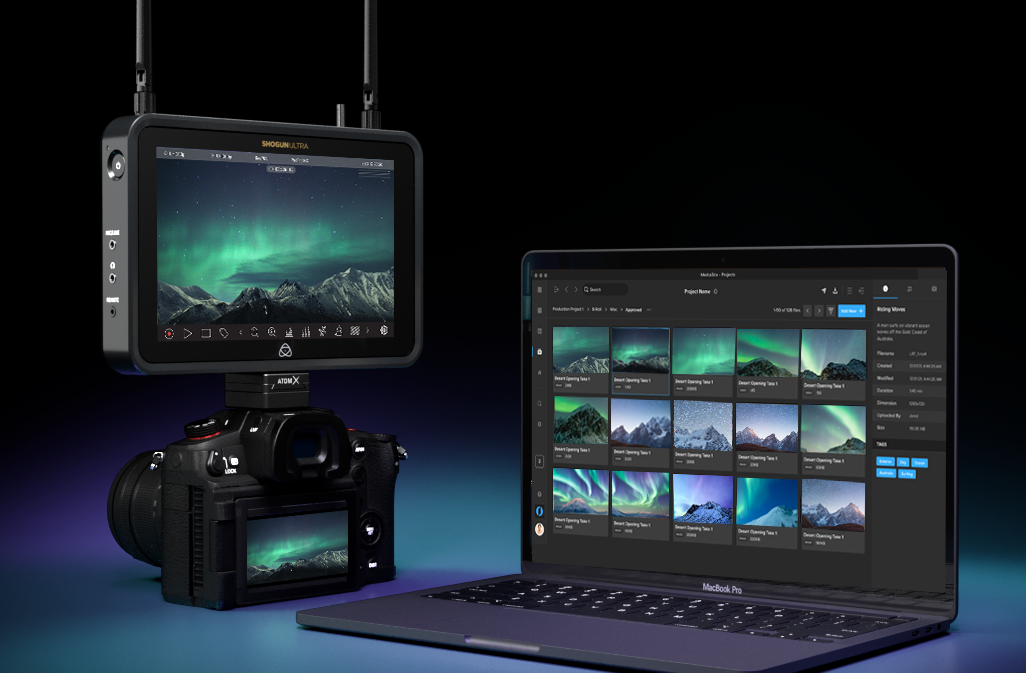
Post-production can feel like its own little world. It doesn’t have to be that. EditShare EFS now integrates with MediaSilo. An integration resulting in an end-to-end workflow. When you are shooting, Atomos recorders will deliver your footage right to the cloud via MediaSilo when you are shooting. Then your project can go through post on EFS and then get securely delivered to outside stakeholders via MediaSilo. This is an unprecedented level of integration and security from script to screen.
Conclusion
Deploying an EditShare EFS shared storage solution will revolutionize your post-production workflow, solve problems for your team, and deliver the foundation for scale. Reach out to an EditShare rep today to learn more.
Alex Leafer, Director of Production for the New York Islanders, joins us to discuss how EditShare storage and FLOW asset management support their content production, pre-game presentations and social media presence. From capturing those exhilarating moments on the field to delivering compelling highlights, our hosts will guide you through innovative strategies and best practices tailored to streamline your sports video production process. This webinar will be a game-changer in maximizing efficiency and enhancing the quality of your sports content.
The variety of editing that goes on at a broadcaster would amaze you. There are promos, documentaries, news stories, specials and more. Some projects take weeks, and some projects take hours. The technical infrastructure is imposing, but it’s also mobile. Add to that a changing landscape of viewers’ tastes, outside consultants and inside pressures.
To get an inside look at the world of broadcast video editing, we interviewed Gregg Ginnell, former senior editor and post-production supervisor at the CBS affiliate Kiro 7 in Seattle, WA. He’s had a career spanning more than two decades and was keen to share his insights.
Meet a broadcast editor
“I worked in broadcast for a large number of years. I did a lot of documentaries. I did a lot of promotion. I didn’t do a lot of news,” relates Grinnell. “I did do news for a couple of years after leaving Kiro when I worked for Al Jazeera America. That was a completely different news experience.” When an interview opens with that breath of experience, you know that you are going to get some interesting insights into the world of video editing for broadcast.
Video editing for film, corporate and broadcast is all storytelling. But Gregg pointed out that there’s a vast difference between a “three-and-a-half minute story” and a “six-shot” news segment. While working at Kiro, the work got split up between team members who were good with quickly putting together a series of shots and moving on and those who spent days crafting a story.
He related a story of a colleague comparing the cutting of short segments to “making sandwiches.” That kind of edit had to be put together quickly to meet deadlines. Gregg focused on pieces that involved interviews and promotional spots for the station.
Film vs broadcast editing
I asked Gregg what the biggest difference was in the mindset of an editor working on a film vs. one working in broadcasting. His reply was, “Consultants.”
I didn’t expect that answer. He explained that every 12-18 months, a consultant would be brought into the station to give their perspective on trends in broadcast and how to gain market share. Each time, there was a different person, but they were all from the same firm. Sometimes their guidance would directly contradict each other or go back and forth between recommending a trend, advising against it, and then recommending it again.
Gregg shared that the advice of one consultant was to focus on the local news talent for their promo spots. So they went out and shot footage and tied that in with graphics to create a personal connection between the talent and the audience. Eighteen months later, another consultant from the same firm came in. This person advised that they need to drop the focus on talent and emphasize the news itself. Gregg’s team went to work on the new direction and crafted a whole new set of promos.
A year or so went by, and, you guessed it, the next consultant from the firm said to highlight the talent. At this point, Gregg’s team showed them the promo package from the prior campaign and simply asked, “Like this?”
Running decisions through the lens of outside consultants also led to feedback around everything from how many shots should be in a story to the content of the promotional packages. This dynamic leads to a balancing act for broadcast editors between their instincts on telling a story and outside feedback based on market research.
For instance, a story might go off for review, and the feedback would come back as “We love this story, but your shot count is too low.” Gregg recalled thinking, “Well, actually, it has just the right number of shots.” But at the end of the day, you do your best work and try to balance those competing interests.
This is in contrast to the work that Gregg did for the broadcaster Al-Jazeera America. In his experience, they deferred to the editor to determine the dynamics of the edit, even if it meant a piece was a few seconds longer than initially planned.
Editing three-and-a-half-minute packages that took the editor’s lead feels more like a documentary filmmaker’s approach than working in a typical newsroom.
Grinnell made an interesting comparison between documentary and news editors, saying, “I love news editors. I can’t do their job. I’m a little too frenetic. But I know news editors who became documentary editors. I don’t know any documentary editors who became news editors.”
It appears that once you’ve had a chance to tell long form stories, you just keep coming back for more.
Promo Editing
Gregg spent much of his time crafting “promos.” These spots air during commercial breaks and promote the news programming of the local station.
A lot more effort goes into editing promos than your evening news stories. This demonstrates the broad spectrum of talent that needs to be brought to the table at your local broadcaster. Some editors need to be fast. Gregg mentioned an editor who cut 62 packages in eight hours!
On the flip side, Gregg would spend half a day dialing in the color grade for a single promo spot. The message, visuals, motion graphics and sound would all be coordinated to reinforce the brand message for that season.
That difference in editing jobs perfectly illustrates Gregg’s comparison of editing a documentary vs a last-minute promo. He went on to describe it, “If I’m working on a documentary, I’m working directly with the producer, and we’re working every day together, and we are creating it from whole cloth. And that is a completely different experience than how [if] somebody comes in and drops a script down and going, [and says] ‘we got to promote this thing and we got to do it in the next two hours.’ And those are all really different, almost different jobs.”
Learning to shoot helps you edit better
As an editor, you are always looking to grow your storytelling skills. Gregg related, “I’ve always told everybody that I didn’t become a good editor until I became a better shooter. Go out and have to shoot your own stuff, and [when] you get back into the bay, there’s no one else you can blame.”
Many shooters who started off as editors develop strong skills as interviewers. “Where you’re sitting there listening and you go,” Gregg recounted, “Oh, my story’s changing now! There’s nothing I love more than editing in my head.”
You can see from Gregg’s career how the disciplines of editing, shooting and interviewing all work together in the head of the filmmaker to produce a better story. It’s a good reminder that in this age of specialization, there’s still value in combining the skills of a generalist with an area of specialization.
Working remotely
Working remotely was a shock to many industries, but post-production had already laid in place much of the infrastructure to go remote. This preparation allowed editors to remote into their AVID workstations from home and crank out edits. Google docs, Slack and Zoom provided other means for collaboration. Broadcasters all over the world also began to use advanced tools like MediaSilo.com for review/approval, tracking versions and managing assets. These tools combined to really remake the landscape of post-production.
Gregg shared about a campaign he edited for an app that focused on the footwear market. The shooters were in NYC, the graphic designer was in Utah, motion graphics were in California, and he was editing from Seattle. With the proliferation of mobile video capture and distributed teams, we’re going to see more and more of this kind of collaboration.
But along with the ability to work from anywhere comes the importance of security. MediaSilo helps broadcasters secure their assets with SafeStream technology. SafeStream enables visible watermarks and invisible forensic watermarking so that you can track any leaks back to their source.
Conclusion
Getting to know this legendary Seattle broadcast editor, Gregg Grinnell, was an honor. He has a passion for editing that is still burning strong after decades in the business.
Grinnell’s experiences remind us that being an editor is an act of service. Sometimes, you serve a client, a consultant, or a director, but you always serve the story.
It’s inspiring to see how even though consultants come and go and technology changes, the need for crafting compelling stories only increases. It causes us to ask ourselves, “How will I adapt to a shifting landscape? What core skills can I continue to develop that will remain relevant no matter what the future holds?” Those questions will help editors remain sharp and stay in demand in this ever-changing landscape.
Building For The Future
Azimuth, a full service editing, post-production, finishing and delivery facility, has a new home, purpose built from the ground up, on Eagle Street in Holborn in the heart of Central London. With the changing demands of modern broadcast – particularly the need to deliver in 4K HDR and with Dolby Atmos Home Entertainment audio – Azimuth have designed and built a modern, flexible, and adaptable post house to fulfill these requirements incorporating the latest in post technology and workflow methodologies. Systems integration was carried out by technology experts, Altered Images.
Re-Imagining Azimuth
Operations Director, Yives Reed describes the challenge that led to the new, re-imagined Azimuth being built: “post pandemic, OR Media (parent production company) had lots of projects coming through with multiple specialist factual and documentary series. As they were getting closer to post production, it was obvious that the Azimuth as was, was not set up to accommodate either the volume or the 4K HDR deliverables required so the time was right for a reset.
High-End Television Post Workflows
At the heart of Azimuth’s technology vision was the need to fully support a range of high-end television post workflows. To achieve this, they knew they needed a robust server and media management system that could securely handle multiple streams of high-bandwidth data, including 4K and even 8K RAW files, and effortlessly distribute these with real time playback wherever and whenever required within the facility.
Head of Technical Operations, Steve Oak describes the new picture finishing set up at Azimuth. “The bulk of the work going through the facility is 4K HDR and Dolby Atmos for IMF delivery. If that high bandwidth work sets your benchmark, it helps to make some pioneering decisions with our hardware. Between two Resolve Grades and three Online, three Colour Assist stations and two QC rooms we are reading and writing huge amounts of data at the same time. Alongside native workflows in Resolve, we’ve got Baselight and Flame Open EXR and uncompressed workflows with its own demanding requirements. In Resolve we’re working with multi-layered sequences, including uncompressed RAW, all supported by the 40 Gb/s network input from each of the Editshare SSD arrays.”
Oak continues, “we are bricks and mortar within a Central London location and despite our cloud presence, the bulk of our services are hosted here. When you go back to the shell of a building, you have the chance to shape it in the way that you think it should be going forward. We wanted flexibility with what we put into place now and how it might be different in six or twelve months’ time which is not how most post houses work.”
The Need For Flexibility
“With Editshare, we have a petabyte of spinning disk and 200 terabytes of SSD between which we can move workspaces seamlessly while carrying on working. Importantly, Editshare is NLE agnostic allowing our customers to work the way they want to work with media plug-ins and workspaces for Media Composer, Resolve and Premiere Pro respectively.
“At Azimuth, we bring the native material into a Resolve conform to effectively create a re-link environment. We get a lot of XAVC at 300 and 450 Mb/s, RED, Canon XF, Sony X-OCN and ProRes RAW. In Final Post it means that we can have quite large workspaces and we can be pulling a huge amount of bandwidth per client.
Better Workflows
“An Editshare media asset management system sits on top for media encoding and cloud integration where you can work within an intuitive web GUI, all of which is tied into a server giving us better performance for our dollar than any other we reviewed. Investing in Editshare was a no-brainer.”
Reed concurs, “ Editshare gives us performance storage with a lot of useful tools to support a fully modern workflow and an agnostic approach to applications. It’s flexible and has a strong track record.”
Oak is consistently looking towards what’s next and was additionally impressed by Editshare’s M&E-centric approach, increasing use of automation and roadmap, “Editshare’s acquisition and integration of MediaSilo reflects the vendor’s approach. You can set up watch folders through your FLOW environment so you can export a cut and it will transcode and upload it to MediaSilo, and anyone within that group will get a notification that it’s been uploaded. It can scan our MediaSilo cloud storage through a Storage DNA MAM, that sits on top of our whole environment, and bring those assets back down again and deep archive on LTO on completion of a project. Editshare offers us better workflows with less human time and more automation.”
“Editshare gives us performance storage with a lot of useful tools to support a fully modern workflow and an agnostic approach to applications.”
As a video production professional, choosing the right video storage solution for your media assets is a crucial decision. While file and project sizes continue to grow exponentially, deadlines are continuously shrinking, so having a video storage system that can keep up with capacity demands while remaining fast, secure and cost-effective is essential.
In this article, we’ll examine the pros and cons of the two main options – cloud video storage and on-premise video storage – and look at the benefits of the hybrid solutions that combine both.
What is the difference between on-prem and cloud storage?
On-premise video storage is locally connected media storage such as individual hard drives and RAIDs, network-attached storage (NAS) or storage area networks (SANS) that are physically located at your facility and managed by your own IT staff.
The benefits of on-premise storage include the potential for air-gapped security, predictable costs and reliable performance. The downside to this kind of video storage is that the full expenditure is incurred upfront, your internal IT or creative teams must manage, backup and repair the system, and significant expansion requires additional costs and expertise.
Cloud video storage, however, is offsite, internet-connected media storage managed by an external third-party vendor. One of the main benefits of working with cloud storage for video production is that the cost is limited to a monthly subscription for the capacity used, negating the requirement for a lot of up-front cash.
That capacity can be rapidly expanded or constrained in tandem with current project requirements, leading to cost savings and overall efficiencies but also a more unpredictable monthly spend. Furthermore, the third-party vendor bears all management, servicing and infrastructure costs, which is often preferable for teams without this in-house expertise.
Hybrid video storage solutions aim to combine the best of both worlds into one integrated system. Fast, high-bandwidth local storage is used for active projects and workflows, while completed projects and non-urgent media are sent to the cloud for archiving. This combines the performance and simplicity of on-premise storage with the scalability and cost savings of the cloud.
What about remote access? For both on-premise and cloud video storage, remote access is possible, depending on the security and performance requirements of the video production team.
The Pros and Cons of On-Premise Video Storage
While there are many benefits to having all of your video storage on-premise, cloud storage is designed to overcome limitations and challenges. Let’s consider some of the pros and cons of on-premise video storage in more detail.
Pro – Full control over all hardware and software
One of the advantages of on-premise vs cloud storage is that you design and control the entire hardware and software architecture, selecting a system that best meets your specifications and overseeing maintenance and upgrades. You’re not at the mercy of an external vendor’s roadmap, business changes or downtime.
Pro – Predictable high-speed performance
Local hard drives and network-attached storage provide fast, reliable connectivity for high-bandwidth processes like multi-stream video editing. Unlike cloud storage for video editing, your read/write performance doesn’t suffer due to internet congestion, server loads or bandwidth limitations.
Pro – Enhanced security
Keeping your storage on-premise protects sensitive media files from being erroneously or maliciously accessed while on shared cloud infrastructure. Restricting physical access and air-gapping (disconnected from the internet) your media storage adds a further layer of protection.
Pro – No hidden costs
While on-premise storage comes with larger upfront costs than a cloud storage subscription, it also negates any hidden or unexpected expenses, such as egress fees, which occur when you move your data out of the cloud or surcharges enforced when you over-step your subscription limits.
Pro – Integration with legacy systems
Existing edit bays, asset management software and established video production workflows can often more easily connect to new on-premise storage without the need to re-construct the whole system, as everything is under your control and most often is largely plug-and-play.
Con – High upfront costs
Purchasing substantial video storage capacity as well as the switches, servers, and management software required to make it all function comes with a large capital expenditure. You’re also paying for all unused capacity from the start.
Con – Complex configuration and management
Even a medium-scale video storage solution requires some IT staff time for the initial design and integration, not to mention the ongoing administration and daily troubleshooting. This staff skill set also needs regular updating as technology and workflows evolve.
Con – Separate disaster recovery site required
A system for backing up and storing all of your media in a second physical location is needed to replicate and recover all of your data in the event of a disaster at your main premises. This necessitates purchasing yet more storage capacity and connectivity.
Con – Scaling requires overprovisioning
While you can work within the constraints of your initial storage capacity, adding further storage capacity requires purchasing it in large chunks and planning for the upgrade downtime. Running out of storage space will obviously impact the efficiency and productivity of your creative team!
Con – Dependence on locality
To get the best out of the system, users must be physically on-premise to access the media, while remote users often have comparatively limited connectivity and bandwidth. Even when remote access is established, staff are still required onsite to manage the physical devices.
Pros and Cons of Cloud Video Storage
While we are all used to working with cloud storage on a daily basis, from our Dropbox accounts to our iCloud photo backups, cloud storage that is capable of storing, managing and streaming or downloading large video files with the performance for real-time playback is a different beast altogether.
Here are some pros and cons to consider when using cloud video storage for modern video production workflows.
Pro – No infrastructure to manage
As part of your subscription fee, the cloud storage provider handles all of the necessary hardware, component upgrades, system maintenance and offsite backups, and instead, your team focuses on their creative work.
Pro – Scalability on demand
Adding further capacity to your cloud video storage account is as simple as clicking ‘upgrade.’ This has the added benefit of only paying for what you need when you need it and allows you to respond quickly to unexpected growth or capacity requirements.
Pro – Global availability
Storing your media in the cloud means it’s instantly available to authorized users anywhere in the world with an internet connection. This gives you access to a global talent pool, the efficiency of single-source asset management, and the potential for a creative team to work around the clock from different time zones—all without the need for setting up remote access VPNs for your on-premise storage.
Pro – Reduced disaster recovery costs
As cloud providers replicate their data storage globally by default, there’s no need to build and maintain a second offsite backup in case of disaster recovery. This is already done for you.
Pro – Lower initial costs
With no upfront expenditure on expensive hardware, there are no large CapEx purchases to wait and plan for. Costs move to OpEx, where subscription fees based on usage, storage capacity, and the number of seats needed are much more manageable from a cash flow perspective month-to-month.
Cons – Vendor dependence and lock-in
Once you choose a cloud video storage provider, you have no real control over that vendor’s policies, service charges, fee increases or business stability. Once a workflow has been established and a lot of media is stored online, switching cloud providers is more complicated.
Con – Variable performance
While most cloud video storage providers offer some form of performance guarantee, internet outages or service congestion are unpredictable. Also, each end-users experience relies on a range of factors, including their local internet connection strength and stability, proximity to the data center and local system spec.
Con – Limited integration options
While using cloud storage does open up the potential for some newer automated workflows and remote production capabilities, it is not always possible to integrate legacy apps with cloud storage or even with other online services and storage providers.
Con – Security risks
No matter how tight your security procedures, storing your valuable media online, especially in a shared cloud storage server you don’t control brings a level of exposure to a greater number of threats.
Con – You may end up paying more in the long run
If you store and maintain a substantial amount of video media in your cloud storage over a long period of time, your total cost of ownership (TCO) may end up exceeding that of on–premise storage. Services often charge egress fees for downloading data, for example, when making room online or moving it to cheaper archival storage like AWS Glacier.
The Pros and Cons of Hybrid Video Storage
If you decide to use a hybrid cloud and on-premise storage solution, you can get the benefits of both and avoid some of the limitations of either one, yet you will create some new challenges to consider.
Let’s examine the pros and cons of a hybrid video storage workflow.
Pro – Best of both worlds
The most obvious benefit of a hybrid video storage solution is that you’re set up to enjoy the strengths of both models, gaining the performance and security of on-premise video storage with the scalability and global reach of the cloud.
Pro – Elastic Capacity Management
Having your media stored in the cloud gives you the buffer to absorb the unexpected variable demands of different projects and the flow of projects over time, while your local storage can handle anticipated project requirements.
Pro – Reduced disaster recovery costs
By setting up an automatic cloud backup of your on-premise video storage, you can more affordably and easily manage both archiving and disaster recovery by creating an offsite duplicate.
Pro – Greater workflow possibilities
Modern video productions require a wide range of workflow capabilities, from high-performance local storage for demanding processes like color grading final high-resolution media or combing through terabytes of archival material to enabling a globally distributed creative team to manage assets and artistic responsibilities through shared media stored in the cloud.
Pro – Gradual transition path
Developing a hybrid storage model can be a simple and gradual process that doesn’t require wholesale reinvestment or scrapping existing workflows or hardware. When starting with local storage, it’s easy to add cloud storage for archiving. Or, when starting from a cloud platform, it’s easy to add local storage for more demanding tasks. This makes it easier to test the benefits of either solution before fully committing to either or both.
Con – Added complexity
One consideration of combining on-premises and cloud storage is that it does add a further layer of complexity to managing media files, user access permissions and deciding where files should live and for how long. Further complexity arises if files live in multiple locations at once rather than having a ‘single source of truth’ for all uses.
Con – Potential replication lag
If you have to move media files from local storage to cloud storage (or vice versa), a lot of data must be copied between locations, which can create a delay. This also requires the on-premises storage to have access to adequate bandwidth.
Con – Two sets of storage to purchase and pay for
With the costs of a cloud subscription, on-premise infrastructure and software, the hybrid model may be more expensive in combination than leveraging a single platform.
Con – File management training
Having worked at a few facilities that had their own unique way of doing things when it comes to file management, and sometimes, in fast turn-around environments, management goes out the window – educating your users on where to store their files or where to look for the right files becomes all the more important – otherwise you end up wasting either time or storage capacity.
Con – Partial vendor dependence remains
While there are many benefits to a hybrid workflow, one consideration when choosing a cloud storage provider for that workflow, is that you will be locked into a dependence on them.
How to choose the best cloud video storage solutions for your needs
Determining the ideal storage solution for your video workflows depends on several key factors:
Bandwidth needs – High-speed on-premise storage is best for multi-stream 4K editing, while remote teams will need cloud or VPN connections.
Scalability requirements – The cloud offers the most flexibility for rapid growth.
Budget – While the cloud has lower startup costs, on-premise storage can offer TCO savings at larger capacities.
Security – Contractual requirements may require on-premise storage for sensitive footage and projects.
Team skills – The cloud reduces the need for dedicated storage admins and IT professionals.
Disaster recovery – The cloud’s built-in redundancy makes backups easier to manage.
Growth plans – A Hybrid solution can future-proof on-premise expansion with cloud filling in the gaps.
The best way to evaluate your needs is to take an in-depth look at your current infrastructure, workflows and pain points, then calculate the total cost of ownership for an on-premise vs cloud video storage solution over a 3-5 year timeframe. Ask your creative team for their opinions and try to road test potential solutions in a small way where possible.
With the right strategy tailored to your situation, you can build a storage setup that keeps your creative work flowing while staying within budget and IT constraints. The goal for the optimal solution will be to transform how your team collaborates and unlocks greater productivity and business potential.
FAQ about on-premise storage vs cloud storage
Which storage solution is better for you?
How much do storage solutions cost?
How secure is each solution?
How reliable is each solution?
How scalable is each solution?
How easy is it to manage your storage?
How easy is file-sharing or real-time viewing?
What are the potential drawbacks of relying solely on one storage for a business?
What are the key considerations for implementing a hybrid storage solution, and how does it address the limitations of both on-premises and cloud storage models?
Which video storage solution is better for you?
The best storage solution is a hybrid cloud and on-premise storage model for performance-intensive workloads with cloud storage for scalability and broader access. The high-speed local area network would enable smooth video editing and collaboration, while the cloud side would allow remote team members to access files from anywhere. The cloud capacity would also help manage spikes in storage demand. This hybrid approach delivers a solid mix of control and reliability with on-premise along with the flexibility and global availability of cloud.
How much do the storage solutions cost to use?
Cloud storage has a lower startup cost since it avoids major capital expenditures on hardware and software. Monthly subscription fees based on limited usage are more predictable. On-premise storage requires large upfront investments in storage, servers, networking equipment and more. But at scale the ongoing costs of cloud data egress fees can make on-premise more cost effective in the long run.
How secure is each solution?
On-premise storage keeps data isolated within a controlled environment, reducing exposure to external threats like hackers or ransomware. Control over physical access and air-gapped networks ensures high security. Cloud storage, however, involves some additional risks since data resides in a multi-tenant environment while being stored on a shared server. Most cloud providers offer robust security measures, vetted by the media industry, but security is always a concern when data leaves the premises. A hybrid solution provides strong isolated security for the most sensitive files, along with the convenience of cloud access for low-risk assets.
How efficient is each solution?
Cloud storage enables great access efficiency by allowing authorized users to access files from anywhere with an internet connection, avoiding the need for remote access VPNs back to the local network.
However, the performance efficiency of cloud storage can suffer from variability based on internet traffic levels. On-premise storage offers consistent and predictable high-speed performance thanks to dedicated local networks, especially valuable for bandwidth-heavy video editing work. A hybrid configuration puts performance-sensitive workflows on reliable on-premise storage while leveraging the global accessibility of the cloud.
How reliable is each solution?
On-premise storage has higher reliability since its performance depends on a controlled local network rather than the open internet. Latency and congestion on the public and local internet connection can inhibit access to cloud video storage. However, cloud services tend to have very durable underlying infrastructure with lots of redundancy to minimize downtime risk, as this is an essential part of their business offering.
How scalable is each solution?
The cloud is extremely scalable, allowing storage capacity to be increased essentially instantly through a web dashboard rather than waiting for fresh hardware deliveries. Cloud services are designed for massive scale to handle demand spikes and growth surges that would overwhelm on-premise infrastructure.
On-premise storage requires purchasing and installing larger capacity systems in chunky increments to scale up gradually. The combination of the two enables core consistent storage needs to be handled on-premise while leveraging the cloud to absorb surges in requirements.
How easy is it to manage your storage?
Cloud services are much easier to manage since the provider takes care of all hardware, software, troubleshooting and maintenance behind the scenes. So your creative team can focus on creative work rather than storage infrastructure.
On-premise storage requires dedicating skilled IT staff to architect, integrate, administer, optimize, and upgrade storage systems on an ongoing basis.
How easy is file sharing or real-time viewing?
Cloud video storage’s global accessibility makes sharing and collaboration very straightforward for distributed teams. It allows access from anywhere with credentials as long as the video storage platform supports this functionality.
However, the ability to view high-resolution media files in pristine quality, smoothly in real-time, such as in a color grading suite, depends heavily on having consistent high network bandwidth, something on-premise storage excels at.
What are the potential drawbacks of relying solely on one storage for a business?
Depending on only cloud or only on-premise storage increases vulnerability. If the cloud goes down, all workflows halt without the backup of a local system. Disaster recovery becomes very difficult if local hardware fails or is destroyed without off-site backups.
Blending the two provides contingency options to mitigate risk – essential data is protected on-premise through RAID-level redundancy, with archives and overflow capacity stored in the cloud. A hybrid solution means an outage in one environment won’t cripple overall operations thanks to the redundancy and flexibility cloud and on-premise storage can provide each other.
What are the key considerations for implementing a hybrid storage solution, and how does it address the limitations of both on-premises and cloud storage models?
The keys to an effective hybrid implementation are ensuring adequate bandwidth between environments, thoughtfully integrating workflows and applications across cloud and on-premise boundaries, and designing cost-effective disaster recovery.
The hybrid approach helps overcome the inherent limitations of a single storage model. The cloud side provides scalability and geographic diversity missing from pure on-premise. The local side offers reliability, performance and control lacking in pure cloud deployments.
Together they can complement each other and side-step the weaknesses of either standalone option.
Transforming innovations in workflow, server and delivery from storyboard to screen
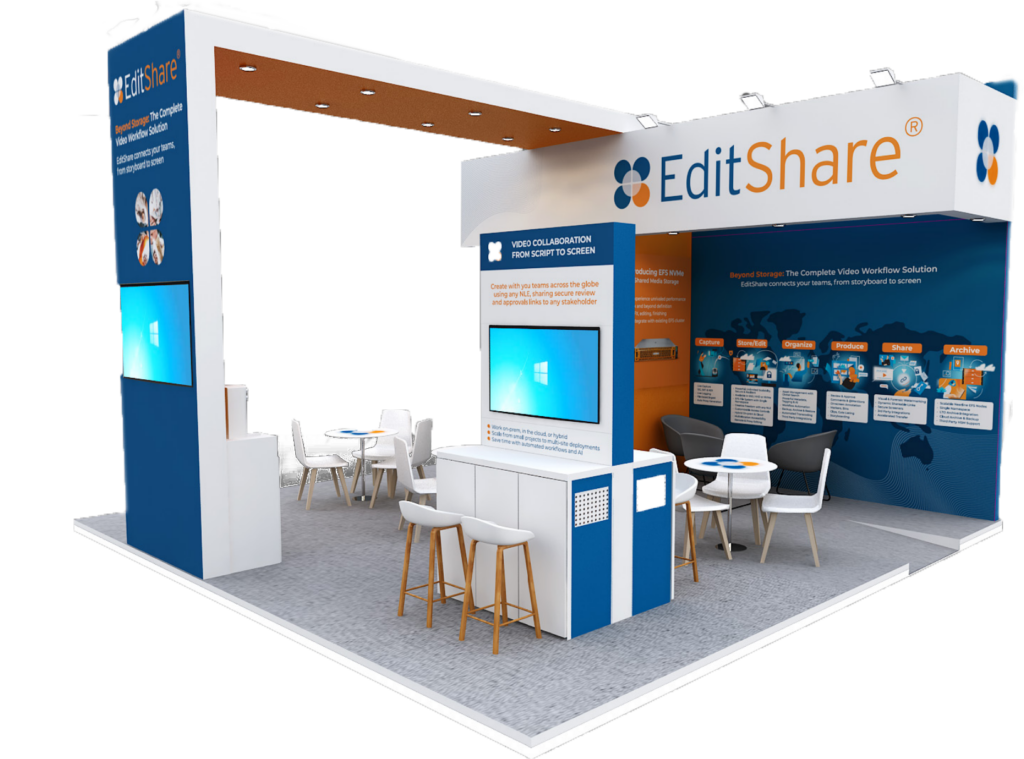
Boston, MA, 24 May 2024 — EditShare, the technology leader that enables storytellers to create and manage collaborative workflows at every stage from storyboard to screening, will use its presence at BroadcastAsia 2024 (stand 6G2-10, Singapore Expo, 29 – 31 May) to highlight the creative, economic and productive benefits of its unified approach to content management. The presentation will show EditShare’s scalable and collaborative solutions for media across multiple premises, cloud and hybrid implementations, focusing on ease of operation and security of content.
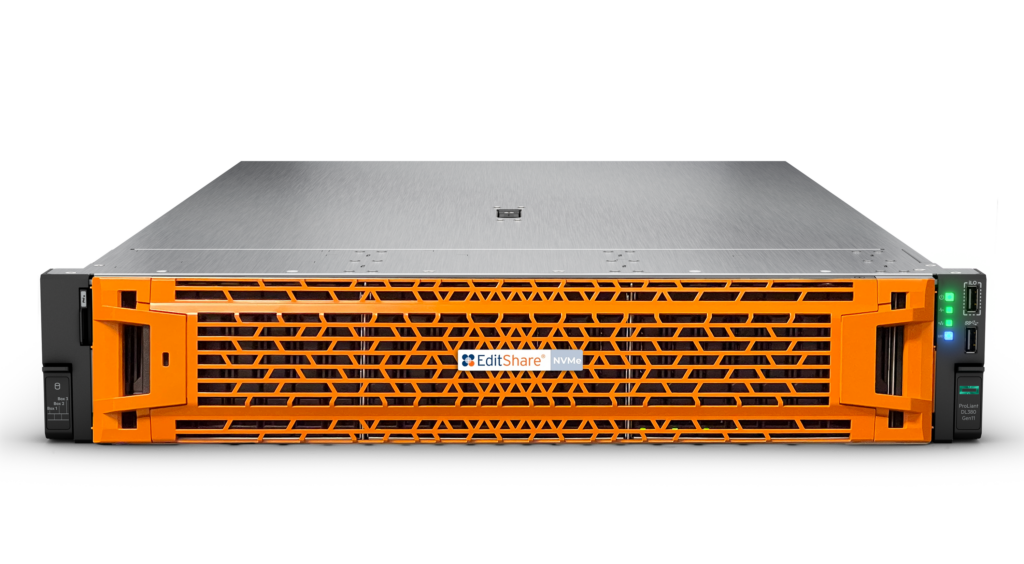
EFS, the EditShare media storage architecture, has now been boosted with the addition of EFS NVMe, adding the high performance, high bandwidth solid state technology as another building block. For demanding creative applications – like DPX, OpenEXR, 4k, 8k and beyond – EFS NVMe provides throughput three times faster than previous generation SSD servers, while still being integrated with and managed by the overall EFS environment, including traditional servers, nearline storage, archives and the cloud.
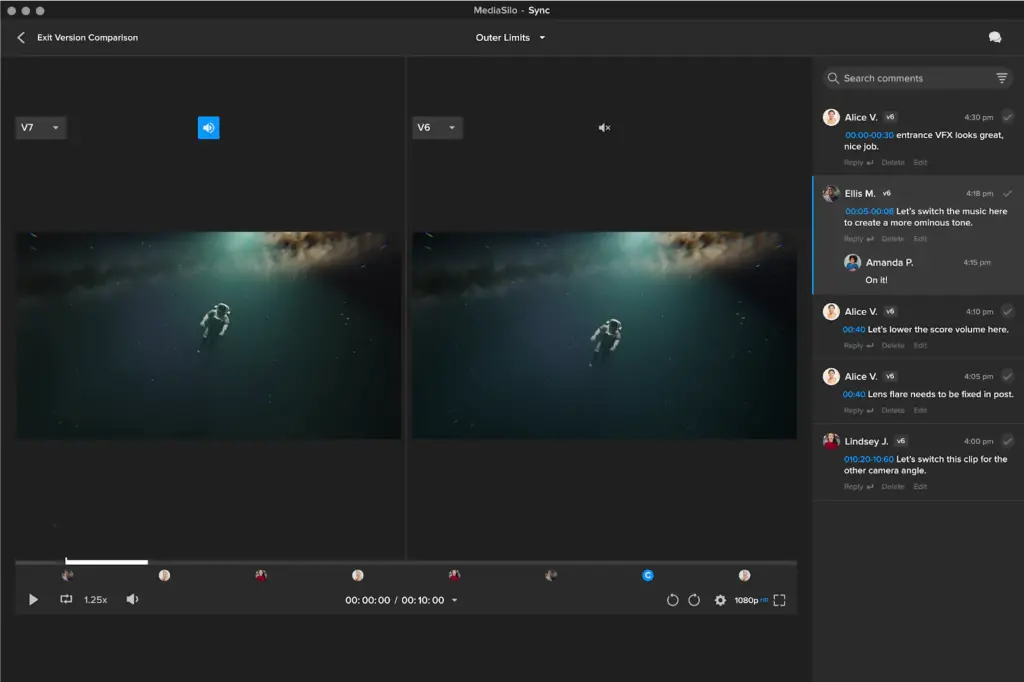
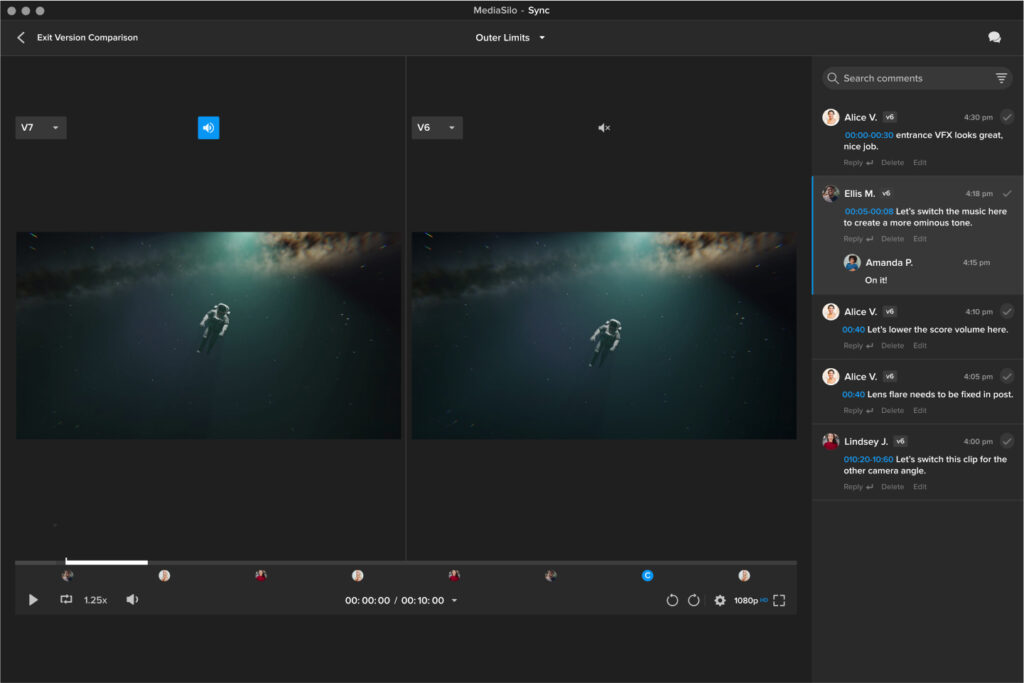
MediaSilo, the video collaboration platform for sharing work in progress, sees enhanced review functionality, including side-by-side version comparisons, and more facilities for making, tracking and acknowledging comments and sign-offs. To provide protection when sharing review material, MediaSilo incorporates visible and forensic video watermarking as well as image and document watermarking, dynamically inserting customizable viewer information into the file. The result is a secure but effective way of distributing all assets, including scripts, casting shots and marketing materials as well as content.
Improved security, along with more branding customization and in-video logo watermarks are also among the enhancements for Screeners.com, the preferred press screening platform widely used by major studios and production companies worldwide. Reviewers will see an enhanced OTT-style experience, with improved content recommendations, watchlists and expiry notifications.
“From the foundation of EditShare, 20 years ago, our overriding aim has been to give creators the tools they need to make and deliver great content, without tying them up in technology,” said Tara Montford, EVP Sales and Co-Founder at EditShare. “That still drives our thinking today, and we continue to innovate as we strive for those goals. We allow open interworking with the creative tools users really need, providing the platform for truly end-to-end workflows from script to screen; and we protect it all through excellent security.”
Visitors to BroadcastAsia will discover all the latest enhancements to EditShare products, like FLEX Sync which provides powerful tools to sync with services like Amazon S3, Wasabi and Backblaze, and the new EditShare One Organize module, ensuring users can easily identify assets whether they are stored locally, remotely or in the cloud.
Find out more on stand 6G2-10 at BroadcastAsia 2024, or visit www.editshare.com
About EditShare
EditShare is an Emmy Award-winning technology leader, supporting storytellers through collaborative media workflows across on-premise, cloud and hybrid architectures. The market-leading open software solutions and robust APIs improve workflow collaboration, third-party integrations and content sharing across the entire production chain. Designed specifically for media applications, the high performance line-up provides shared storage, archiving and backup, and intelligent media asset management.
Through a merger with Shift Media, EditShare now also integrates tools for content review and distribution, the creation of customised and branded pitch reels, and secure preview of high-value pre-release content.
Beyond storage with workflow, server and delivery solutions from storyboard to screen
Stand S1-E20, CABSAT, Dubai World Trade Centre, 21 – 23 May 2024 — EditShare, the technology leader that enables storytellers to create and manage collaborative workflows at every stage from storyboard to screening, is celebrating its 20th and CABSAT’s 30th anniversaries by bringing its latest remarkable advances to the MENA region (stand S1-E20, Dubai World Trade Centre, 21 – 23 May). Visitors will see the breadth of coherent solutions from EditShare, bringing benefits beyond storage, from storyboard to screen.
EFS, the EditShare media storage architecture, has now been boosted with the addition of EFS NVMe, adding the high performance, high bandwidth solid state technology as another building block. For demanding creative applications – like DPX, OpenEXR, 4k, 8k and beyond – NVMe provides throughput three times faster than previous generation SSD servers, while still being integrated with and managed by the overall EFS environment, including traditional servers, nearline storage, archives and the cloud.
MediaSilo, the popular tool for sharing work in progress, sees enhanced review functionality, including side-by-side version comparisons, and more facilities for making, tracking and acknowledging comments and sign-offs. To provide protection when sharing review material, MediaSilo incorporates visible and forensic watermarking, dynamically inserting customizable viewer information into the file. The result is a secure but effective way of distributing all assets, including scripts, casting shots and marketing materials as well as content.
Improved security, along with more branding customization and in-video logo watermarks are also among the enhancements for Screeners.com, the preferred press screener widely used by major studios and production companies worldwide. Reviewers will see an enhanced OTT-style experience, with improved content recommendations, watchlists and expiry notifications.
“It’s great to be able to share major milestones with CABSAT: our 20th, the event’s 30th,” said Vincent Eade, RVP sales EMEA at EditShare. “Our goal has always been on freeing creators so they can concentrate on making great content, we do this by providing the storage and workflow tools they need along with a secure way of collaborating on projects and sharing material, all the way from ingest to screen.”
“I’ve had the privilege of attending CABSAT many times,” Eade continued, “and I know that it is a great opportunity to have detailed, positive conversations with the industry. That helps us set our own development plans, so we can deliver even better solutions in the future.”
EditShare staff will be on hand at CABSAT to talk about all of the latest enhancements, find out more on stand S1-E20 at CABSAT, or click here to get in touch.
About EditShare
EditShare is an Emmy Award-winning technology leader, supporting storytellers through collaborative media workflows across on-premise, cloud and hybrid architectures. The market-leading open software solutions and robust APIs improve workflow collaboration, third-party integrations and content sharing across the entire production chain. Designed specifically for media applications, the high performance line-up provides shared storage, archiving and backup, and intelligent media asset management.
Through a merger with Shift Media, EditShare now also integrates tools for content review and distribution, the creation of customised and branded pitch reels, and secure preview of high-value pre-release content.
Workflow, server and delivery solutions from storyboard to screen
Stand D40, London Olympia, May 15-16, 2024 – EditShare, the technology leader that enables storytellers to create and manage collaborative workflows at every stage from storyboard to screen, is exhibiting at the 2024 Media Production & Technology Show to showcase its unified approach to content management. The demonstration will show EditShare’s scalable and collaborative solutions for media across multiple premises, cloud and hybrid implementations, focusing on ease of operation and security of content.
EFS, the EditShare media storage architecture, has now been boosted with the addition of EFS NVMe, adding the high performance, high bandwidth solid state technology as another building block. For demanding creative applications – like DPX, OpenEXR, 4k, 8k and beyond – EFS NVMe provides throughput three times faster than previous generation SSD servers, while still being integrated with and managed by the overall EFS environment including traditional online servers, nearline storage, archives and the cloud. Attendees at the Media Production & Technology Show will have the exclusive opportunity to experience a live demo of this cutting-edge technology firsthand.
MediaSilo, the premier video collaboration platform trusted by the biggest names in entertainment, sees enhanced review functionality, including side-by-side version comparisons, @ user mentioning, and range-based commenting to provide feedback on entire scenes. To provide protection when sharing videos for review, MediaSilo incorporates visible and forensic watermarking, dynamically inserting customisable viewer information into the file. Now MediaSilo also offers image and document watermarking, protecting non-video content including scripts, casting shots and marketing materials.
Also, MediaSilo is now seamlessly integrated with Atomos’ pioneering cloud-connected range of camera-mounted monitor-recorders, offering attendees a firsthand view of this innovative collaboration. Camera to Cloud workflows accelerate the creative process by shrinking the capture-to-edit timeframe, enabling editors to begin working on media instantly instead of waiting for hard drives or delayed file transfers. The Atomos MediaSilo integration elegantly unlocks these capabilities. Additionally, MediaSilo creates dynamic review links that automatically update as more footage is shot, providing external collaborators with one destination for feedback.
Improved security, along with more branding customization and in-video logo watermarks are also among the enhancements for Screeners.com, the preferred press screener widely used by major studios and production companies worldwide. Reviewers will see an enhanced OTT-style experience, with improved content recommendations, watchlists and expiry notifications.
“EditShare was formed 20 years ago now, and from that day to this our sole focus has been on freeing content creators to exercise their craft and not worry about the technology,” said Tara Montford, Co-Founder and EVP of Sales at EditShare. “That still drives our developments today, and we continue to innovate as we strive for those goals. We allow open interworking with the tools users really need such as editing software; we provide the platform for truly end-to-end workflows from ingest to screeners; and we protect it all through excellent security,
“Our direction is set through a deep understanding of our clients and their needs, so events like MPTS are vital in building and maintaining those relationships,” Montford added.
Staff will be on hand on stand D40 at MPTS to talk about all of the latest enhancements to EditShare products, like FLEX Sync which provides powerful tools to sync with services like Amazon S3, Wasabi and Backblaze to create an automated but completely secure, completely reliable backup system.
EditShare is an Emmy Award-winning technology leader, supporting storytellers through collaborative media workflows across on-premise, cloud and hybrid architectures. The market-leading open software solutions and robust APIs improve workflow collaboration, third-party integrations and content sharing across the entire production chain. Designed specifically for media applications, the high performance line-up provides shared storage, archiving and backup, and intelligent media asset management.
Through a merger with Shift Media, EditShare now also integrates tools for content review and distribution, the creation of customised and branded pitch reels, and secure preview of high-value pre-release content.
Expanded lineup includes new EFS NVMe finishing nodes, revolutionary private cloud technology and powerful enhancements to FLOW asset management, MediaSilo and Screeners.com
Boston, MA, February 29, 2024 – EditShare, the technology leader that enables storytellers to create and manage collaborative workflows, is celebrating 20 years of outstanding innovation at the 2024 NAB Show (booth SL8087, Las Vegas Convention Center, 14 – 17 April). It will mark the milestone by unveiling powerful new tools for producers and post facilities, new software and hardware, and the initial integration between FLOW and MediaSilo.
EditShare has always pushed the boundaries of media engineered storage solutions and will be demonstrating for the first time the new EFS NVMe, which enables creatives to work in demanding media formats such as DPX, OpenEXR, 4K/8K and beyond – all powered by the media aware industry standard file system, EFS. EFS NVMe provides unprecedented throughput, three times greater than the aggregate bandwidth of previous SSD generation servers, making it ideal for users working with VFX and other high bandwidth, high throughput environments.
EditShare completed its merger with Shift Media in September 2023, and at NAB 2024 the company is already unveiling major steps in integration and enhancements. Users of FLOW, the asset and workflow management platform integrated into EditShare’s storage systems, will be able to directly access all of the tools in the MediaSilo video collaboration platform to distribute viewing copies and collate annotations, speeding still further the processes of collaboration and content sign-off.
Within MediaSilo, collaborative creative editorial review improvements will include side-by-side version comparisons, user mentioning and range-based commenting. These advances further the effectiveness of MediaSilo as a review tool during the production and post timeline. To protect content, MediaSilo incorporates visible and forensic watermarking, which dynamically inserts viewer information into the file and is completely customizable including text and images. EditShare also recently released image and document watermarking support in MediaSilo, further bolstering its security capabilities for assets such as scripts, casting shots, and sensitive marketing materials.
Screeners.com, the preferred press screener solution of publicists and content security teams, will see a fresh look unveiled for the reviewer user interface. Publicists will have more branding customization options including in-video logo watermarks, specific color palettes on network pages, and broader options for key art. Reviewers will see an enhanced OTT-style experience with improved content recommendations, watchlists, and expiration notifications.
“From the day, 20 years ago, that EditShare was formed, there has been a tight focus on freeing content creators to exercise their craft, minimizing the need to interact with the technology,” said Tara Montford, Co-Founder and EVP Sales at EditShare. “Thanks to the close relationship we have with our clients, we are able to understand their needs and rapidly develop solutions to meet them.
“I am particularly proud of the way we have integrated the former Shift Media technology into our overall platform and program,” he added. “To be able to unveil really complex interworking just a few months after the merger is impressive. But what is really important is that it makes both EditShare FLOW and MediaSilo even more effective and valuable for our clients.”
Also on display at NAB 2024 will be FLEX Sync, which builds on EditShare FLEX’s cloud storage management layer. FLEX Sync provides powerful tools to sync with services such as Amazon S3, Wasabi and Backblaze. By making it easy to establish sync destinations and pick storage tiers, users will have complete confidence in their backups to the cloud. FLEX Sync also paves the way to use the cloud for specialist processor-intensive tasks like AI, fully integrated into the workflow.
Now available with all new EFS systems, EditShare Connect features new swift link technology, a revolutionary productivity tool turning your on-premise storage into your own private cloud for remote editing workflows. Reliably connect from any location using automatic latency detection and use your favorite NLE software on any OS to work on your media remotely and securely.
Finally, NAB Show will see the launch of expanded EditShare One functionality. EditShare One enhances the experience of FLOW users by providing a single user interface for collaborating across the FLOW feature set. Organize, thelatest EditShare Onemodule, ensures users can easily identify assets, whether they are stored in the cloud, on-premise or in a hybrid network. It means a producer or edit assistant can preview and log assets, view and edit metadata, and prepare content for work from any connected desktop, releasing edit suites for creative work. Organizejoins the Produce module as part of EditShare One’s transformational approach to asset management, organization and collaboration during video production and post-production.
Celebrate the 20th anniversary with EditShare on booth SL8087, book time with us at the show by clicking here.
EditShare is an Emmy Award-winning technology leader, supporting storytellers through collaborative media workflows across on-premise, cloud and hybrid architectures. The market-leading open software solutions and robust APIs improve workflow collaboration, third-party integrations and content sharing across the entire production chain. Designed specifically for media applications, the high performance line-up provides shared storage, archiving and backup, and intelligent media asset management.
Through a merger with Shift Media, EditShare now also integrates tools for content review and distribution, the creation of customised and branded pitch reels, and secure preview of high-value pre-release content.