MediaSilo + MASV allows you to quickly migrate all your content
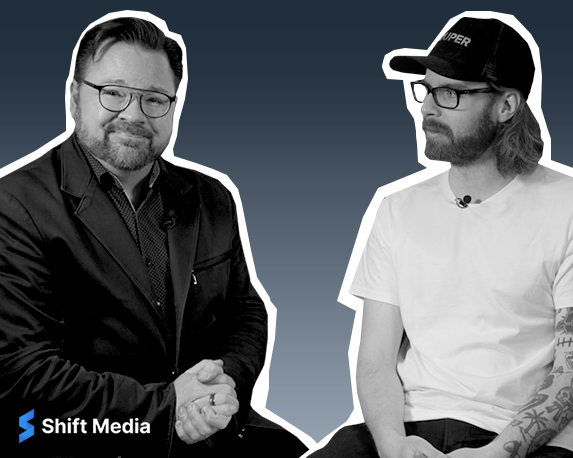
Ready for an even faster workflow? Our new integration with MASV enables accelerated uploads without compressing or splitting files. Collaborators can also upload to MediaSilo without needing access to your secure workspaces. Michael Kammes recently sat down with Greg Wood, CEO of MASV, to discuss the advantages this provides MediaSilo customers.
Michael: Welcome back. I’m Michael Kammes with Shift Media here at the NAB 2023 Show Floor, and today we’re joined by Greg Wood from MASV. Greg, thanks for coming here today.
Greg: Thanks, Michael. Thanks for having me.
Michael: We have a lot of things to talk about, but for the folks out there who don’t know, and I don’t know why you wouldn’t know, can you share with the folks what MASV does?
Greg: Absolutely. MASV is an accelerated file transfer platform. We have a global network, and we have the ability to deliver an unlimited volume of content anywhere in the world, really simply, really easily and very securely.
Michael: This year, one of the themes of our booth is integrations, and we are thrilled to announce that we have an integration with MASV. So instead of using the uploader included with MediaSilo, we now can use MASV. So what does MASV bring to the table that MediaSilo doesn’t?
Greg: Well, we’re a specialist in moving files. So if you need to ingest files, collect files from a whole bunch of contributors, or you need to simply deliver content in the fastest way possible via cloud, that is what we do. So that’s our specialty. And it makes sense for us to work with vendors like Shift and integrate with MediaSilo, because we want to help get assets into MediaSilo as quickly, as reliably and as effectively as possible. So, if you imagine where we fit in, like you can stand up a MASV portal. This is a webpage where anyone can drop content, and you can set up an automation that will take the files directly from that webpage through the cloud and put it right where it needs to go into MediaSilo. And that makes everything really easy, really fast. No fuss, no muss.
Michael: I hope everyone realizes just how powerful portals is because often you’re working with not just a team that you work with on a daily or weekly basis. You’re dealing with partners, vendors, contractors outside the ecosystem, and being able to give them a simple place to just say, drop your files here – it’s one less thing. You have to train these folks to learn how to use it.
Greg: And think about how we used to do this, right? We used to like ship drives around, and drives are never gonna go away, right? They’re just too handy and simple, right? But drives on-prem technologies like standing up a folder and inviting people to your folder in the cloud, right? That can get confusing. Am I in the right cloud? Am I putting the files in the right place? With portals, you literally have one page, it can be fully branded, all the instructions are more clear. They drop the files there, and [the files] get handed automatically into where they need to go. So it’s really, really simple.
Michael: Aside from the integration with MediaSilo, what else is MASV announcing at NAB this year?
Greg: We’ve had a really busy show. The biggest thing for us is that we are kind of a lingua franca for moving large files. So we can talk to a lot of different storage devices, both on-prem or in the cloud. And we’ve just announced that we’re now able to do that from cloud storage as well. So if you’re a user of S3 storage or if you’re a user of Wasabi, now you can take the files out of that storage in the cloud and deliver it, say, into MediaSilo, just as if you were sending it from your own computer at home, right? And so if those are really adopting true cloud workflows, it’s getting just so much simpler. Like we’re removing all that complexity that we had to use even two years ago. It was way more complicated to do this. And I think that’s going to accelerate the pace of cloud production.
Michael: You bring up a good point. Uh, one of the biggest stumbling blocks has been we have terabytes of data on-prem. We’re not sure how to get that to the cloud, or we’ve already parked terabytes of content in the cloud. Now we want to do more with it, but we can’t do a lot more with it where it’s sitting. So, being able to do something like an S3 transfer to MediaSilo, which is on AWS, makes it that much easier.
Greg: Well, and you’re really pointing out the real solution that MASV provides, right? Because it gets very, very complex to deal with where all your assets are. There’s a lot of uncertainty, and where there’s uncertainty, there’s security risk. Because if you don’t know where to track things down, you know that that’s going to be a problem, right? You have to make sure that the content is protected, your customers are protected. And so, what if you can create these really clear workflows, a clear path to deliver the content where it needs to go, you’re gonna be able to have greater certainty that your content is where it needs to be and secure. So that’s exactly the problem that we’re simplifying.
Michael: What I’m really curious about is, in our technology age now, there are a lot of comparisons. This is better than this because of this. I’m really interested to hear people who have come to MASV and who have stayed on MASV, they’ve undoubtedly tried other solutions. What makes them say, I want to stick with MASV, and here’s why.
Greg: Yeah. Well, I think most customers would come back and say that it’s simplicity. It’s a wonderfully easy interface. If you’ve ever sent an email, you can use MASV, right? Even setting things up, it is really quite easy. And doing an integration with MediaSilo, that’s probably the number one thing; it’s very fast. There was a time when people felt like sort of you needed to have a UDP solution on-prem, UDP dedicated internet links, all this sort of stuff to get great speed. And that’s simply not the case anymore. Like, we’re TCP-based and we can send at up to 10 gigabits per second if you’ve got a 10-gigabit fiber connection. And that just delivers files so fast. So speed is amazing. And then of course, the security, you gotta know where your assets are. We’re TPN certified. We’re ISO 27001 certified. And probably the biggest news for us this year – we just have achieved our SOC 2, uh,
Greg: Yes, exactly. So for companies who have to know where their assets are and keep their customer data private and everything, that is a huge achievement. So, those are the reasons why people use MASV, for sure.
Michael: So there’s been a lot of changes in the industry. How has that influenced how MASV has marketed themselves? What has helped or what has hindered?
Greg: Well, I mean, there’s so many. I’ve seen so many changes and obviously the pandemic is first and foremost in everyone’s minds because it drove such incredible change in the technology marketplace. So, you know, obviously when everyone had to go home and work from home, you needed these remote tools, and of course, MASV was there to help people out. So that was a real boon to our business, and we learned a lot about what people really needed. We came up with some really wild features we wouldn’t have thought about otherwise.
We have a product, a tool called Multiconnect, where we can bond multiple internet connections and basically double your bandwidth by sending over two paths, all with software, right? Like that’s, that’s incredible. And just thinking about how much faster that makes everything. So, you know, the pandemic drove really interesting changes, but I think another thing is the consumerization of IT. Because, you know, we’re on our phones every day, and so many of the apps we use are so simple, and they’re a delight. And then we go to work and we’re supposed to deal with kind of a terrible user experience that hasn’t changed that much from what, the early 2000s or something, right? So, we really believe that you’ve gotta make tooling that is simple, fast, secure and reliable. I think reliability is the greatest feat of engineering you can have. If you can trust that app to just work, and you know how to use it, you don’t need IT intervention. That’s really been a really big trend for us, and it’s central to what we do here.
Beyond that, of course, the move to cloud. So cloud production [is] essential. And we help support that by getting all the assets to the cloud and from the cloud to where it needs to go. So I think those are the biggest things for us.
Michael: I think over the past few years, we’ve seen that folks are really embracing the concept of manufacturers and companies being transparent. Right? And what I mean by that is a lot of businesses, the trajectory of their businesses, based on where their manufacturing partners or technology partners are going, one of the things that MASV does is says, this is our roadmap. This is what we’re doing. And that kind of transparency helps clients and businesses decide where they’re going to go. So I’d love for you to discuss any of the features or the directions that MASV is looking for in their future.
Greg: We see cloud production only continuing to grow, and I think incredible things are possible. So our integration with MediaSilo is a great example of where we want to go in the future. There’s gonna be more integrations to come, for sure, with other vendors and all kinds of places. And the exciting thing about that is that once assets are in the cloud, so many things are possible. And we’re gonna see so much great innovation coming out of this event. We’ve seen so many great news items and new innovations coming out. So we really see the pace of cloud production accelerating. Obviously, there are all kinds of other ways we’ll continue working, and MASV can connect all of those things. We’re gonna continue to be the specialist at delivering files the fastest, in the easiest kind of way.
And probably the biggest thing that’s coming up right away is our improvement to portals. We’ve got this portals product we talked about already. We can drop those files onto it and automatically deliver the files where they need to go. Well, we have learned from customers over time, we love talking to customers. If you go on our website, you can talk to a human being right away, and [customers are] telling us, hey, it would be great if you could move this feature further up with the flow, and this would be more discoverable if you did this other action. So we’re really cleaning up portals and improving it to make it even easier and more accessible to more people.
And I think that’s how we love to do business. We’d love to hear customer feedback and turn around really fast. And, I mean, that’s how we connected with MediaSilo. We had customers telling us, “Hey, we wanna deliver our files into the review and approved solution at MediaSilo. Can we do that?” And, of course, we could. So that was great.
And then, finally, we’re a global company. We can deliver files as fast in Vegas as we can in Singapore or even in Africa. So we’ve localized our product recently into Japanese, German, Spanish, and Dutch, and in the future, we’ll be doing more of that and making that even better. So those are the big things we’re most excited about next.
Michael: One of the hurdles that people deal with when they get to the cloud is pricing. I don’t know how many megabytes I used this week versus next week? But you have a very innovative way of doing that. What is the pricing structure for MASV?
Greg: Yeah. It can be really opaque in our industry to know what something’s gonna cost. And it’s a foundational belief at MASV that our pricing matters and packaging matters. You should be open with that. So we are best known as a pay-as-you-go business. So we love usage-based pricing. We charge 25 cents a gig. And if you have a project where you have a lot of assets to deliver, you can actually prepay credits at a discount as well. And that works for everybody cause now you can pay less for an enormous volume that you’re sending, and then you can invoice, put that on your media delivery fee, or you can give it to your accountant to keep track of everything. It just makes it so much easier.
But it de-risks using MASV as well because if you’re gonna send a petabyte worth of data in the first quarter, and then in the second quarter you don’t have any projects planned, you don’t want to sign up for like an enterprise agreement, or an annual contract with one of the on-prem vendors or whatever. So, it’s all pay-as-you-go. So you just use it, we charge you, you don’t use it, you don’t get charged. So you can actually build all kinds of new workflows, whether the automations we offer or using our API, knowing that you’re not gonna get charged if you’re not gonna use it. So that de-risks it for the customer as well.
Michael: So, aside from watching this video, where can people learn more about MASV?
Greg: If you go to our website, massive.io, you can enter M-A-S-V or just the word massive. You can find everything you want, including a hundred-gig free trial, and you can set up all those automations, that’s completely unlimited. So you can really see whether or not it works for you and if you want to use it. And we hope people will.
Michael: Excellent. Thank you so much for your time, Greg. Thank you for tuning in. Michael Kammes with Shift Media from the NAB show floor 2023.
MediaSilo allows for easy management of your media files, seamless collaboration for critical feedback and out of the box synchronization with your timeline for efficient changes. See how MediaSilo is powering modern post production workflows with a 14-day free trial.
Alex Williams, the founder of Louper, sat down with our Senior Director of Innovation, Michael Kammes, at NAB to discuss our latest integration with the cloud-based real-time collaboration platform. They talk about why people choose Louper over the competition, and the features that make it so popular, even in the most unexpected workflows.
Michael: Hi, Michael Kammes here from Shift Media on the show floor. Today we’re with Alex Williams from Louper. How are you doing, Alex?
Alex: I’m well, Michael. Thank you for having me.
Michael: Excellent. We are so thrilled to have Alex here because one of our announcements here is that we’re integrating with Louper. Louper has been one of my favorite technologies in the past couple years because they enables review and approve in a live way, plus some awesome other features. So I don’t wanna steal your thunder. Perhaps you could just share with everyone – what is Louper?
Alex: Yeah. Right. So it’s live review and approve. You can play out of your NLE so you can review edit sessions, VFX reviews in real time in a web browser. And on top of that, you can also review assets. So existing media files, you can have synchronized playback of that inside the room. And everything works in the web browser with built-in video chat and text chat. And so it’s sort of a synchronous live review and approve tool to complement the asynchronous tools out there.
Michael: What I love, you brought up at the very beginning, was interfaces with NLE. So video editors, there are a lot of screen-sharing tools out there that say, we’ll just do a screen scrape, right? We’ll just do a screen share, and the quality is degraded. The color management is out the window. Sync AV is often not there. So being able to integrate directly within the NLEs, gives you that high-quality, correct frame rate. And I think a lot of people just glaze kind of over that. Can you talk a little about the tech specs as they are right now? Like, are we doing SD, is it HD, what kind of frame rates, what kind of data rates?
Alex: Yeah. So at the moment, it’s uh, 4, 2, 8 bit SDR, up to 4K resolution frame rates 23.976, 24, 25, 30. And we don’t process or compress that stream in any way. That’s a pass-through thing. So, whatever you stream at resolution frame rate is what the end user sees in the browser. And then, in terms of data rates, it’s anything from 2 to 20 megabits per second for offline editorial. And people use color reviews as well for SDR contents. And then, on top of that, you can also get a direct signal out of NLEs like Final Cut, Avid Media Composer, and Premiere Pro. Flame as well for online assets. That’s quite a popular one as well now. So you get the actual video frame out of that as opposed to a full interface scrape or anything like that. It’s a true signal.
Michael: So one of the things that we’re showing here is taking that technology and enabling Louper to plug into MediaSilo. So can you explain a little bit about how that integration works and what folks who already use MediaSilo can then use Louper to do with their assets?
Alex: Yeah, sure. So if you look at Louper as kind of the shell where you have your video chat, your text chat, everything’s live, and you know, at the moment, the content in there is a live stream on top of that. And with the MediaSilo integration, you can now connect your MediaSilo assets, video files that exist on MediaSilo, to Louper, and you can then have synchronized playback of those video files within the Louper room so everyone sees the same frame at the same time. There’s collaborative shared playback, controls, pause, play, sync, as well as onscreen drawing and annotations. So that sort of adds a real-time live review to existing assets, which is exciting.
Michael: So MediaSilo clients who are already used to the more traditional on-demand review and approve now can do joint screening sessions, for lack of a better term, for assets that are already sitting inside a MediaSilo project.
Alex: Yeah, exactly that. Yeah.
Michael: Excellent. So, I’m sure you’ve had some excellent growth since Louper started just a couple years ago. Have there been any unexpected use cases, like use cases you didn’t really imagine when you first developed the product?
Alex: Yeah, I mean, we’ve been so focused on our vertical and media entertainment and film industry that in terms of the types of use cases and the types of workflows, that said, there are some ways that people are using the product, which I didn’t envision. We spoke to a customer last week who works in visual effects, and they have VFX editors that use Louper for internal reviews. And from that point, they go, well, we’ve actually got multiple projects, multiple VFX editors, and we like to have an internal review every morning and have all the VFX editors streaming into the same Louper room and just switch between the live signals and do a 30-minute review with everyone on the team looking at that, and then switch over to the other VFX editors live signal without having to go to a separate room. We’ll start a new session, all remaining right there. And I think that kind of stuff is cool and stuff I didn’t expect, of having it really be this hub where everything can happen live and in real-time, and you can send signals into and out of it really, really quickly and easily.
Michael: So over the past few years, especially during the pandemic, a lot of solutions popped up that enabled live review and approve. And obviously, folks will try out each one. And when folks end up trying all the others and end up coming to Louper, what’s the main reason you hear is why folks said, yeah, that’s really the reason why I’m sticking with Louper.
Alex: The biggest thing is ease of use, setup and, especially on the client side, just having the ability to join via links in the browser. So on the client side, for people who are producers, directors, clients who need to join the session, they don’t need to register, they don’t need to sign up. There’s no real setup. It’s a one-click drawing in the web browser and that, people love that. That’s been the biggest, the biggest kind of, “Yeah, this is cool.”
Michael: Now, this is where you’re on camera, so I’m gonna try and put you on the spot. Just to see what I can get out of you. But can you talk about maybe what directions you may be looking at Louper going or what features you’re really looking into? Can you discuss any of that?
Alex: Yeah, I can. So the big one is support for 10-bit 4:2:2, 4:4:4 HDR streaming. We are getting a lot of interest from colorists and yeah, we support SDR and 8-bit 4:2:0. But really there’s a need there for 4:2:2, 10-bit, including HDR. So that’s something we’re working on actively. And that is one of multiple things, but that’s probably the biggest one that, you know, that we’re responding to. In terms of customer stories.
Michael: Where could folks find out more about Louper?
Alex: So on the website, Louper.io, l-o-u-p-e-r dot i-o. I’m also on Twitter @alex_willo_. And that’s pretty much it. Our website’s pretty extensive in terms of use cases and customer stories, and setup guides. It’s also free signup. So it’s super easy to get started and try it out and take it for a spin.
Michael: And for any MediaSilo clients, we’re now in beta with utilizing Louper to playback content to folks in real-time from MediaSilo. And we can also get you connected with Alex to talk about playing out directly from your NLE. Alex, thanks so much for coming. Thank you for tuning in. This is Michael Kammes from Shift Media at the NAB show floor.
MediaSilo allows for easy management of your media files, seamless collaboration for critical feedback and out of the box synchronization with your timeline for efficient changes. See how MediaSilo is powering modern post production workflows with a 14-day free trial.
Major South African production company adds third storage network
Boston, MA, April 05, 2023 – EditShare®, the technology leader that enables storytellers to create and manage collaborative media workflows, has added a third EFS-300 storage solution at Homebrew Films in Cape Town, South Africa. Homebrew is a leading producer of high quality television for the home and international markets.
Based in Atlantic Studios, Homebrew provides a complete production service, with its own 4k Ultra HD studio with audience seating as well as outside broadcast and single-camera shooting capabilities. It has long-standing contracts with leading broadcasters in South Africa, producing soap operas, drama, documentaries and popular entertainment shows. It is the home of MasterChef South Africa, and the installation of the third storage network was prompted by the start of work on the game show Deal or No Deal.
EFS is the open storage solution from EditShare. It is a software-defined ecosystem built on commodity hardware and designed for practical workflows, with the ability to scale from a single storage node to an enterprise cluster, with a single namespace for simple management. It incorporates EditShare’s FLOW media management software with dedicated metadata servers, and ensures content flows are managed and prioritized to deliver against the practical demands of busy facilities.
“EditShare has served us well over the last three years, and we were confident to continue investing,” said Jaco Loubser, CEO of Homebrew Films. “As we grow, remote editing and workflow automation tools become ever more important, and EditShare supports those well.”
The installation was provided by Protea, EditShare’s channel partner in South Africa. Protea’s James Macpherson said “We have a strong relationship with the team at Homebrew, and they know they can turn to us at any time for backup and support. In turn, we know we get the same level of support from EditShare, so this is a really solid offering for them.”
“We appreciate Protea’s ongoing support in delivering EditShare’s innovative solutions to Homebrew Films” added Said Bacho, CRO at EditShare. “Our EFS storage solution, in combination with Protea’s expertise, ensures that Homebrew’s growing media production needs are met with speed, scalability, and reliability.”
EditShare is a technology leader that enables collaborative media workflows on-premise, in the cloud, or in a hybrid configuration. With customer and partner success at the heart of EditShare’s core values, our open software solutions and robust APIs improve workflow collaboration and third-party integrations across the entire production chain, ensuring a world-class experience that is second to none. The high-performance software lineup includes media optimized shared storage management, archiving and backup, and media management, all supported with open APIs for extensible integration.
EditShare’s cloud-enabled remote editing and project management technology was recently recognized by the National Academy of Television Arts and Sciences (NATAS) with a prestigious 2021 Emmy® Award for Technology and Engineering.
Let’s face it: the traditional agency pitch is a drawn-out, sprawling, cumbersome process that has now spread throughout the creative industry.
From pitching on a client’s entire creative business to bidding on a specific project or campaign, creative agencies in advertising, marketing, experiential, PR and digital all dutifully invest time, creative energy and resources into frustratingly rigid dog-and-pony shows.
And talk about rigid: according to pitch consultancy ID Comms, today’s agency pitch process has been in place since the early 1990s. In other words, most consultants’ pitch templates are older than the internet.
Even during the COVID-19 pandemic, when accelerated changes swept through so many other industries, these archaic processes remained in place, keeping agencies tied to stagnant and unproductive methods of developing new business – while the rest of the world raced ahead.
Basically, we’re stuck with the traditional pitch.
The Creative Cost
Yes, the process is formulaic and time-consuming. Yes, the average agency surveyed in the industry report The OUCH! FactorTM spent 22.2 days’ worth of staff time last year on each pitch they entered (equal to one employee working one full month per pitch – 11 times a year). And sure, the odds of winning the pitch after all that work are around half at best, according to the same research. It couldn’t get any worse, right?
Wrong.
New studies have shown that the traditional pitch process actually feels like it undermines the core strength of an agency: creativity. With all the focus on jumping through hoops to present strictly formatted materials for every client who requests them, it has become very difficult for agencies to show what they actually do well themselves.
“We’re meant to be in the business of creativity, but the focus has shifted,” says MullenLowe Group UK’s Lucy Taylor in a Campaign Live article from March 2022 (Resetting the pitch process and bringing the soul back to adland.) “The average agency now spends around 2,000 hours a year working on pitches, time that’s often tacked on to the end of the working day.” With that kind of time required to address restrictive pitch requirements, it’s almost impossible to demonstrate real creativity.
Pitches can also be very stressful and lead to burnout, posing a serious problem for existing clients, who “need a healthy landscape with dynamic agencies and great creative work. That’s the lifeblood of our industry,” says Andrew Lowdon from the Incorporated Society of British Advertisers (ISBA), the trade body representing advertisers in the UK, in Marketing Week. After all, says Jemima Monies of adam&eveDDB in the Creative Salon, “New business should be a means of nurturing talent, rather than draining it.”
So how can you shift the odds in your favor when it comes to preparing for the dreaded pitch?
The Agency Reel: The Win Before The Pitch
Consider the basic criteria clients use to determine the fit of any agency— essentially, the admission price for you to compete:
You understand the client’s business, their vision and their immediate needs.
You have experience in their industry.
You have a recognizable roster of previous clients.
You have the right mix and level of capabilities.
You can personalize your solution to them.
It seems like an overwhelming list of things to demonstrate clearly. But with one creative pitch reel done right, you can prove to your prospects that you possess all of these characteristics before you invest valuable hours into a pitch. They can see right away that you’re a great fit for their needs and that you have creativity to boot. If a client loves your pitch reel, then you’re in the enviable position of only needing to confirm their impressions rather than having to prove that you’re right for the job.
A good reel will help pave the way into a prospect conversation before you’ve even spoken with them while leading with proof points they care about— giving them confidence to trust you with the brief. And reels are the most visually arresting way to show all of your work, from print to outdoor to experiential. Nothing jazzes up a static medium more than a video presentation with music. And nothing showcases your successes better than a video that tells the story behind the work. It’s a tool that can speak for you without you having to be there.
Better yet, a great reel will allow you to learn earlier in the process (even before the competition begins) whether the client feels you’re a good fit, so you don’t waste time pitching on work that you never had a chance to win anyway. Then you can determine whether to continue to invest or weed out the clients that aren’t a good match and instead focus on the next important project.
What’s important to note is this: the best reels reflect the specific client who’s watching it and demonstrate what you can do for their exact needs. That airtight resonance of your work with the client’s needs is what gives a reel the best chance at hitting every one of their initial criteria.
Bespoke Reels: Sizzle On Demand
Of course, every client is different. That means the best reel you can use is one that’s customized for the particular client. And creating custom sizzle reels professionally can get very expensive—up to $10,000 per minute of finished video, or more in many cases.
And that’s the conundrum: on one hand, a reel made just for the client you want to pitch will be far more effective and ultimately win more of the right clients for your agency or firm. On the other, it’s risky, involved and expensive to professionally create a bespoke agency reel each time when you have no idea whether you’ll land the project. And the more work samples and other elements you have to choose from, the more complex creating the perfect reel can become
If you’re going to engage with multiple prospects while trying to beat The OUCH! FactorTM odds, it makes sense to scale up your reel-building capabilities internally. Doing this will allow you to conduct business development proactively, respond more swiftly to requests, reduce the expense of customizing your reels and, most importantly, increase the “at bats” your agency gets by pitching as many clients as possible. Best of all, with the right tools, it’s possible to build reels quickly with the staff and resources you already have in place, using the content you’ve already created.
Check out the full guide to pain-free-pitch reels here.
The reel is everything. Whether you’re an independent rep hoping to get your future star on an agency’s radar or an executive producer with a director or editor ready to tear up the awards circuit, the first step is getting agency producers or creatives to take notice. And that means you need a showreel. But how do you make your showreels work harder and cut through the clutter amidst so much competition? We’ll help you make the most of your work by making the most of your reels.
A Digital Foot in the Door
When you first approach an agency or client, you often don’t even get the chance to talk to anyone. It’s only after you’ve sent a reel and they like it that you get to have an actual conversation about the talent you represent. So your reels have to do the talking for you. Think of them as a digital foot in the door.
Use Advertising Tactics To Cut Through the Clutter
Since a showreel is essentially an ad for one of your creators, it can be helpful to think of showreels in terms of both reach and frequency. On a basic level, reach refers to how many different people see your ad, and frequency is the average number of times each of them sees it. Most people just think about getting their reels in front of prospective clients, but that’s only part of the equation. Unless someone watches it two or three times (and preferably more), there’s a pretty good chance that they’re not going to remember it well enough to reach out to you and take the next step. So you’ve got to think about ways to get them to watch the reel more than once if you want it to bear fruit. That may be a matter of following up and asking questions about what they thought of particular spots so they watch them again while engaging actively. Or it may even mean sending the reel more than once and tracking whether or not it’s been viewed. This requires a bit of extra effort, but it’s critical to getting creatives to remember the reel you sent and who did the work.
There is a limit: you want to avoid inundating them with the same stuff over and over. But you’d be surprised how quickly the details disappear after just one viewing. So if you sometimes feel like you’re just sending reel after reel into thin air, keep in mind that finding ways to increase your viewing frequency could help crack the code.
Timing Is Everything
Sometimes getting people to react to your reel isn’t just a matter of having them watch it enough times. They also have to watch it at the right time. Say your reel showcases a lot of motion graphics; unless the viewer has an immediate need for motion graphics work, they may not respond to it, even if they like it. The fact that they viewed it is great, but you’ll still want to make sure that it’s fresh in their minds when they have a project that the work is a good fit for.
If you’ve done your homework correctly and have seen to it that people are viewing your reels, the next step is to do what you can to increase the likelihood that they’re seeing them at a time when they have a need and can take action. Otherwise, you’ll want to keep in touch and maintain an ongoing relationship until they do. Even if they don’t have a need now, they may talk to someone who does, and if you’re top of mind, that can turn into a new project.
Talent Alone Isn’t Enough
It’s a familiar refrain: “We need to see it on the reel.” No matter how talented, experienced or smart your director, editor, colorist or VFX artist may be, no one is ever going to just take your word for it. Prospective clients almost always want to “see it on the reel.” And by that, they mean that they want to see not just the flashiest or funniest work on your showreel but also things that are very similar to what they’re hoping to produce. This helps reassure them that your person can do the job. If you have a very similar project available to show, then by all means, include it. But sometimes, that kind of thinking is really a trap. Making a great reel requires more than just showing stuff that’s really similar to what the client is hoping to produce, even if that’s what they asked for.
It’s a Trap! (And How To Beat It)
While there are obvious reasons why agencies and clients often seek out reels featuring work that’s as similar as possible to their proposed ideas, there are also a number of drawbacks to this approach that they are usually unaware of.
Generally speaking, creative professionals take on jobs for one or more of the following three reasons:
The reel: They love the creative idea and think that the end result is likely to end up on their reels, where it can bring in new work.
The relationship: They want to start a working relationship with an agency or client in the hopes of establishing an ongoing flow of projects.
The money: The job is lucrative enough that it’s worth doing just for the paycheck.
In the best-case scenarios, all three reasons will be at play. But in the real world, that’s rare. More often, only one or two of these conditions are met. Generally speaking, agencies and clients hope that the creative merits of their idea are strong enough that a talented creator will want it on their reel. But creative professionals are a restless lot, motivated by variety, excitement and creative innovation. So if a client seeks out someone who has work just like their project already on the reel, chances are that person is only going to take it on for the money or to get in with the client for future projects. After all, if they already have something just like it on their reel, they don’t need it for that. And if they don’t need it for their reel, that means they’re doing it for one of the other two reasons. The risk in such cases is that they may just “phone it in,” creatively speaking. That’s why the practice of looking for reels that are just like the proposed project is a trap.
But all is not lost. The best creative agencies and clients are savvy enough to be aware of this and are frequently open to finding talent who can demonstrate the general skill set to do a great job, even if they don’t yet have an exact clone of the project on their reel. Those clients know that the added bonus of having someone really excited and creatively stimulated by their project is well worth any perceived risk in trusting it to someone who hasn’t done one just like it before. And that’s where building just the right showreel can help crack the code.
Picking Your Spots
So how do you decide what to put on the reel? The first thing to consider is what skills the client will be looking for rather than just what the finished product will be like. Will they be concerned with actor performance, how good their food looks or heartwarming storytelling? Does comedy or tone matter to the project’s success, or does gorgeous composition matter more? While you may not be able to show them their exact piece on your reel, you can show them things that required the same skills in their creation. Whether it’s for an insurance company or a delivery service, funny dialogue is funny dialogue. If the project requires that, try to include something demonstrating the ability to achieve that result.
In addition to demonstrating specific skills, you may want to consider budget and scope. Having worked on large-scale projects with lots of moving parts may be reassuring to a client with a complicated project. Meanwhile, flashy-looking locations and sophisticated visual effects may scare a client who knows they are playing with a limited budget. You may want to show work that managed to achieve a lot of impact without huge production investments. In the end, what you choose to put on the reel is about reassuring a prospective client that you have the knowledge and skills to make their project great, even if you haven’t done that exact thing before. You can also use a showreel to balance out or address any concerns you know the client has going into the project. Having your work do the talking is always better than just verbal reassurance.
Aim High
While you don’t want to scare clients with scope or make them think you are only good with huge budgets, it can be very powerful to show them what their work could be like. Especially with agencies and clients who are new to the game, you want to show off work that might be aspirational to potential clients. Make them see that you can take their work to the next level. So if you’ve got a spot that’s next level for them, use it to show them how good their work could be if they hire you.
Leave Out the Kitchen Sink
Building a great showreel can be a bit like building a great meal. You want enough courses to make everyone satisfied, but you don’t want to overwhelm with volume. And if every piece you choose to include is great, you’ll leave a fantastic overall impression. But if one piece is notably weaker than the others, that is what the viewer will remember. Better to have fewer and know they’re all good than to include a “weak link.” Leave them wanting to see more. Especially with new and developing talent, having a short reel is fine and far preferable to a reel of mixed quality with some flawed pieces that aren’t up to standard. As a guideline, people will assume you’re as good as the worst work they’ve seen from you.
Put Yourself In a Box (or Boxes)
While most creative talents crave variety and new challenges, this sometimes works against making the best showreel for agencies and clients. When seeking creative professionals for a project, ad agencies and clients usually have a specific vision in mind and want to find someone who’s a perfect fit for that particular job rather than a talented generalist. They’ll be looking for very specific skills, as well as genres and sub-genres of work. So having a really broad reel, while seemingly impressive, can be confusing or make them concerned about whether you really understand what they’re after. If you’re strong in multiple genres or styles, creating separate reels for each is fine, but it’s often a good idea to refrain from putting it all on one showreel (unless specifically requested). It may take more thought and resources, but if you’re truly multi-talented, try making distinct reels that demonstrate each of those disciplines and marketing them separately.
Make It Bespoke
Of course, every client and project is different. That means the best showreels reflect not only the general category they’re in but are customized for the particular client or even specific aspects of the project. The reel should demonstrate what you can do for their exact needs at the time. That connection between your work and the client’s needs is what gives a reel the best chance of getting you in the door. So the more customized you can make the reel, the better your chances of winning the job. The top people in the business make custom reels for each job they pitch on, despite the time and cost this may incur. And creating custom showreels professionally can get very expensive quickly: as much as $10,000 per minute of finished video once you’ve factored everything in.
Look the Part
Because your reels are the first impression you will make on many clients, it’s a bit like your resume or a first job interview. You want it to have a professional look and feel. You wouldn’t show up to an interview in your gym outfit or hand them a hand-scribbled resume. So make sure your reel is polished and professional-looking. Include company graphics or animation at the head and tail, and make the hosting page or presentation look good. If possible, you may even want to include their logo or customize the reel with a mention of the project. This is all part of making it feel like it’s the perfect fit for them.
Managing Your Stable
Most companies in the creative world manage work for a number of people. Whether you’re a production company, editing company, independent rep, post house, music house, color grading or VFX facility, or involved with other parts of the creative pipeline, chances are you’ve got a lot of work to pick from and a lot of assets to manage. Add to that the need to demonstrate a variety of skills and customize your reels for specific jobs, which means you’ll need to handle a lot of materials and keep track of them all. Having a reliable system for managing all of that is essential, or things can get messy pretty fast. It can also be a big time suck, so organization is critical when setting up a reel-building process.
Mitigating Costs and Time
While it’s clear that creating custom showreels is the best strategy for winning jobs, not everyone can afford the time and money it takes to do so. On one hand, a reel made just for the project you want to pitch will be far more effective and ultimately win more jobs for your talent. On the other, it’s a big ask to professionally create a bespoke showreel each time when you have no idea whether it will even get viewed. And the more projects and samples you have to choose from when building reels, the greater the challenge to managing the process efficiently.
If you’re going to be pitching on a lot of projects with a variety of different parameters or styles, it often makes sense to scale up your reel-building capabilities internally rather than relying on outside vendors. Doing this will allow you to be more proactive, respond more swiftly to reel requests, reduce the expense of customization, and, most importantly, increase the “at bats” your company gets by pitching as many projects as possible. Fortunately, there are now tools and options available that let you build reels quickly with the existing staff and resources you already have, using the content you’ve already created rather than going to outside vendors.
Read about how to optimize your reel-building system in our next installment.
The reel is everything. Whether you’re an independent rep hoping to get your future star on an agency’s radar or an executive producer with a director or editor ready to tear up the awards circuit, the first step is getting agency producers or creatives to take notice. And that means you need a showreel. But how do you make your showreels work harder and cut through the clutter amidst so much competition? We’ll help you make the most of your work by making the most of your reels.
Read about how to optimize your reel-building system in our next installment.
Storage network allows iconic production to grow and develop
Boston, MA, March 16, 2023 – EditShare®, the technology leader that enables storytellers to create and manage collaborative media workflows, has supplied two post-production storage nodes to the production responsible for This Old House, US television’s hugely popular restoration show which focuses on the crafts that go into renovating buildings. The show reaches audiences of tens of millions of enthusiastic fans and has 21 Emmy® Awards and 119 nominations.
This Old House started in 1979 and is now in its 44th season. Based in its own facilities in Concord, Massachussetts, the company was recently acquired by the streaming platform, Roku and has seen a huge upsurge in activity.
Working with EditShare’s channel partner T2|Computing, This Old House recently installed two EFS300 160TB storage nodes. The initial goal was to supplement the existing storage and asset management system with a more flexible, more dynamic store to meet the workflow and throughput challenges of the expanded output.
Michael Svirsky Post Production Manager, Roku Inc.
Michael Svirsky has been overseeing post-production systems and solutions at This Old House for 16 years. “The Roku acquisition has driven a rapid expansion with new shows and more output,” he said. “The result is that we need new workflows and much greater accessibility to our media.
“EditShare understands the requirements for post today, which is one of our main reasons for choosing them and to move increasingly towards the workflows that they can offer us,” he continued. “Reliability is also very important to us: when you have a huge number of assets and over 1,000 episodes you cannot risk the slightest chance of anything disappearing.”
Said Bacho, CRO at Editshare, added “This Old House has been making programs for four decades, and using shared storage for 16 years, but Michael Svirsky and his team recognize that they have to continually develop and refine their workflows to ensure they are delivering the best creativity in the most ordered way. They also face the challenge of originating in 4k, and even 8k, so the storage demand is growing exponentially.
“They are a great team to work with. I am very pleased that we have been able to provide the agile storage they need, and we’re looking forward to helping them with new, dynamic ways of working in the future.”
EditShare is a technology leader that enables collaborative media workflows on-premise, in the cloud, or in a hybrid configuration. With customer and partner success at the heart of EditShare’s core values, our open software solutions and robust APIs improve workflow collaboration and third-party integrations across the entire production chain, ensuring a world-class experience that is second to none. The high-performance software lineup includes media optimized shared storage management, archiving and backup, and media management, all supported with open APIs for extensible integration.
EditShare’s cloud-enabled remote editing and project management technology was recently recognized by the National Academy of Television Arts and Sciences (NATAS) with a prestigious 2021 Emmy® Award for Technology and Engineering.
On our first episode, we hang out with Sven Pape, host of This Guy Edits, to check out his new editing bungalow and bay, the gear he uses to edit and chat about workflow and collaboration. Next on “What’s In Your Bay.”
Michael
On this episode of “What’s in your Bay” we’re talking to this guy, Sven Pape, indie doc and feature editor and nearly a million subscribers on YouTube. Oh, no… it’s half a million.
Sven
Half a million…
Michael
Half million.
Sven
But I won’t stop until it’s a million.
Michael
Today, we’ll sit down with Sven Pape. We’ll check out his new editing bungalow and bay, the gear he uses to edit and have a chat about workflow and collaboration. Next on, “What’s In Your Bay.”
Sven
Well, come on in. This is the actual office right here.
Michael
This is a brand new building, right?
Sven
Brand new. This is going to be where the assistant editor station is right here. And then I’ll be over there. Well, I actually am. I’m going with a laptop. This is a decision I made about, I don’t know, six years ago. I had a Hackintosh, actually, before that.
Sven
It’s actually pretty straightforward. It’s just a MacBook Pro. At some point, I decided I don’t need a desktop anymore because I need to be able to edit on the fly when I’m, like, traveling, when I’m on location. I also have the iPad connected to it in the teleprompter, and I do Zoom streams sometimes while I’m showing stuff to edit to students, and I run all the drives.
Sven
I have about five or six LaCie drives, and it’s about 16 to 20 terabytes per box. And I basically, I mean, I run a feature on one of those, and then I have a backup or I have my entire YouTube library of like 100 plus episodes that I’ve created on there and backed up. I only really recently started to do a full backup of everything, and a week later, one of these died.
Sven
So I got lucky because that would have been thousands and thousands of dollars worth of video. Instead of that, I would have lost. So if they do the system of three, right, so two locally and then one off-site just in case the building burns down, you still have the ability to be up and running.
Michael
So I see a ton of monitors on your desk. And these aren’t just regular 16:9 monitors. These are ultrawide.
Sven
And I have them just because the timeline is long, and I want to be able to see as much of the timeline as I can. I love this. That’s the Monogram Creative Console, which really helps me with editing to just stay more in the flow state and be able to like, cut as fast as I want to without having to worry about, like, where do I put tracks and manage media, that kind of stuff.
Sven
I have two Rodes. This is the N-11. I love this mic. This is my favorite video mic. And it’s actually not that expensive. It’s, like, 150, 200 bucks, and it just has a super clean, fat sound. And then this is also a Rode. But that’s just for Zoom because I do a lot of Zoom calls with students or I have live stream office hours.
Sven
And to be able to sound good and look at it’s really important to just sort of up the production value, then it feels more professional.
Michael
I’m glad you mentioned Zoom because I can imagine that having a good camera to be on Zoom with your students is important. So what kind of optics do we have there?
Sven
There’s the Sony ZV-1, which is really a specialized camera for vloggers. So it’s like auto everything. And I love that. It gives me a good look, and I don’t have to worry about sound or anything. If for any reason I lose connection here, it immediately switches over to that camera, and it’ll be fine. And then behind that, I have a GH-2, too, which is a very old camera.
Sven
It’s about ten years old. It’s actually the one that Martin Scorsese tested first when he was like, Should I shoot film or should I shoot digital? And so he tested all kinds of cameras, and this was the one he picked as being the has the most character. So I’m going to stick with that for quite a while.
Michael
I think I understand this desk is also a transformer, right?
Sven
So it has this retrofit here where it can be a standing desk. And I actually like to, I got to make sure that I don’t break anything here, but I can theoretically, I’m not going to bring it up all the way just about here. And I love to do all my work while I’m standing because then I can sort of move to the sound, to almost dance to the editing when I do the sound.
Michael
Was that a little bit of Walter Murch?
Sven
It’s a little bit of a Walter Murch thing when I’m cutting and want to do a lot of the heavy lifting, which is like selecting shots and really thinking hard about how I’m going to, like, structurally build something. I’d rather sit down for that. And they also do this, which is great, like when I’m standing and then I want to have my laptop right here.
Michael
Is that some of your swag? “Just Edit.”
Sven
Just that is. Yes.
Michael
Some of your merch.
Sven
Merch. Get a little bit in trouble with Nike with that. I’m still selling it.
Sven
So what’s really nice about having this new office is I actually have a bathroom here as well, so they don’t have to come into the main house. We can have a coffee; we can sit down here. And there’s also an option where the director can sleep here overnight if we have a long session because this can be pulled out to become a bedroom.
Sven
And this is something that I really noticed when I was working in my other bay. It’s like, okay, how do I make sure that the director can be comfortable? Because it’s going to take a couple of days to get through and edit. And so any amenity that I can throw at them is another option for them to entice them to hire me.
Michael
I see you have an assistant editing station. Is this to do just to string out, or what do you typically task an assistant editor to do here?
Sven
Well, I try to get them as involved as possible, so whenever there’s time, I want them to cut. Being able to work together closely in this environment is really, really important. And then they can also stand if they want to.
Michael
Yeah. I see you have a standing desk here.
Sven
At any point, decide I want to be cutting on this system right here, and I can be standing. This TV can come out and swivel. So if it’s like if I have a director right over here, I can just pull it more like this. I’ll be watching it over here. The director will be watching it over there, and we can be communicating.
Sven
I am starting to write a screenplay, and I actually, I know this is like a trend right now to be writing on typewriters, but I actually find it quite enjoyable. And it also makes me be very focused when I put it on the page because I can’t delete. So I have to commit. I have to commit to the scene.
Sven
So we’re actually using a typewriter, like in the morning for an hour, which is actually really helpful to get things done. This is one of the old YouTube plaques that you get for 100,000 subscribers, and I got one of the last ones before they changed to like, it’s more of a mirror-looking thing. And so I’m really glad to get this one.
Sven
And I hope with my other YouTube channel eventually, I will get the new one. This is the phone, and it actually works. I can call the company Film Supply whenever I need a shot. Just call us direct.
Michael
It’s like the “Bat Phone.” You can pick it up and hit the button.
Sven
And supposedly, it’s 24×7. I haven’t tried it, but supposedly I can get somebody at night.
Michael
After the tour, it’s time to sit down with Sven and talk about editing and collaboration. So the first thing I want to point out is that normally when you walk into a higher-end editing bay, you’re seeing Avid Media Composer or Adobe Premiere Pro. But I noticed a familiar icon here. What? What’s that?
Sven
Yeah, I’m still loving Final Cut X. It’s my go-to system. It’s so intuitive. I love the magnetic timeline. I love the fact that I don’t have to think about media management at all or track management. And I can stay more focused in the storytelling, less clicking per cut. That’s what I love about it.
Michael
So when you are working with directors for a lot of the indie projects you’re working on or documentaries do, do they normally request and say, we want you to edit in this software application? And then is there a discussion, or is it this is what I’m working in or nothing at all?
Sven
It really, it depends on the project. So I cut a documentary, and it was already set up in Premiere, and I hadn’t cut in Premiere at all. I told him, that’s fine. Like, I didn’t argue the fact. I’m like, It’s going to take me two weeks to figure it out, but you’re hiring me for the storytelling.
Michael
A core tenet of Shift Media is collaboration. We make tools that enable folks to collaborate. So to that end, what kind of tools are you using to collaborate with people, whether they’re, you know, in the same office or in the same facility or on the other side of the world?
Sven
Well, first of all, I have a pool of about five editors that I work with on various projects at the same time. And what I usually do is I get the media organized here, and I send it over Dropbox to them.
Michael
Are you creating proxies of everything, or are you cutting with the camera originals?
Sven
I’ll try to do the high-res if I can. Sometimes we’ve done proxies, too, and it has worked, but it always creates a little bit more friction. I give the footage to them, I give them direction, and they start cutting. They are then going to start sending me cuts where I can give timecode-based feedback on them online. At some point, we’re going to start sharing examples where I tried to bring the project back alive.
Sven
We constantly update each other’s additional media that we created, and eventually, I will do the final pass on everything before it goes out. And it’s always pushing my editors just a little bit more than what their ability is. I try to get them as close as possible to the finished project, but it doesn’t quite work out because, in YouTube, you have a lot of, like, beginning aspiring editors that are, like, excited to build content.
Sven
So there’s a lot of training, coaching and directing involved online as well. And that happens usually through Discord, Zoom. But those sessions in the room are what really make a difference in terms of just fine-tuning polishing. So usually I have these milestone events where I have a director, and I have a director that’s in Germany, and he shoots, he sends the stuff over here, I’ll send cuts back.
Sven
Eventually, he will fly over for like a milestone or we’re getting ready to do a screener for festival or the producer or whatever. And then we’ll spend a couple of days on the cut together just walking through all the minutia of just massaging it.
Michael
As we’ve spoken about, collaboration involves working with people in the same room or all across the world and in different departments. I’m going to bring up a few job titles, folks who work on the same projects you do. And I want to hear your one piece of advice for those people. So let’s start at the beginning. Let’s start with aspiring editors.
Sven
Actually, edit every day, like there are a lot of aspiring editors who want a cut, and it’s so easy to find something to cut. And if you really want to learn to become good at it, you need to be cutting practically every day because you got to get those 10,000 hours.
Michael
What one tidbit of wisdom would you give assistant editors?
Sven
So many things. But I would tell them to never make excuses when it comes to their misgivings or things that they didn’t deliver. Instead, be very cautious about what you promise. Always under-promise and overdeliver, that makes the relationships so much better.
Michael
And what about directors?
Sven
Other than “get out?” I would say, “hold off.” There’s a lot of work in progress, and it’s very important for the directors to be part of that process. And I tend to really want to show them a cut at various levels, but I don’t necessarily want to be already thinking about the details until we figure out the big picture.
Sven
That’s an end goal that you’re trying to reach with a feature, and it’s going to take a long time to get there. So having patience on both sides to let things suck for a while so that you can get all the other things lined up so you can make the right decisions about how you’re going to change the details. It’s really important. And that patience for a new director is often very hard.
Michael
So, in addition to production, post-production, teaching, and YouTube, what are you doing to keep yourself sane?
Sven
Well, I have a balanced life. I have other passions that maybe combine my interests in filmmaking with something that I’m really, really obsessed about right now. Well, keeps me sane as well as to really not stress about popping out content constantly and just let it happen. Like, if a good idea for a piece of content comes, I’ll make a video.
Sven
I don’t feel obligated to make a video just to make a video.
Michael
Is there anything else you would like folks to know?
Sven
I’m a little bit in the transition phase in the sense that I’m a traditional filmmaker, but I’m also a YouTuber and it’s a very interesting spot to be in the sense that I can use what I’ve learned traditionally as a filmmaker and apply it to social media. And I think a lot of filmmakers have kind of a blind spot when it comes to social media.
Sven
They look down upon it, or they don’t see quite how it’s going to benefit them to get involved. And I think there’re so many ways how it would benefit you. First of all, you can make better content than many other people as a filmmaker because you have the skills. And secondly, you can suddenly own things that you create. A lot of filmmakers work for hire when you are a creator.
Sven
Most of the stuff you create, you own. So you can license it, you can sell it, you can do whatever you want with it. Owning the content becomes even more important.
MediaSilo allows for easy management of your media files, seamless collaboration for critical feedback and out of the box synchronization with your timeline for efficient changes. See how MediaSilo is powering modern post production workflows with a 14-day free trial.
There is no doubt that, with ChatGPT making waves with immediate writing capabilities and stable diffusion enabling creatives to create incredible imagery based on simple prompts, artificial intelligence is the hot topic of the moment. Making sense of it all is quite a challenge, especially for us in the media and entertainment industry.
The talk at the moment is about the “creative” capabilities of AI. But that raises a lot of ethical questions for content producers. Who is in charge of the work? Where are the boundaries between fact and AI generation? What are the intellectual property implications? When AI can create completely convincing images from a brief text description, what is truth, and when does it matter?
These ethical dilemmas can make media businesses a bit uneasy, but let’s not forget that AI can be a lifesaver in some areas. It’s like this: people are great at the fun, creative stuff, while computers excel at the dull, repetitive tasks. AI is just another example of this age-old truth.
It’s all about the metadata
Asset management is the way we find stuff in our content stores. We describe the content using metadata, and the more detailed the metadata, the easier it is to find what we are looking for. Indeed, with really good metadata – and maybe some AI help in the search – we may find content that will take our productions off in a new, unexpected and delightful direction.
At EditShare, we’re all about helping you keep track of your content. Whether you’re producing blockbuster movies or TikTok videos, our FLOW asset management software bundled with our storage systems is the way to go. One fundamental truth with all asset management platforms is the better the metadata the easier it is to find the raw material to tell your story.
The real timesaver: Intelligent software
Completing good, detailed metadata is a time-consuming business and sometimes, it is not an especially rewarding task – which can lead to human fatigue and, in turn, errors. Spending hours or even days in a darkened room manually tagging hours of video can be tough, but it is needed if you want to be sure you can later find the people, places and items you need; to sort the best takes from the OK; to find new and informative B-roll to tell the story.
But computers are good at repetitive tasks, so this is an ideal application for AI. If the software is intelligent enough, it can reliably tag objects, people, locations, and even emotions. It can process audio, transcribe the speech and lock the script to timecode, so that users can quickly jump to the part of the clip they need. Processing audio and video together helps fine tune the script tracking and understanding of emotions.
This all sounds great in theory – a real timesaver at the point of ingest, and throughout the extended life of the content. But can it be done in practice?
FLOW AI for Superhuman Vision
At EditShare the team studied the market, and saw that a start-up based in Berlin had all the right vision coupled with an incredibly powerful technology stack. The company is called Mobius, and their AI platform is called Superhuman Vision, which is pretty much what we wanted to achieve.
Facial recognition
So we have integrated it into our FLOW asset and workflow management system. We call the add-on FLOW AI. It adds yet another layer to our already highly automated environment. FLOW AI can process content for keywords in a scene, automatically tag people based on facial recognition and improve the post environment with intuitive scene and detection algorithms.
One of the operational considerations in AI is that it has to be trained to know what you know. FLOW AI is supplied with a lot of basic knowledge already in its database: as soon as you plug it in it can recognize more than 5000 objects, emotions, actions and even 10,000 famous people. And you can teach it more – you can add people to the database, for instance, and it will index them every time they appear in your archive.
Detailed image analysis
FLOW AI also includes intelligent support when searching for content. User requests can be very specific or quite vague, and the retrieval system will suggest relevant clips beyond the usual, so that stories become more interesting.
Obvious applications are systems with a high throughput of content, like newsrooms and sports broadcasters. Say a golfer hits a hole in one: you can quickly find all the other times this golfer has done it; or it has been achieved on this hole; or even disastrous triple bogeys at the same place.
It is a powerful tool for other users, too. Say you are producing a multi-part drama serial, and you need some cutaways to manage the pace of the story. By framing your request by mood, weather, time of day or people in shot, you can help the editor by offering clips that will match and flow seamlessly. For post houses versioning content for different markets, it can help by identifying the points which may need conformance editing, like nudity or swearing.
The partnership with Mobius is already proving very worthwhile. The algorithms in their software not only save time but offer more accurate, richer results, and as users get into the capabilities of FLOW AI, the benefits continue to grow. Object detection is just one string to our AI capabilities, with other integrations including speech to text and translation, but that’s something for a future blog!
It is said that AI is a powerful tool when used to support human decision-making. That is why we see FLOW AI as a great enhancement for our storytelling platform.
Want to find out more? click here to book a demo, or a chat with your local EditShare team member.