If you’re unfamiliar with the church world, the extent of video production used in megachurches’ weekly services might surprise you. The definition of a “megachurch” is any church with a weekly attendance of 2,000 or more. They come in various denominations. In the United States, they are mainly protestant and often non-denominational.
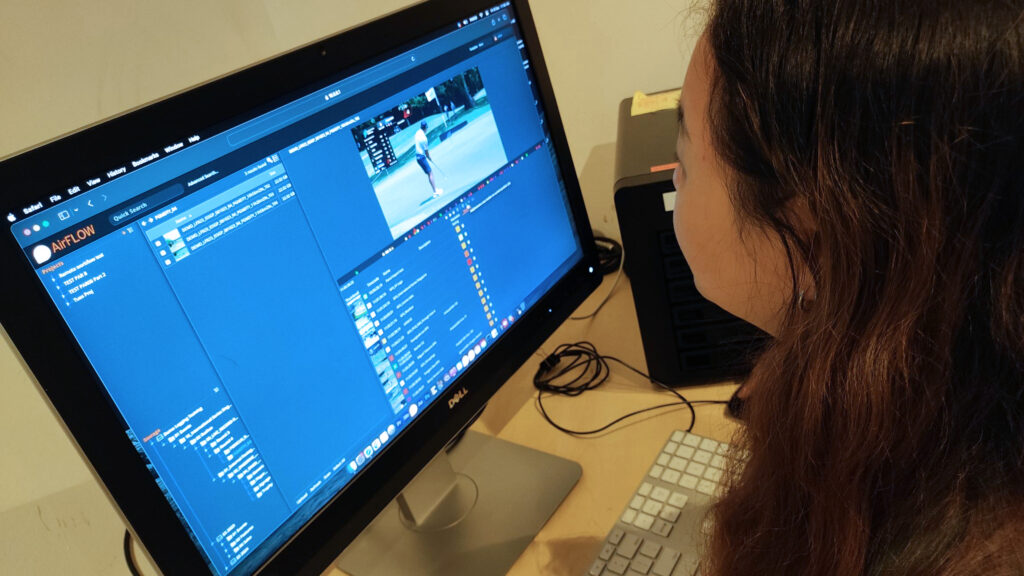
Many of these churches actually use two video teams. One team runs the “live production” for the weekly service. This generally includes multiple cameras, image magnification (IMAG), live switching, slides, and streaming the service online. Furthermore, megachurches often employ a smaller “film crew” to create elements such as bumpers that complement the week’s message, commonly known as a sermon.
We’ll take a closer look at how the video teams of these houses of worship function and some of the challenges they face.
Video is a key medium for megachurches
It’s reported that 66% of megachurches “always or often” have video segments as a part of their services. Video helps these churches communicate a consistent message to their communities. Some churches meet at a single location with multiple services, while other churches have adopted a multi-site approach to their ministries. In either case, a core creative team usually helps produce design and media (with the help of volunteers) for the entire organization.
Live Production
The “Live Production” video team helps to produce the Sunday service. 75% of megachurches use IMAGE (image magnification) technology to help the crowd get a better look at the speakers and worship leaders. This involves a multi-cam setup that generally employs professional cameras, broadcast zoom lenses, and support such as jibs, gimbals, and beefy tripods.
Volunteers trained by the staff on the live production team frequently operate the cameras. This also offers an excellent opportunity for students and older teens to get some hands-on experience with gear. Even though I didn’t attend a megachurch, I remember as a teen learning to work a soundboard, lavs, recording gear (cassette tape! It was the 90s!), and projectors, and I’m still using those skills today (well, maybe not the cassette tape skills).
These live production teams need to have a firm grasp on camera operation, running professional cabling through long runs, taking live direction over headsets, or even wireless focus pulling.
Over 90% of these churches also use streaming for their services. I was surprised to learn that 45% of Americans have viewed a church service online, even though many don’t attend church in person.
This actually produces a large amount of data that needs to be managed and referenced for special events, compilation videos, or social highlights. Increasingly, ministries have needed more robust digital asset management tools to help them disseminate these assets to their teams.
Multi-site megachurches
Many megachurches have adopted the multi-site model. In this model, there is a main campus and satellite campuses. Generally speaking, each satellite campus has its own set of volunteers and worship music leaders. The sermon may be live-streamed from the central location. Other times, the satellite locations use local pastors to deliver the message. There are multiple ways of executing this strategy and many times, the satellite locations grow into their own autonomous congregations.
Church film crew
In addition to the live production crew, megachurches often have a “film crew.” Typically, a smaller team focuses on producing pre-recorded material intended for playback during the service. In many ways, this parallels the setup of professional sports broadcasts or even “Saturday Night Live.” In both kinds of shows, there is a live presentation, and they also cut away to pre-recorded segments.
The teams that create these pre-recorded segments function as small film crews rather than broadcast teams. So they might use equipment such as cinema cameras, cinema lenses, and audio techniques more commonly found on a movie shoot.
The film crews could be volunteers or even contracted on an occasional basis. The sermon series “bumpers” could also incorporate motion graphics and 3D effects. The goal of these teams is to use the beauty of cinematography and the emotional impact of storytelling to touch their audience. These teams use aesthetics and story as an extension of the Sunday message. They try to find ways to visualize the text of scripture or the stories of their community.
Challenges of video production in a megachurch
Most of the time, church leaders aren’t media professionals. This leads to challenging situations around review and approval processes. All video professionals know that it takes a long time to do high-quality work. We also know that people outside of production have difficulty understanding the necessary timelines to deliver solid work. Sometimes, those mismatched expectations can lead to burnout. In the article, Life after Church, several filmmakers describe those challenges.
Communication is key to helping leadership teams and creative teams work together in healthy ways. Creative briefs, budgets, and time estimates can help align expectations regarding production.
When you enter post-production, the review and approval process can be tricky on any project. This is where tools like MediaSilo can come in and streamline the process. It makes it much easier to work together as a team.MediaSilo also makes it simple for teams to find and repurpose archival footage. This helps to keep the video team’s efforts valuable into the future so that you aren’t digging through hard drives looking for clips.
Streamlining review and approval
Church film crews (often just a couple) also cover things like international mission trips, fundraising videos, testimonials and more. When working on the road, it is common to need to “get something up so they can see something.”
However, WiFi networks can be slow and unreliable in the field. MediaSilo’s uploader is one of its best features. It gives you the percentage uploaded, the upload speed, and the estimated time for the upload to complete. If the upload is interrupted, MediaSilo will let you know. Then, it will continue where it left off once a connection has been re-established.
When you approach the end of a project, you can enter into a phase where you repeatedly upload versions and tweak a video. We all know how disappointing it is to attempt a large upload to a cloud provider and have it fail after partially completing the upload. You can waste hours trying alternative services, re-uploading, or changing formats.
MediaSilo features panels for Adobe Premiere Pro and DaVinci Resolve so that you can go right from your timeline into the cloud, and reviewers will be notified. This eliminates the frustration of a multi-step export, upload, checking the upload, and then sending out a review email/message. This automation can distinguish between getting home in time for dinner or getting stuck late in the edit bay on a Saturday night.
Churches and feature-length films
As filmmaking has become more accessible, churches have embarked on feature-length documentaries and even narrative films. The Kendrick brothers (Fireproof, Courageous, War Room) started their film career out of Sherwood Baptist Church. That experience helped them grow as filmmakers, and they eventually started their own production company, Kendrick Brothers.
The church has a complicated and evolving relationship with Hollywood. The award-winning documentary Reel Redemption, directed by film critic Tyler Smith, goes into the history of how the church has engaged Hollywood. Smith covers it all from the Hayes-code to the international hit, Passion of the Christ, to schmaltzy faith-based films, to the latest entrants that have sought to improve on the craft of filmmaking. It’s an insight deep-dive into this little known chapter of Hollywood history.
This system has provided a network where young people can start as volunteers on a live production team on Sundays and move up to bigger projects with larger audiences while growing their careers as filmmakers.
Conclusion
According to NPR, there are over 1,800 megachurches in America. Many of these are amongst the fastest-growing churches in America. However, the pandemic did have a substantial impact on in-person church attendance. But with over 60% of the US population attending church at least once a month, we will continue to see the importance of video production grow in the faith-based space.
In the same way, as we are seeing the cross-pollination of disciplines between television broadcast tools and film production techniques, we’ll see collaboration between live production and film crews in churches.
EditShare tools like MediaSilo and EFS can help facilitate that collaboration with solutions for on-site storage, remote collaboration, and review and approval.
It will be exciting to see this space continue to grow. And it will also be good to see it develop in its capacity to nurture artists while still faithfully sharing its message.
Data breaches are costly – creatively and financially. Trust your content to a product that values data security. With just a few clicks, you can easily protect pre-released or confidential content, ultimately protecting creative impact and revenue potential.
Users can now watermark images and documents with email, name and/or custom text with SafeStream technology at the Workspace, Project or Review Link level. Whether you’re trying to protect scripts, key art, screenplays or call sheets, we help keep your projects safe and sound. Sleep better knowing you don’t have to worry about waking up to a catastrophic content leak.
Apply Watermarking Requirements to Your Workspace
As an administrator, you can require visible image and document watermarking for every new project created in your workspace.
Start by clicking the gear icon in the left-side navigation bar, which will take you to the Administration page. In the SafeStream tab, select Watermark Settings from the menu to open your workspace-level watermark settings. Now, toggle on Apply Visible Image and Document Watermarking.
Next, use the dropdown menus under Image Template and Document Template and select your default watermark template to apply to new projects. You can choose a template that displays a viewer’s full name and email address, the viewer’s email address only or a custom template created for your workspace.
On all templates, the watermarks will be displayed in a “wallpaper” format, which repeats diagonally across the entire image or document.
Apply Watermarking to a Project
You can apply visible image and document watermarking to all images and documents inside a project, provided the files match our list of supported file types.
From the project settings, a project owner or administrator can find watermarking options in the SafeStream tab. Simply toggle on the Apply Visible Image and Document Watermarking tab and use the dropdown menu to select the template you want to apply to the images and documents in this project. Whichever template you choose, the viewer’s identifying information will be displayed in a “wallpaper” format, which repeats diagonally across the entire image or document.
Apply Watermarking to Unwatermarked Files in a Review Link
Applying watermarks to images and documents at the Review-Link level allows you to protect select items you’re sending without using those watermarks on the entire project.
Click the Advanced button in the bottom left in the Share for Review window, and toggle on the Apply Visible Image and Document Watermarking tab in the Watermarking section. The default templates chosen by your administrator will display automatically. You can keep these selections or choose a different template. Whichever template you choose, the viewer’s identifying information will be displayed in a “wallpaper” format, which repeats diagonally across the entire image or document.
If these watermark templates display a viewer’s identifying information, you must enter link recipients in the Audience tab on the left side of the share window.
Your choice of watermark template can affect the link’s Access setting.
If a watermark displays the viewer’s name, you must select Workspace users and enter workspace users as recipients.
If a watermark only shows the viewer’s email address, then you have the additional access options of Public and Password protected. When you select Public or Password protected, you can enter any email address in the recipients field, even if that email does not belong to your MediaSilo workspace.
For more detailed information, please visit our support page or contact us at sales@mediasilo for a demo.
You already know how important good audio and sound is for a film. When was the last time you watched through the entirety of a video with bad-quality audio? As an audience, we can deal with a certain level of poor video quality, provided the sound quality is still good. However, as soon as the sound is bad, we’ll stop watching.
While filmmaking is a visual medium for storytelling, it’s undeniable that audio plays a huge role in the process. To create great films and videos, you need to produce great audio and sound. Let’s take a look at 8 tips to achieve great film audio production.
Microphone choices
First things first, let’s talk about microphones. Yes, every camera nowadays comes fitted with its in-built microphone, but let’s be honest…these simply don’t cut it.
If you’re serious about capturing great audio and sound, you must invest appropriately. Just as we invest in cameras to achieve beautiful visuals, we need to invest in microphones and develop professional microphone techniques to capture stunning audio.
For video production, there are two main microphones to consider:
Shotgun mics
Long and cylindrical, the shotgun microphone is directional. It picks up sounds directly in front of the mic while rejecting and toning down ambient sounds to the rear and sides.
Shotgun microphones are highly versatile, allowing you to capture all kinds of sound, from actor dialogue to room noise and wild sound. Because of its directional nature, you will need to think about where you place a shotgun microphone and how you use it. We’ll take a look at how to do this below.
Some of the broadcast-grade shotgun mics you may want to consider:
Lavalier microphones, often termed “lav mics” or “lavs” in the industry, are the classic small-form clip-on microphones you’ll see used frequently in interview videos or where a presenter is talking to the camera.
Unlike their shotgun counterparts, lavalier microphones are very small and designed to be lowkey and unobtrusive. Because of this, Lav mics don’t really pick up that much background noise. Lavs are much more about capturing quality, clear audio from the person they’re attached to.
Some of the broadcast-grade lavalier mics you may want to consider:
To boom, or not to boom? That’s a common question when tackling how to capture great audio during video production. As discussed above, there’s a clear difference between shotgun and lav mics. To capture really high-quality audio and sound for your film project, you need to consider the following:
Which one you’re going to use
When you’re going to use it
Where you’re going to use it
With a lavalier microphone, you’ll capture clear, crisp human speech from the actor. However, it can create a sense of closeness for the audience, which may feel a little jarring or strange if we’re watching a wide shot. This is where you need to think about the microphone perspective.
Shotgun microphones can be attached to a boom pole, which then gives you the freedom to experiment with the microphone perspective. If you’re looking for closeness, you can bring the boom in closer to the actor. Equally, if you’re going for a wider shot and want to capture a bit more of the room tone or environment, you can bring that boom away so that the audio recording feels more natural with what you see on screen.
Stop and listen
When you’re in the middle of production, firing on all cylinders and juggling ten things at once, it can be easy to forget to check your audio before hitting record. However, it’s an essential part of any professional production.
When you take the time to listen to your audio before each shot, you’re allowing yourself to catch any potential mistakes or errors. You may notice that you can hear the traffic from a distant highway or planes from a nearby flight path. All these details help you to adjust and rethink the way you shoot this particular scene. Or perhaps (I’ve experienced this plenty of times), you realize you need to switch on your microphone!
By taking the time and slowing down to listen and double-check things, we save ourselves a lot of pain further down the line in post-production.
Invest in necessary accessories
Again, just like with cameras, where we buy different lenses and ND filters for specific scenarios, along with tripods, lights and whatever else you can think of, you need to invest in additional accessories and gear for your audio-capturing gear.
Noise-canceling headphones
On the topic of listening to audio before shooting, it’s well worth purchasing a high-quality pair of noise-canceling headphones. These will eliminate all the background noise on set and enable you to focus on the actual sound of the film. This approach often helps you detect any potential mistakes that need to be smoothed out. When the guy with the headphones on set says do it again, you do it again.
Some of the best noise-canceling headphones you may want to consider are:
It’s advisable always to avoid filming in windy conditions at all costs. However, that’s sometimes easier said than done. As filmmakers, we can’t control the weather; therefore, it’s well worth ensuring all your microphones (lavaliers and shotguns) have deadcats. These fluffy mic buffs will shield the condenser from any unwanted noise, such as wind or even a sharp exhale of breath, that could cause the audio to clip and create all kinds of issues in the edit.
Compressors and limiters
Making use of compressors and limiters can help you to smooth out an audio signal. On many higher-end microphones, you may well find that they already come with an in-built option for limiting. Employing a limiter prevents the amplitude of a signal from exceeding a predetermined value. In other words, you hopefully stop any potential clipping from happening.
Meanwhile, a compressor will reduce the volume of louder sounds while amplifying quieter sounds. This effectively compresses the audio signal’s dynamic range, making it “smoother” and easier to work with.
Think about your location
When you’re location scouting in pre-production, don’t just analyze a space from a visual perspective. Think about location in terms of audio.
How does your voice carry in a certain location – is it bouncing off walls and echoing? Are you on a busy flight path? What elements of the environment can you control, and what can you not?
Developing location-sound strategies will help you immensely later in post. Ideally, the more things you control, the better.
Room tone
On the topic of location, it’s a great idea to pick up room noise and ambient sound from the places you shoot in. Think of this as Foley on set.
When you’re in post-production working on your film sound design (more on that below), it can be very difficult (often impossible) to recreate the exact ambiance and match it with the scene you’re working with. Sometimes called “room tone,” this process helps you precisely capture the tone of your room.
For this, you may want to invest in an audio recorder, or you can use something like a shotgun microphone. However, you do it, it’s a really useful habit to have, giving your sound designer much more to work with in the edit.
Clean dialogue
Depending on the type of video or film you’re making, you may want “clean dialogue” capture.
Even if two actors are interacting with each other, going back and forth in a scene, it’s a good idea to have them redo their lines afterward, just one actor at a time. Capturing these lines crisply and clearly, with no interference from anyone else, gives you much more to work with in post-production. Clean dialogue can allow you to speed up lines, cut them out, overlay them elsewhere, and perform many other little tricks in the edit.
Post-production
Typically, the phrase “we’ll fix it in post” should cause you to run for the hills. As a professional filmmaker, you should never rely on post-production as a surefire way to patch up bad production. However, certain elements of post-production audio are essential when it comes to quality audio and sound.
For example, don’t be afraid of SFX. Great filmmakers understand that not everything can be captured during production. When you’re editing your film, you need to work closely with SFX to help build out your environments with sound design, helping to bring the visuals to life and make the audience feel like they’re truly there. This is where capturing things like room tone and ambiance can lend a helping hand.
Additionally, if working with actors, you may also need to capture ADR (audio dialogue replacement) to ensure you’ve got the best-sounding edit possible.
Wrapping up
So, there are 8 great tips to help you capture great audio and sound in your next video. It’s a challenging part of the filmmaking process to perfect, and many filmmakers can shy away from it. However, as this arti
Large nearline server nodes directly connected to live production system
Boston, MA, January 16, 2024 – MTV Oy, the leading commercial television company and production house in Finland, recently relocated to a new center in the suburbs of Helsinki, seizing the opportunity for a major technical refresh. The facility serves multiple channels and streaming services, and a key part of the project was to migrate its extensive news and sport archive from tape, a task accomplished with EditShare providing the latest storage technology.
Central storage for all live production is provided by four nodes of EditShare EFS 60NL nearline storage, with a total capacity at present of eight petabytes. The EditShare storage is directly accessed by journalists and producers via their workstations, which are connected to production servers and asset management provided by EVS. The open architecture of EditShare EFS storage makes the integration seamless and transparent.
“It was important that journalists don’t have to care where the material is,” said Tommi Tynys, Head of Broadcasting Technology at MTV Oy. “Whereas getting content from the tape archive could take 30 minutes or more, now users search directly for what they need and it is instantly available to them. We need to take the fight to our competitors, to be first with the news, so performance is vital to us.”
The facilities at the new center are managed for MTV by NEP Finland, and the companies collaborated on designing the new architecture. The complete center was built by Broadcast Solutions Nordic, with Pipeline Media providing continuing support for the systems.
“One of the great things about EditShare is that the storage network is completely scalable,” said Jukka Keski-Loppi of Pipeline Media. “Our estimate is that the MTV archive will grow by 350 TB a year, and we can add storage as we need it without taking the system offline.”
MTV’s Tynys added that the system was also extremely reliable and resilient. “It took a while to transfer all our archive into EditShare,” he said. “But now it is running we have had zero downtime, even with a lot of users demanding simultaneous access.”
Stephen Tallamy, CTO at EditShare added “In demanding environments like MTV, nearline means virtually instant. We designed the EFS 60NL as an ultra-high density storage node for media that needs to be accessible, but does not need the performance of an online production workflow.
“That transforms the architecture of the news and sport facility: the complete archive can be online thanks to the very high storage density of our solution, and at the same time it’s available to all users, when they need it.”
The EditShare EFS 60NL is built for high performance media applications. It uses native erasure coding, eliminating the need for hardware-based RAID while providing complete resilience. The standard chassis holds 60 enterprise-grade disk drives, all hot swappable from the front of the rack.
EditShare is an Emmy Award-winning technology leader, supporting storytellers through collaborative media workflows across on-premise, cloud and hybrid architectures. The market-leading open software solutions and robust APIs improve workflow collaboration, third-party integrations and content sharing across the entire production chain. Designed specifically for media applications, the high performance line-up provides shared storage, archiving and backup, and intelligent media asset management.
Through a merger with Shift Media, EditShare now also integrates tools for content review and distribution, the creation of customised and branded pitch reels, and secure preview of high-value pre-release content.
About MTV Oy
MTV Oy is Finland’s leading commercial television company and video content house. MTV’s media family includes the MTV Katsomo streaming service, the TV channels MTV3, MTV Sub and MTV Ava, as well as MTV Uutiset, which broadcasts latest news on multiple channels.
MTV is part of Telia Company, one of the largest television companies in the Nordics, which leads the way for the development of the entire media industry.
An innovative workflow for the production of sports broadcasting for the Hangzhou Asian Games
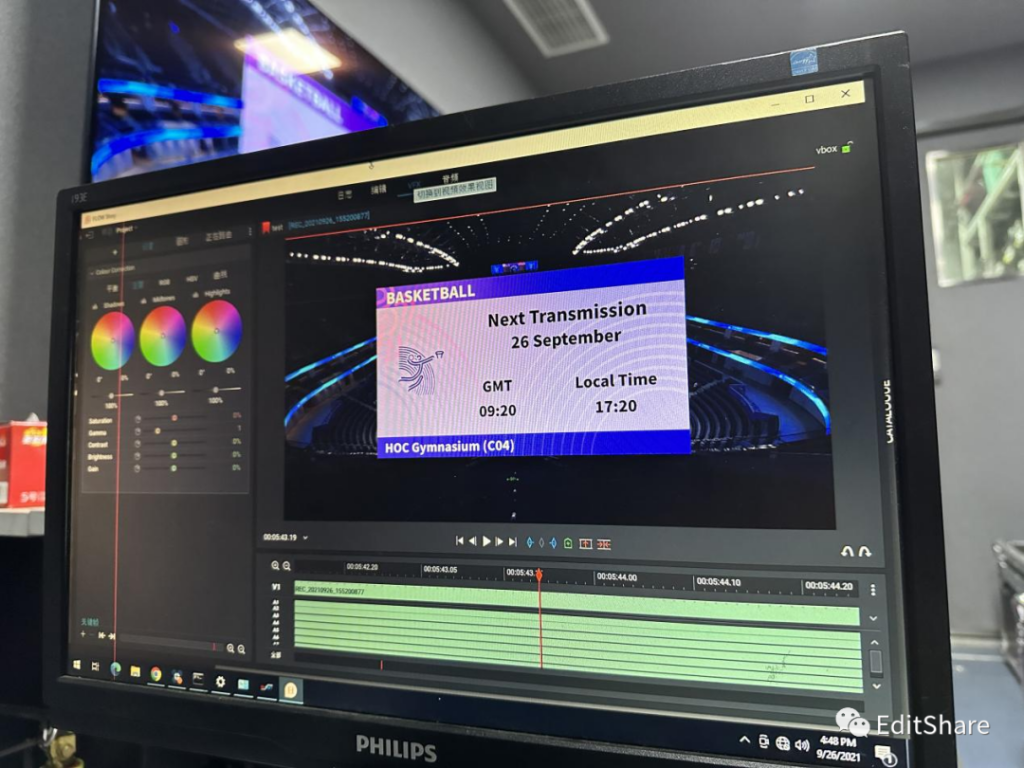
The 19th Asian Games took place in Hangzhou in September and October 2023. Guangdong Radio and Television was contracted to cover the basketball competition on behalf of the host broadcast organization.
The goal was to provide high quality, exciting coverage in 4k Ultra HD of all the games, together with informative packages and summaries around the games. That called for sophisticated post production which could turn the content around very quickly.
Guangdong Radio and Television worked with EditShare’s partner in China, ThinkTone, to develop a core shared storage production system. This was built on a network of EFS storage nodes, linked by EditShare FLOW production asset management software.
FLOW makes it easy for users to find the material they need, and system administrators can direct individual content to bins in each edit workstation to speed up the process. FLOW panels are available for all the popular edit software packages, including Adobe Premiere Pro and BlackMagic DaVinci Resolve, so editors never have to leave the familiar environment.
Online Editing
Covering a major live sporting event is a big test for any production workflow, but the EditShare system delivered against all the demands. All the camera and other feeds, as SDI or IP, were acquired onto the EFS storage network whilst FLOW created proxies on ingest to make it easy for multiple users to start editing immediately. FLOW also automatically generated all the appropriate metadata to guide users to sort material.
Because ingest is completely automatic, it eliminates tedious linking and labeling in traditional workflows. Having both the full resolution and proxy material available maximizes the bandwidth while allowing large numbers of users to work simultaneously, creating different packages as the event is taking place. Editing while recording transforms the way that content is used in live events like this competition.
The result was lively and engaging coverage and analysis of every game of the tournament, thanks to the operational efficiency of the EditShare system. Operators and editors were able to focus fully on making the best possible content by saving them from dull and repetitive tasks, which were all fully automated.
The success of the project also paid tribute to the intuitive user interface, as well as the absolute reliability, of the EFS storage platform and FLOW production asset management. The EditShare environment ensured that the operators from Guangdong Radio and Television immediately felt sufficiently comfortable to rely on it for a very high profile, technically demanding production, with a large number of live events, all seen by audiences right across the continent.
AMP Creative is an independent agency, based in Dallas, that aims to bring a fresh approach to corporate learning and communications. Recognizing that simply putting a lecture on video is not going to engage anyone, they develop unique, tailored solutions that use the latest techniques to create packages that are immersive, attractive and compelling – while also getting across important messages.
The company’s roots lie in video production, with that experience and excellence drives much of their work. Their role is to find the compelling narratives and convey them in the most appropriate way.
As a successful business, AMP Creative has generated a lot of content over the years, and managing and maintaining work in progress and archives has been important. From early in the business’s lifetime it has relied on EditShare hardware to provide secure storage and archiving, along with content management using FLOW software.
Into The Cloud
Then along came COVID. AMP Creative moved its own operations into the cloud, allowing its large team to work remotely. With its clients also being forced into new working practices, the need for communications was greater than ever so AMP had to find a way to keep providing their signature services.
While it was simple to move AMP Creative business functions to the cloud, it became clear that they need to move their production capabilities, too. They turned to EditShare to see how their proven editorial workflows could be modified for the new environment.
The response, they were happy to find, was that EditShare was already there, and had a fully developed and ready to run cloud environment. FLEX provides the same comfortable, familiar environment of EFS storage and FLOW media management, with the same ability to manage content and projects so the creative teams can concentrate on delivering great material.
FLEX provides all this functionality as a cloud-native package. It goes further than that, by supporting editing in the cloud – where the familiar software tools run in the same remote environment as the content storage – and by automating all the necessary transfers.
AMP uses Adobe® Premiere® Pro as its preferred edit platform. FLOW fully integrates with Premiere Pro, putting project cloud storage into pre-prepared bin structures so editors are working just as they always have, with no need to learn complex communications and interconnectivity.
Remote Working
To optimize for cost, AMP Creative opted for a hybrid option of Proxy Editing using local workstations and conforming to the high resolution with using virtual GPU-powered workstations deployed in AWS. This allows remote editors to utilize their existing workstations for editing against lightweight proxy video and then use power rendering capabilities in the cloud. Proxies are automatically generated by intelligence within FLEX, which ensures each editor’s workstation is ready to go with high quality, frame accurate proxies. Projects and additional material can be easily uploaded to the cloud using CloudDat file acceleration from EditShare partners Data Expedition.
This has proved to be highly effective: editors are working in exactly the way they always have; producers have excellent oversight of projects; and clients receive excellent materials in a timely manner.
Transformation
For AMP Creative, the transformation is that it has closed down its traditional server room. This is a big saving in equipment, maintenance and real estate which is a major boost to the business. The company was already an experienced AWS cloud user, so the need for training for IT staff was minimal, as was the training requirement for creative staff who were seeing the same environment as before. EditShare was pleased to provide the necessary support to get AMP up and running.
The effects of the pandemic were transformational for many individuals and businesses. AMP Creative recognized it as an opportunity to take a major step forward in the way their creative storytelling was facilitated. EditShare FLEX made it simple and practical to move completely to a hybrid and remote operation.
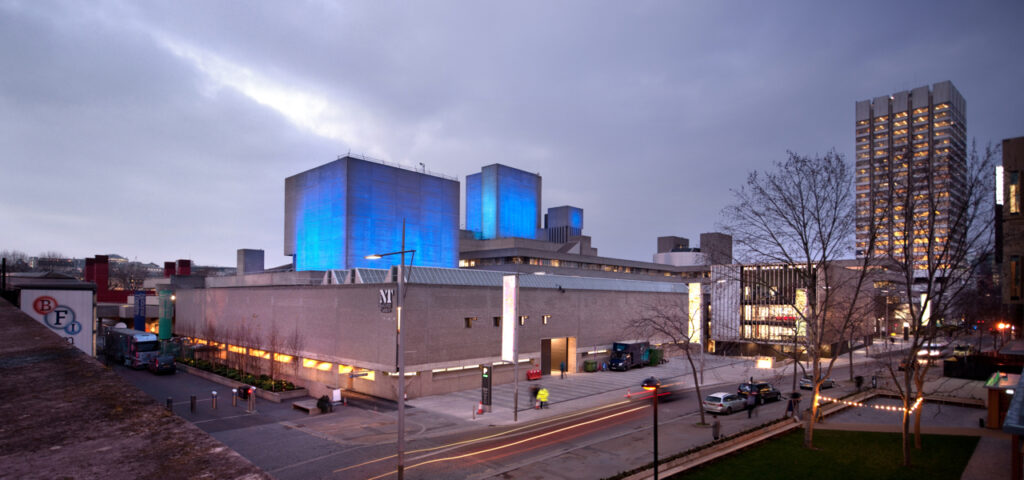
The Royal National Theatre – more usually referred to as the National Theatre, the National or just the NT – is one of the UK’s best known theatre venues. Founded in 1963, the reach and influence of the National has extended over the last 15 years beyond its concrete building on London’s South Bank. This is in part due to NT Live, the cinema programme of multi-camera captures of productions, distributed by satellite or DCP, to over 700 UK sites and more globally. Making the arts more accessible to a wider audience.
During the covid pandemic the National Theatre’s live performances were suspended but they adapted by creating the NT at Home streaming service. Initially it started as a program of free streams on YouTube with the full NT at Home SVOD service launching in December 2020. During this time the National Theatre discovered inefficiencies in the infrastructure when faced with a large increase in captured content, so they needed to look at the addition of post production storage. Central to this was the installation of an EditShare EFS 300 storage system, which was designed and implemented by Tyrell.
“When the pandemic hit, we were no longer able to capture new material and the cinemas were closed as well,” comments Jim Cross, Senior Post Production Manager, National Theatre. “But part of our Arts Council remit as a publicly funded organization is to bring theatre to our audiences. Because of this we started putting out productions free on YouTube, which became the NT At Home platform. To support that we went from a team of 15 to now nearly 60 people, who now work on the dual delivery of NT Live for cinema and purpose capture for NT at Home.”
Cross explains that these services along with the requirement to promote shows in the theatre, as well as the rise in the volume of work for the internal learning department meant their workload increased significantly. As a result, both the production/post-production and archiving departments realised the three legacy servers that had been used since the mid-2010s were no longer suitable for the increased demands being put on them. “It was very hard drive-based, with IT ‘non-video’ servers that weren’t specifically for media,” he says. “And these days we do less live satellite, we do more full post-production workflows in house, including editing, mixing and grading, so we needed a more dynamic, powerful and robust solution.”
This has meant there is a lot more media moving around and being worked on by the edit team, which has doubled in size in the last three years. Cross explains that by the end of 2021 the increased workload meant the NT was beginning to run out of storage. “During the covid pandemic everyone was working from home and shuttling hard drives back and forth,” he says. “We knew we were going to come back into the building, but it became very obvious we needed near-line, hot storage. A NT Live show takes on average 4 terabytes of storage and it would take three, four or five hours to ingest that. Now with EditShare EFS we can do it in just 45 minutes.”
The NT’s digital content is archived using the Preservica cloud-based platform and although that is a self-contained operation, it needed to connect to any new near-line storage set-up in a more efficient way than previously. “Historically there wasn’t such a smooth workflow process around getting material from the digital media team into the archive involved a lot of local knowledge on the part of the editors, producers and me,” comments Post-Production Archive Manager Zoe Bowers, who describes herself as sitting between the digital media team and the archive. “The move towards the new EditShare system came in tandem with thinking we all needed to know where content is so we can find it, particularly as so much more is being created.” Tyrell’s sales and marketing director, Dan Muchmore adds, “it’s a common issue that every facility hits as they grow and it’s our speciality as a technical partner to help migrate workflows away from a single source or knowledge to a way of working that benefits the business, regardless of team size and structure”.
The NT previously did not have a digital asset management system but worked on a SMB file share arrangement, with folders for short-term and long-term storage. With both Tier 1 and Tier 2 server systems nearing the end of their operational lives, Jim Cross and Zoe Bowers instigated a request for proposal (RFP) process, with EditShare being their primary choice for a new system.
“I worked with Tyrell on the installation of the system into our server room, which involved the networking and commissioning of the 256TB EditShare hardware,” Tom Rhodes, Head of IT Infrastructure explains. “But really it was all quite self-contained within the EditShare technology. It’s now utilized on our 10Gb infrastructure, which allows us to ingest material a lot quicker than before. EditShare also has its FLOW media asset management software and although we haven’t fully implemented this yet, it is something we looked at when selecting the system.”
The National Theatre has been using EditShare for 18 months and in that time, Jim Cross concludes, the new storage installation has changed the way the post-production process for the NT. “Previously the team would take material from the SANs and save content locally and on drives,” he says. “Now, the machines themselves are clear of data and we don’t use hard drives in that way anymore because of how fast it is. This means anyone can pick up a project at any point because everything is in EditShare. It has revolutionized the way we work.”
The NT has always led the way in representing the arts in the UK. Constantly evolving to find ways to make productions more accessible to wider audiences, both geographically and financially. NT Live began as a fantastic initiative and become a leader in the event cinema industry. What we love most about their hunger to evolve is that the NT team worked hard to not only maintain the value of the arts to its patrons but also the actors and production teams, who would have been impacted by the loss of work.
This evolution continues to this day, with Jim, Zoe and Tom not only identifying their post production inefficiency but also the importance of their roles as stewards of the NT archive. Inefficiencies often result in additional expenditure, which could instead be used by the arts and as we know the NT archive is important for future generations. EditShare solves both these problems whilst giving the team another opportunity to evolve again.
Brings order to the complex demands of golf coverage
Boston, MA, December 11, 2023 – EditShare®, the technology leader that enables storytellers to create and manage collaborative media workflows, has delivered a shared storage system, with integrated asset management, to Singapore-based Asian Tour Media. The company provides coverage and content distribution for the Asian Golf Tour, the only recognized pan-Asian professional golf tour in Asia.
Asian Tour Media had an existing shared storage network, but its operation was severely limited by its lack of practical production asset management functionality. Editors searching for material were using OS searches, which was slow and inconvenient. As well as good asset management, the new storage system also had to provide comprehensive support for 4k Ultra HD, including the ability to move material as proxies when bandwidth was limited.
The Media Village, EditShare’s partner in Singapore, set up a comprehensive demonstration built on EFS storage nodes and FLOW production asset management. The proof of concept also showed that the EditShare architecture provides ample bandwidth for multiple I/O and concurrent users in 4k.
In capturing all the coverage of a professional golf tournament, the production generates a huge amount of content. The new EditShare installation allows media managers to put markers on all the action points afteringest, so editors can instantly access the clips they need. The system is used on the road at tournaments, and also in Asian Tour Media’s headquarters to prepare packages in advance to make the live coverage more engaging.
“We knew that we wanted to replace our aging video servers,” said Peter White, Senior Head of Production,at Asian Tour Media. “We wanted good asset management, and excellent bandwidth for multiple users and remote access. The Media Village arranged a demonstration, and the rest is history.
“At Asian Tour Media, our content and our staff are the assets.” Whitecontinued. “With EditShare we have found a better way of managing and monetizing our content. We are developing new workflows which will allow us to become more efficient. Time saved means more time to be creative – and more work/life balance for the staff.”
Said Bacho, Chief Revenue Officer at EditShare commented “With our local partner The Media Village we could show Asian Tour Media how they could transform their workflows with EFS and FLOW, and give them the confidence to develop efficient workflows and operational practices they need. That is because the technology is designed for production professionals, making it logical and intuitive to use and absolutely reliable when there is no second chance.”
EditShare is an Emmy award-winning technology leader supporting storytellers through collaborative media workflows across on-premise, cloud and hybrid architectures. The market-leading open software solutions and robust APIs improve workflow collaboration, third-party integrations and content sharing across the entire production chain. Designed specifically for media applications, the high performance line-up provides shared storage, archiving and backup, and intelligent media asset management.
Through a merger with Shift Media, EditShare also now integrates tools for content review and distribution, the creation of customized, branded pitch reels, and secure preview of high-value pre-release content.