
A single video can take a team’s best efforts — and many rounds of revisions — to get right. When you’re working with tight timelines, you need to send files quickly and keep track of real-time updates even when you’re not at your computer.
Introducing MediaSilo GO by Shift — the best of MediaSilo’s Feed, Review and Approval, and Sharing packaged into a mobile app. Available for both iOS and Android, now you can share content and gather feedback right in the palm of your hand.
(more…)
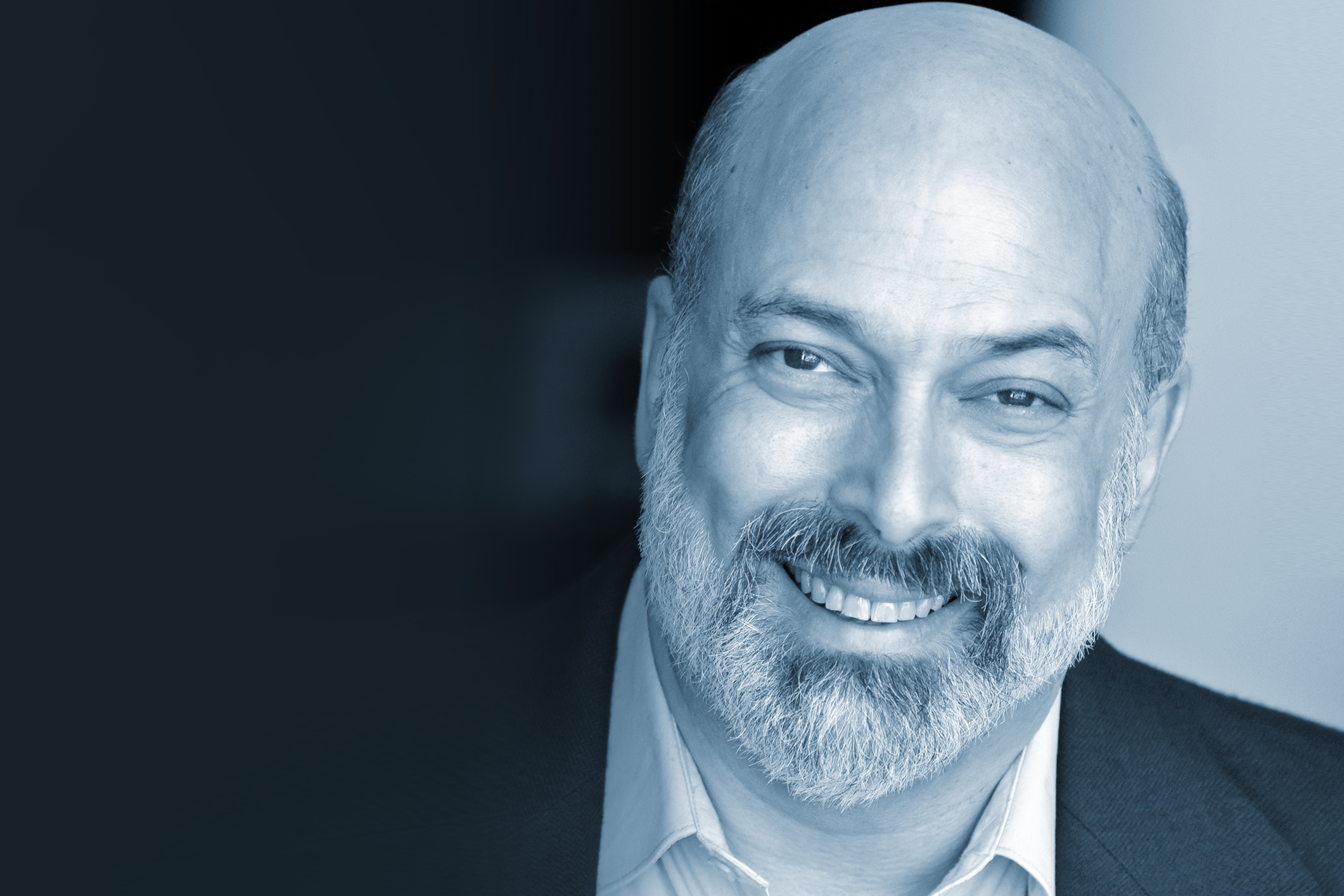
The fab five on Queer Eye were talking so fast, it forced me to turn on captioning, which turned out to be serendipitous. There, I discovered the option “English – Audio Description” and marveled at the linguistic gymnastics it required for the audio describer (AD) to squeeze in a coherent narrative of what the show was depicting visually — all in the rare quiet spaces not otherwise filled by perky music cues or Jonathan Van Ness’s ice skating metaphors.
Audio describers are tasked with using language to convey to visually impaired viewers what’s being portrayed on a stage or screen. It is unquestionably an art form, a feat of poetic efficiency. It’s also a relatively new field, debuting first on radio and then on public television in the 1980s. It wasn’t until the 1990s and 2000s that AD found its way into major theaters, television, and now, streaming.
Joel Snyder has been along for the entire ride. He helped pioneer the discipline, first with live theater at the Metropolitan Washington Ear and then into television and film by starting a description program for the National Captioning Institute. Since that time, his company Audio Description Associates, has been contracted by the American Council for the Blind to run the Audio Description Project, a large-scale initiative to promote the field. He also literally wrote the book on AD. His manual, The Visual Made Verbal, is a training manual for AD students worldwide.
In the interview below (edited for brevity and clarity), we discuss how audio description is one of the few booming fields for people with poetic sensibilities. (more…)
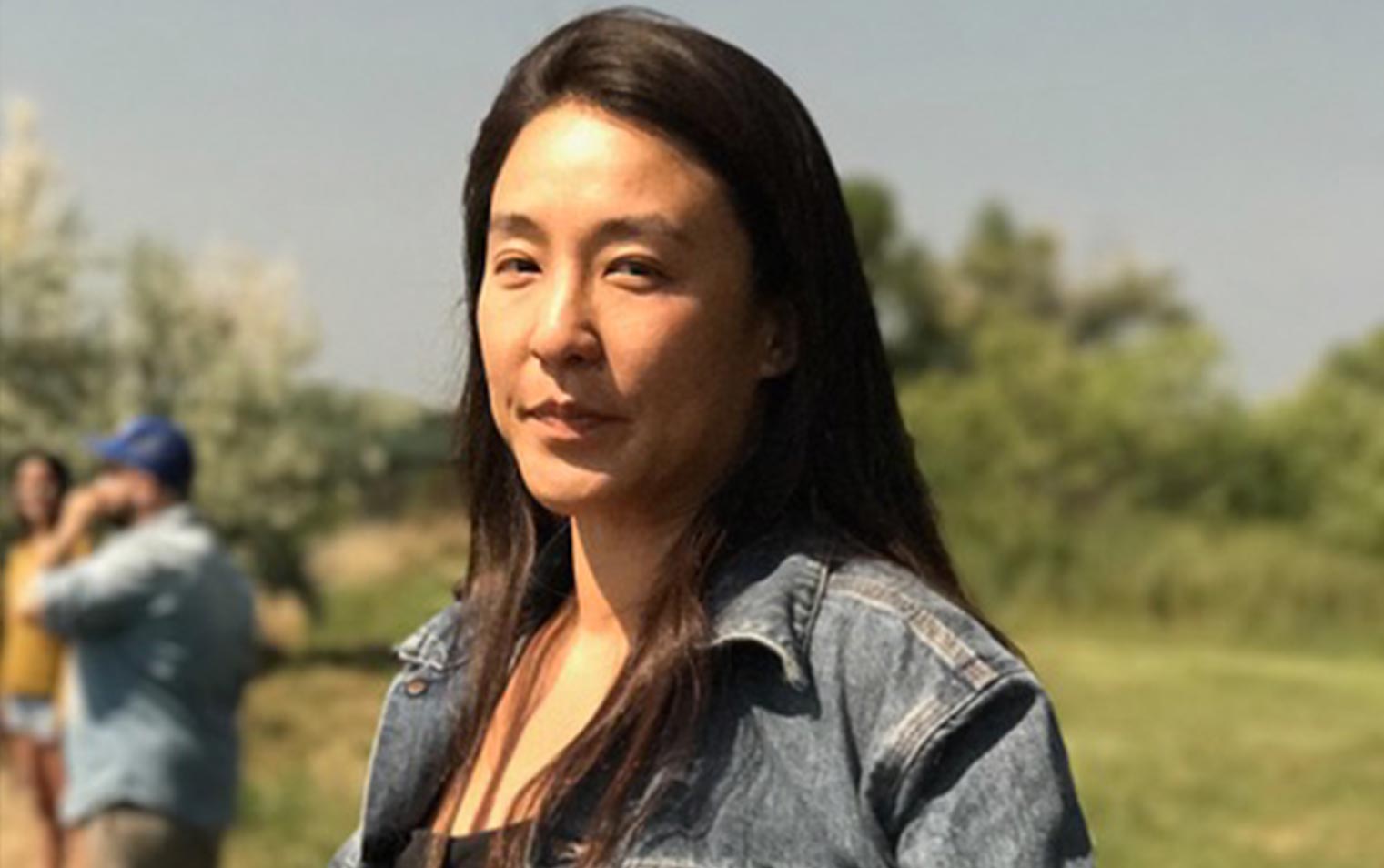
Featuring tufted velvet seats, white linen tablecloths, and wood paneling throughout, Taylor’s Steak House in Koreatown feels like a movie set, a vestige of old Los Angeles. The dim lighting gives the windowless interior a coziness underscored by its curved, dark brown leather booths. I half expect Frank Sinatra or Dean Martin to walk through its doors, but Ester Kim saunters in and slides into the booth where I’m nursing a dirty martini. The faded glamour of Taylor’s seems like the perfect environment for our interview, given her love of The Grand Budapest Hotel and its “controlled aesthetic . . . saturated color palettes . . . [its] time periods and setting all make for a visual feast,” she writes in an email after our meeting.
Kim has been back in her native Los Angeles little more than a year, having relocated from Albuquerque, where she was an active set decorator, dresser, and buyer in the city’s bustling film and TV industry. When we meet, she’s still accruing the needed hours to gain entry to the local IATSE because her union membership in New Mexico doesn’t qualify her to work in California just yet.
It’s no worry — Kim has been in the business for a decade-plus, with titles such as Breaking Bad and Whiskey Tango Foxtrot under her belt. She always carries furniture blankets and ratchet straps in her car in case she discovers the right treasure for whatever set she’s currently working on, and she has quick answers to questions like where to find the best lampshade for a 1960s-era fixture or how to re-tile a mid-century tabletop.
By the time this is published, Kim will have collected the required hours for IATSE, wrapped a film starring Salma Hayek, and begun production for a TV series she can’t discuss. I catch her before all that, though, and we spend a leisurely dinner at Taylor’s chatting about the traits that best serve someone pursuing the type of production roles that are Kim’s bread and butter.
The following are edited excerpts from our conversation. (more…)
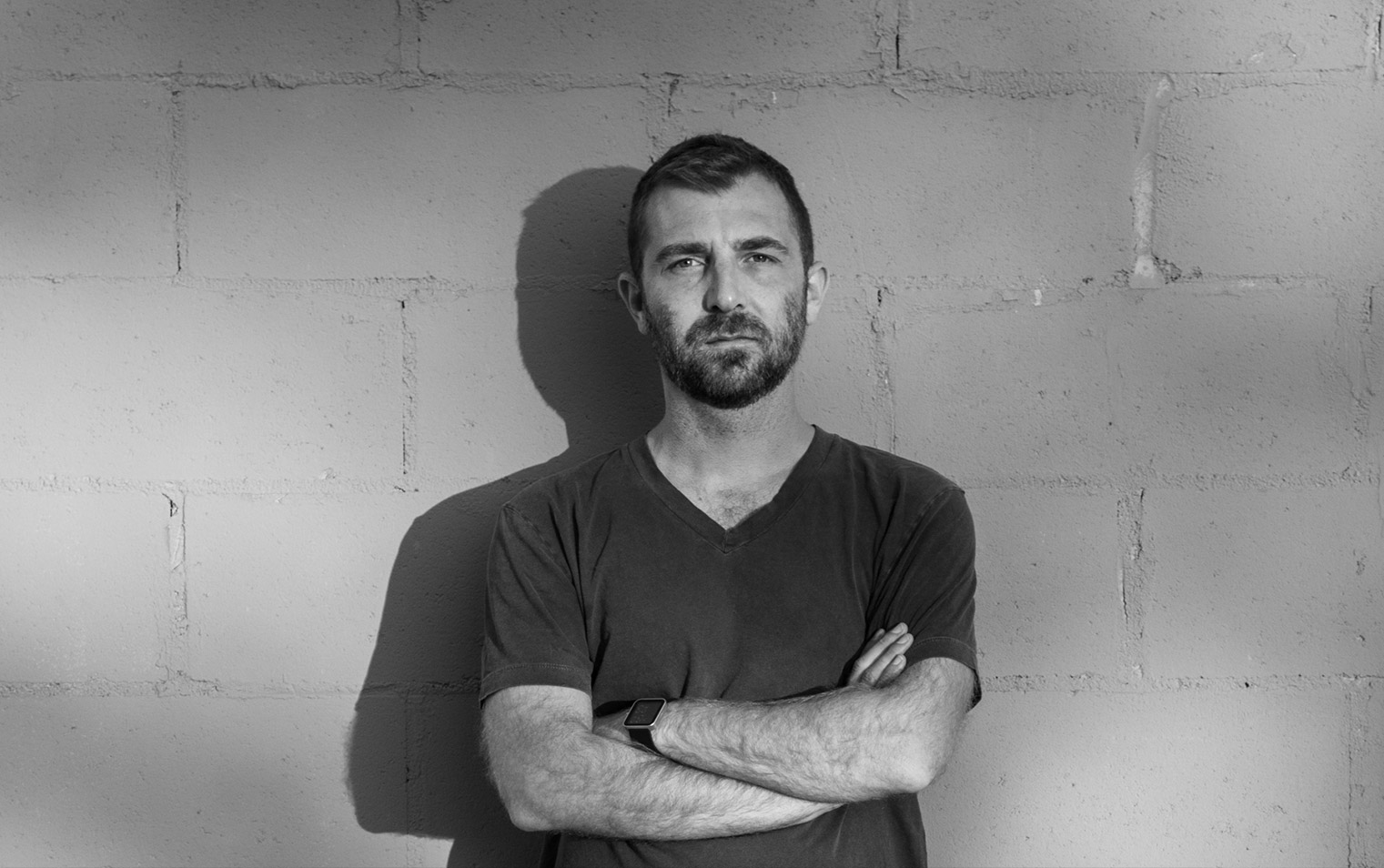
The first thing you see at Jafbox, Joseph Fraioli’s studio in West Los Angeles, is a modular synth. Just looming there, looking like an obsessive detective’s crazy wall. Jumbles of colored patch cords traverse it wildly, connecting modules together in ways that make sense only to him.
Synthesizers are made up of individual parts: oscillators produce tones, filters affect their timing, other filters affect the dynamics or feel of the tones. Most synths only let you blend the individual parts in the specific order that the designer has hard wired them. But modular synths break you out of that, letting you blend parts as you wish, ad infinitum. Exploring their possibilities is a life-long journey best suited to obsessives, alchemists, and meanderers.
Obsessive meandering alchemy is an apt description of Fraioli’s career as a sound designer and electronic musician. Fraioli, who relocated from New York in 2018, has been releasing electronic music as Datach’i since the late 90s on labels like Planet Mu and Timesig (owned by Aaron Funk/Venetian Snares). Throughout the years, he’s played with the limits of genres like drum-n-bass and techno. Sometimes his work explores the playful and melodic, other times the intense and dissonant. Fraioli’s consistency is rooted in being open, experimental, and flexible — qualities that have served him well in the world of sound design.
Fraioli’s resume in sound design is multi-layered, informed by years of investigating the possibilities of individual parts. He’s built complex, immersive installations for Kanye West at Cannes and, as a solo artist, at the Walker Art Center. He’s also created dozens of rich, sonic worlds on commercials, television series, and films (most recently on Kin, starring Dennis Quaid, Zoe Kravitz, and James Franco). In this interview with writer and musician Kerry McLaughlin, he discusses how his varied background has given him a unique approach to sound design and how staying open to accidents is the key to success. (more…)
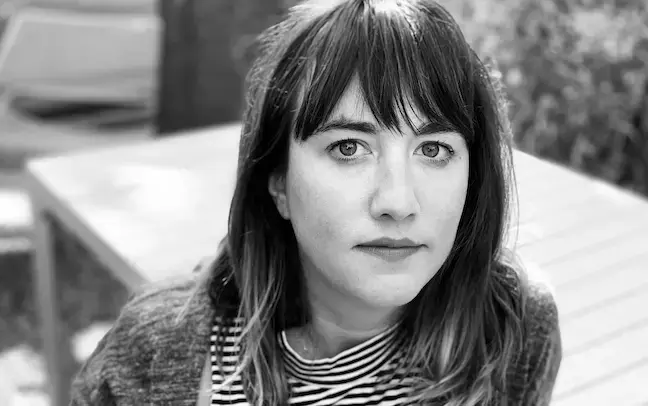
Ask any documentary director worth their salt where films really get made and they’ll confess: the edit. It’s the editor who combs through hours and hours of footage hunting for the threads that’ll weave the tapestry of the story together.
In this respect, Lindsay Utz is at the top of her game. Her latest project, American Factory, follows a Chinese billionaire who opens a car-glass factory in an abandoned General Motors plant in Ohio. Early optimism gives way to setbacks as high-tech China clashes with working-class America. The film combines humor with heartbreak, the duality that drew Utz to the story.
She’s eschewed the current trend toward slick, over-produced documentaries in exchange for intimate stories that tackle politically engaging and timely cultural issues. It’s made her job more challenging — often she must slog through thousands of hours of footage to search for the beats and characters that push the narrative forward. But, ultimately, it’s created a rewarding career.
Her instincts were likely what caught the attention of Julia Reichert, one of the top documentary directors working today. Since 1971, Reichert has made feature-length documentaries that embrace tough subjects: socialism, feminism, unionization, and radical action. They’re noted for their compassion and empathy, portraying complex political stories through the lens of ordinary people.
No surprise, then, that Jonathan Olshefski’s documentary Quest (2017), an Utz-edited intimate portrait of the daily struggles of an African-American family living in Philadelphia, caught Reichert’s eye. Indeed, Quest, a nominee in two Emmy categories this year, has already netted Utz a Cinema Eye prize for Outstanding Editing.
Given the recognition Utz is receiving from all quarters, Reichert’s decision to approach her about American Factory makes a lot of sense. Utz, deeply committed to verité craft and stories with substance, was immediately interested in the project.
It’s choices like these that are putting Utz at the forefront of her game. She’s served on the jury of tier-one documentary film festivals, such as 2018’s Full Frame. And earlier this year she was asked to join the Academy of Motion Pictures’ documentary branch, a responsibility that’ll mean watching up to 200 documentaries each year to help choose the nominees for best documentary in both the feature and short categories.
While American Factory is the first film to be released through the Obamas’ Netflix-partnered Higher Ground Productions, it won’t be the first time a documentary edited by Utz is receiving early whispers among Academy members. Her first film, Bully, was shortlisted for an Oscar after premiering at the Tribeca Film Festival.
Journalist Elaisha Stokes, herself a documentary filmmaker, sat down with Utz before American Factory’s release to talk about what it takes to get through such a monumental edit. (more…)
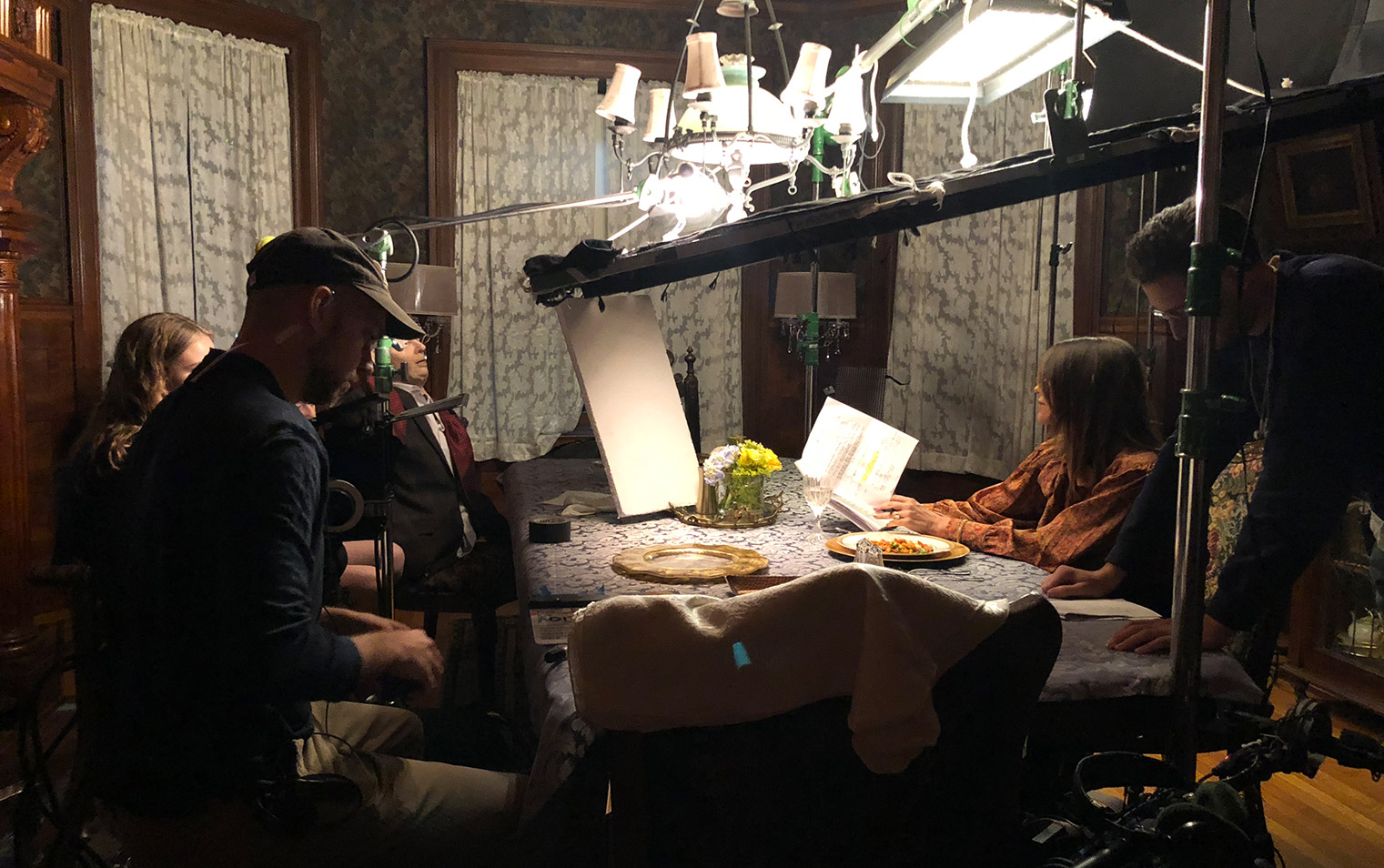
A few days before we shot Father Figurine, I sat down for an interview with Austen, who was helping shoot the behind-the-scenes video for Shift, and he asked how it felt to prep a movie so quickly after spending so much time writing the script. Austen was trying to get at the idea that once you actually go and make the thing, it suddenly becomes this huge crunch, but I genuinely didn’t feel that way about pre-production. Sure, there was lots of work to be done, but once we got the grant, we had about three months to prep the project, which was more than enough time for a short, and I rarely felt rushed.
(more…)
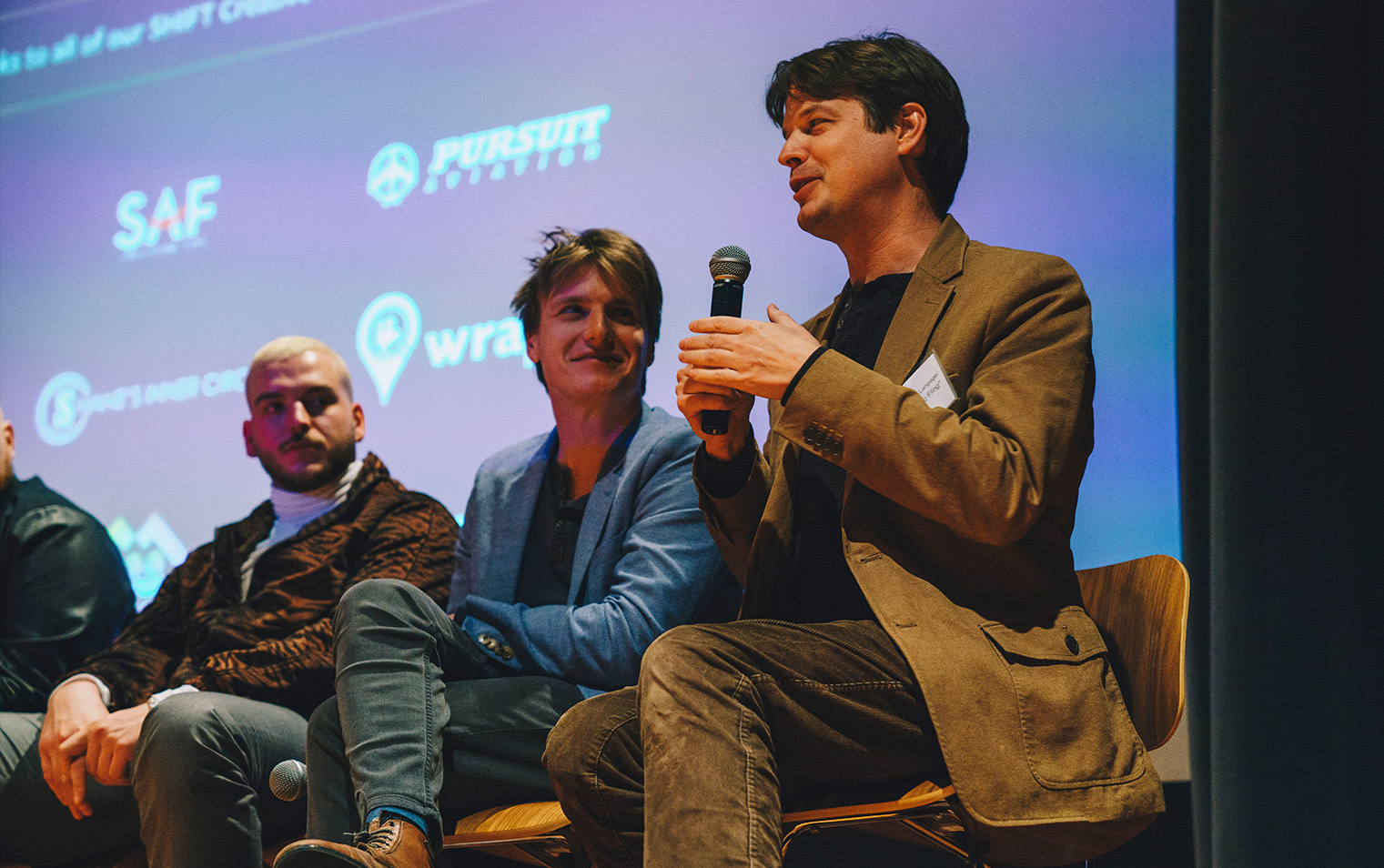
Producers Brendan and Garrett Christian Hall look on at director Jonathan Langager during the Shift Showcase.
As the inaugural year of the Shift Creative Fund drew to a close, we celebrated the first cohort at a showcase earlier this year. The four filmmakers who received grants (and the crews who produced their works — filmmaking, after all, is deeply collaborative) generously joined us on stage to reflect on their films and the lessons they walked away with at the end of the productions. It was an eye-opening conversation worth sharing with other creators; let’s find out what they had to say.
(more…)

Learn more about connecting MediaSilo with Zapier.
User productivity is our #1 goal here at MediaSilo. That’s why we built a Zapier integration for our flagship platform: to let you build custom workflows from the thousands of apps available on the Zapier marketplace.
Did You Know?
Zapier creates “webhooks,” simple integrations that send information from one place to another. For example, when you sign up for flight notifications on your phone, your airline uses a webhook to transmit information from its system to the SMS provider.
Apply the same idea to MediaSilo — you could be notified whenever changes are made in the system in ways that are most convenient for you.
Below are the three most popular ways our customers use Zapier to amp up their MediaSilo workflow. They’re all time-savers that are quick and simple to set up. You might just want to add one (or more) to your toolkit.

Warner Bros. recently trolled Pokémon fans with a fake leak of Detective Pikachu, which turned out to be a 100-minute video of Pikachu dancing. Jokes aside, content leaks represent huge costs to media properties in both clean-up and lost revenue, and a large portion of them come from seemingly mundane scenarios.
Like when Mr. Bigshot Film Critic shares his screener password with his wife who then shares it with her — oops! — book club or when the VP of marketing at XYZ Studios leaves her iPad unlocked, giving her kids access to share, say, the final episode of TV’s most popular show ever.
When it comes to pre-release content, all kinds of people representing all levels of tech and security savvy may have access to your most important content. A network may be sharing show previews with press reviewers, predominantly TV, film, and cultural critics. Authorized viewers might also include VIPs such as writers, directors, and actors; an external post-production or marketing team; and internal team members tasked with sharing the content. A single mundane mishap can cause problems that range from damaged media properties to very costly clean-up.
Good news is most leaks can be prevented with a few simple measures, but when a leak happens, you’ll first need to trace the sequence of events, including who shared the content and how. Start by asking these three questions:
What’s the content?
Is it cultish or nerdy with a strong fanbase? Does it have a highly anticipated reveal? Has it been well marketed? If you answer yes to any of these, chances are someone out there likes the content and thinks everyone should see it right away.
What controls were in place when the content owner shared it?
Did they lower their guard either accidentally or on purpose? Why did they lower their guard? Were they, for instance, helping an executive log in who forgot her password? Or was it something else? Typically, they’re trying to reduce friction for someone they trust to access the content.
How did the authorized user lose custody of the content?
Was it shared on purpose or by accident? With or without their knowledge? Authorized users don’t usually pirate content directly. In fact, they sometimes share it on purpose, which leads to the first threat: oversharing.
Threat #1: Oversharing or “The Lover Threat”
Who else in your life knows at least one password you use whether it’s for your laptop or email? At least one person — your partner, family member, or BFF — likely has access to your digital assets. Often where there’s a relationship in place (romantic or otherwise), there’s a risk that the authorized user will intentionally share access with an unauthorized user. We call this “The Lover Threat.”
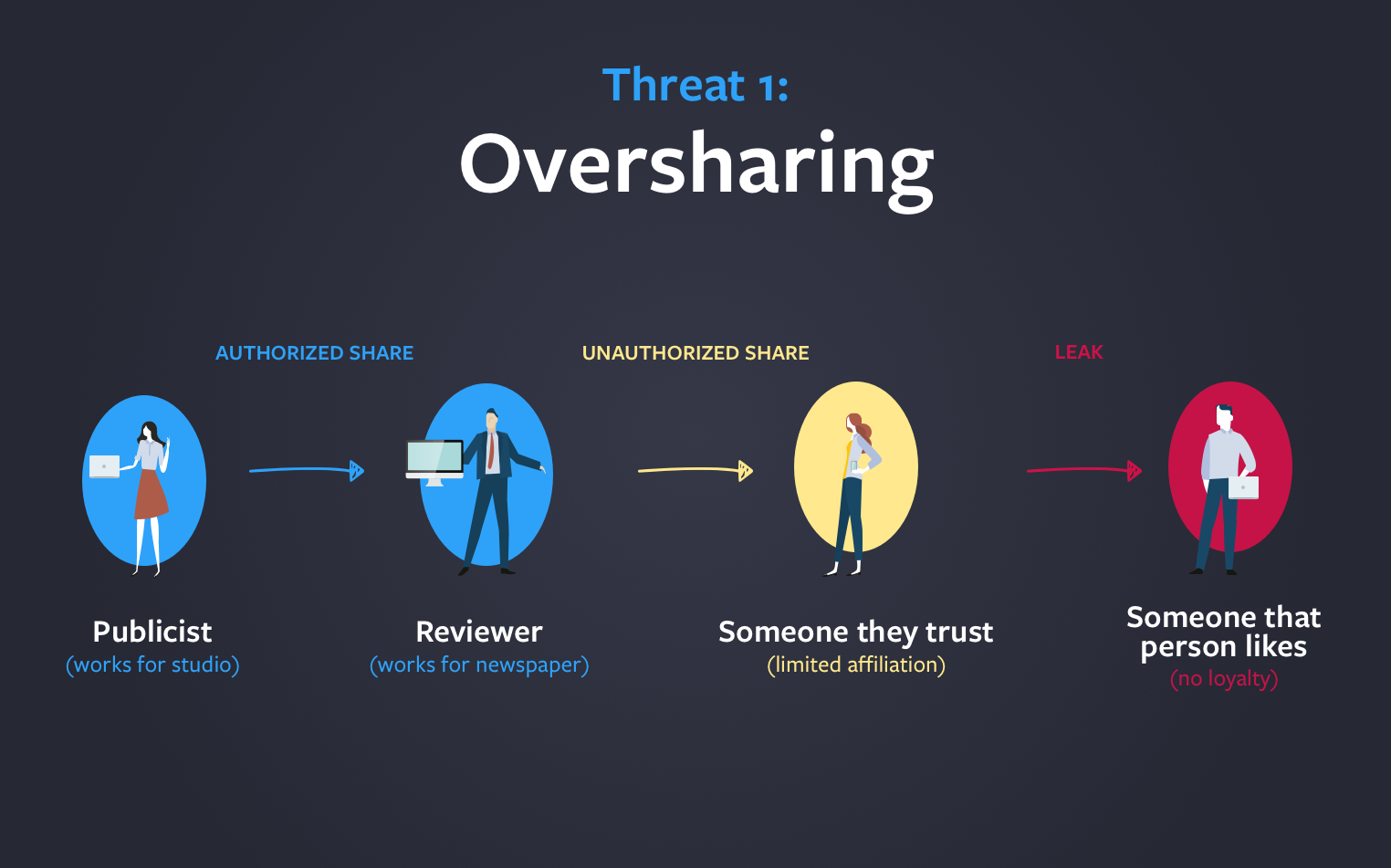
Here’s how it might happen. Let’s say you’re a TV critic who got a screener of a pilot from a network’s PR firm. You share it with your boo, thinking you’ll change the password to the screener later. That person probably doesn’t pose a threat, but what if he shares it with someone else who has no loyalty to you?
Or maybe you forward the email invitation to the screener, and whoever receives it — can you really control who does or doesn’t? — downloads, rips, or shares the file? Things can get hairy fast.
When you’re searching for a software solution to these issues, be sure that it includes the following security measures.
The best antidote to passwords? No passwords at all. Systems that use an email verification process like Magic Link ensure that the content is only accessible through the reviewer’s email, so there’s no longer a password to forward or share.
- Multifactor Authentication (MFA)
Since email can be compromised and passwords shared, content owners should be able to turn on MFA as an additional layer of protection. Multifactor involves authenticating your identity with a code from a third-party application like Authy or Google Auth, typically on your smartphone. The downside to MFA is that it adds an extra step to login and can be troublesome if you lose your phone, which is why we also recommend alternatives like biometrics and physical security key, which we discuss below.
Visible watermarking takes the form of a personalized watermark burned onto a video file the moment a viewer presses play. The authorized viewer’s name and email immediately appear on the video player, communicating that the viewer is, in some ways, also being watched.
In addition to the visible layer, you can find software like our own SafeStream that includes an invisible watermarking system that can help analyze and track down the leaky workflow and user.
- Digital Rights Management (DRM)
DRM is a set of technologies that allows content owners to issue time-limited licenses to content and offer enhanced security. It locks down the player, which makes ripping the video harder.
We recommend that all networks and content owners ask reviewers to sign nondisclosure agreements (NDAs) and other legally binding contracts and to train them how not to share content.
With these features in place, it becomes much harder for users to share content, accidentally or otherwise.
At Shift Media, we include all of these security measures in Screeners.com, a screening app for networks to share pre-release content with a variety of viewers.
Threat #2: Stored Credentials or “The Open iPad”
One threat has recently worsened and is more common than we realized: when an unauthorized user has standing access or can gain access to an authorized user’s credentials. We call this “The Open iPad” because devices save passwords that people reuse and share, and family and friends often know each other’s password habits and four- to six-digit passcodes.
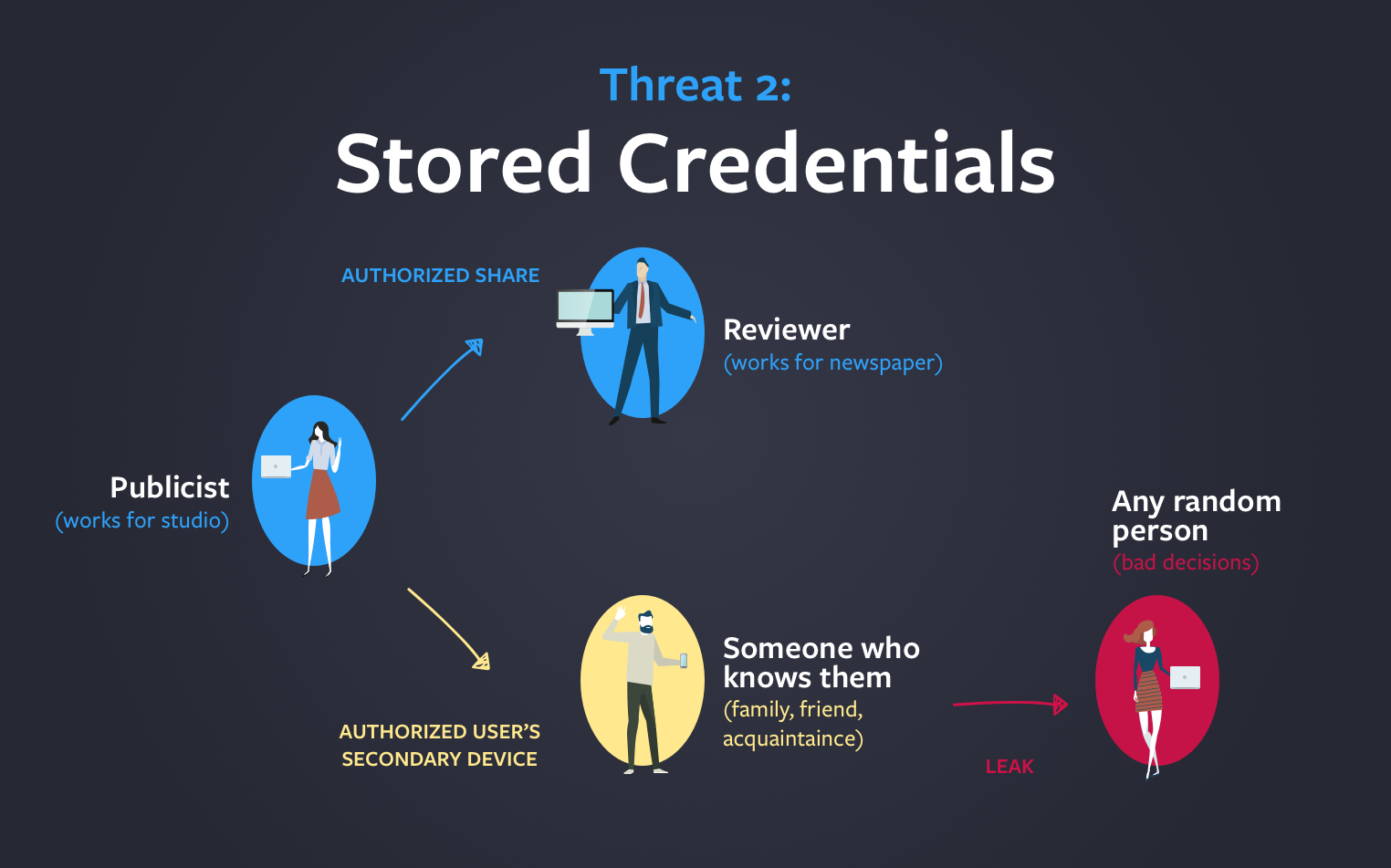
In the scenario shown above, a network’s publicist may not know that the reviewer has a secondary device with direct access to the content or indirectly through email. Anyone who knows how to get into the device can break in and leak its content.
Here, Magic Link directly addresses the password-storing and sharing issue — no more passwords! MFA also helps in this situation as long as the authenticator app also isn’t registered on the same device. At Shift Media, we prefer to register the device and to expire that registration in a number of days or weeks. Otherwise, the device becomes stale, so to speak, and others can gain easy access.
Again, visible watermarking reminds the potential leaker who the iPad belongs to, which may give them pause. It also forces the leaker to put in the work of anonymizing the watermark, while forensic watermarks help track down the leaky workflow and user. DRM further complicates the downloading and ripping process.
Threat #3: Account compromise
The last everyday threat is when an unauthorized user compromises the email or system account of an authorized user. The attacker has no loyalty to the authorized user and either phished them or compromised their email or system account.
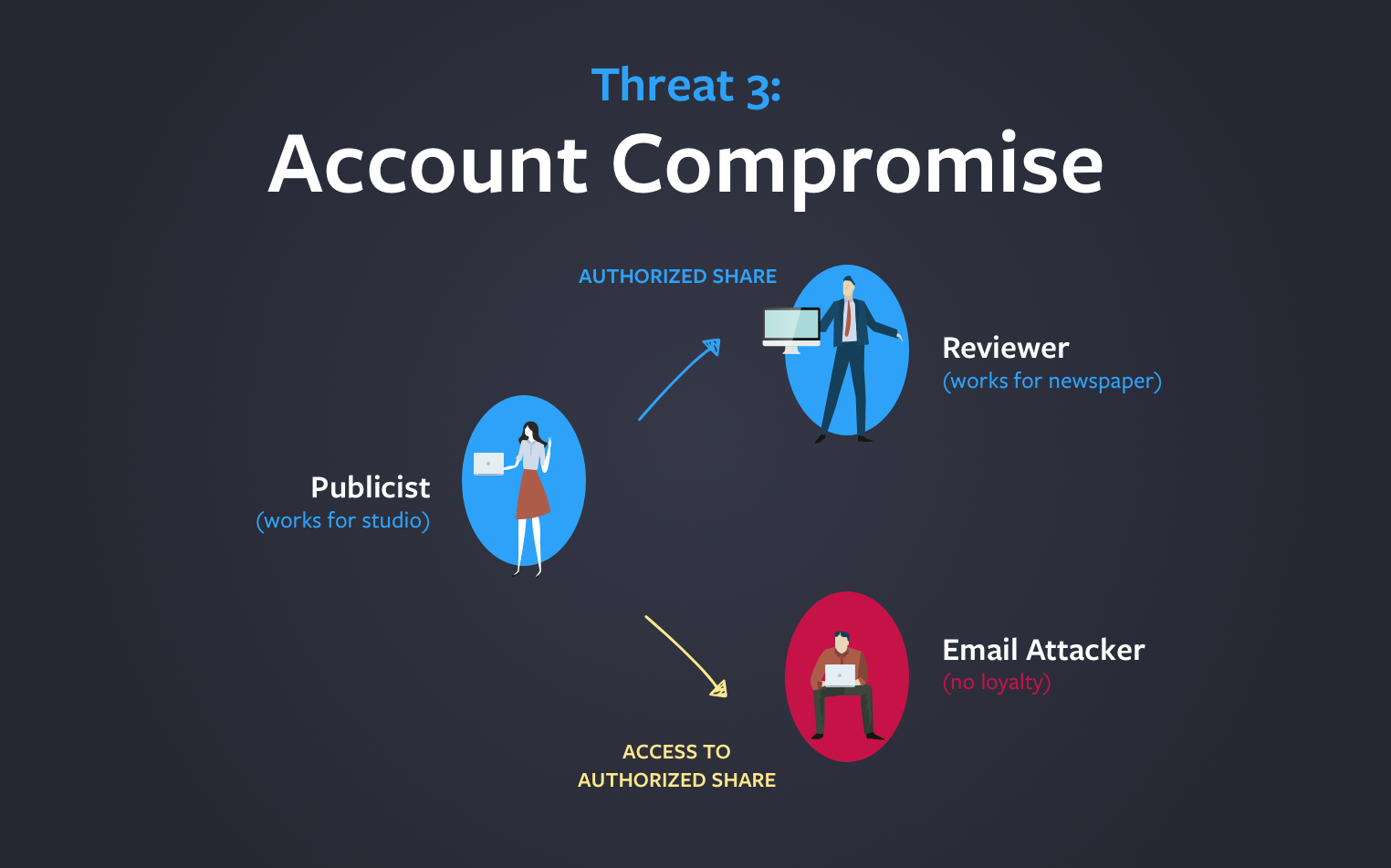
The general public is becoming more aware of the controls available against email compromise, but phishing and compromise accounts are still quite common. MFA remains today’s best defense against such compromises, but MFA can be problematic. At Shift Media, we’re looking at biometrics and physical factors as the next frontiers.
Studios and production companies deal with close proximity issues such as people trying to get on set — by faking identities, for instance — and these people might try to defeat endpoint controls, though probably not by spoofing fingerprints. However, when it comes to sharing pre-release content, proximity is less of a concern. We’re more worried about securing web and mobile software, so biometrics and physical factor protections are very useful.
For instance, iPhone users are probably familiar with TouchID, FaceID, and Face Unlock. All require a body part — finger, face — to unlock, but because those are individual to the iPhone owner, access can’t be shared widely and, beyond an unlikely horror movie-like scenario involving severed fingers and other grim possibilities, can’t be stolen. Availability and quality of biometric protections varies, where mobile (and particularly iOS) has a strong product, so we’re now waiting for the rest of the industry to catch up.
As for physical security, we like YubiKeys on the U2F standard, a USB device that plugs into laptops. The physicality of YubiKey makes it difficult to steal beyond a shared device and outside of one’s immediate social circle. Availability varies, so having both protections are important — biometrics where available on mobile and personal devices and physical security keys on everything else.
Besides these solutions, you can also use a watchmen service to monitor anomalous activity. These activities include users on too many devices in too many different locations, accessing content from odd locations, simultaneous viewing from multiple devices, watching more than twenty-four hours of content in a day, and watching the same content twice from two devices on the same account.
When it comes to security for Screeners.com, we’ve focused our attention on improving detection and responses to these particular scenarios, which we see as the most common sources of our customers’ leaks. Our approach to content protection was born out of several decades of experience developing and maintaining other Shift Media products: MediaSilo, a content-sharing platform and lightweight cloud DAM, as well as Wiredrive, a cloud content library with presentation workflows.
All to say, we’re seasoned experts who’ve observed the pitfalls that our customers and others in the industry regularly encounter. The notes we’ve shared here result from decades of experience, and we hope they prove helpful in protecting the content you’ve worked so hard to create.

Women’s History Month has come and gone, but we think putting a spotlight on women for a scant thirty-one days out of 365 is super bogus, kinda like the Academy of Motion Picture Arts and Sciences’ attempt to sideline editing at this year’s Oscars.
With that firing us up, we transformed our irritations into a post that celebrates editing and women, who edited just 23 percent of top 500 box office titles in 2018. They haven’t necessarily gained much ground since 2016, either: The ratio of white male editors to their underrepresented women counterparts has remained 58.8-to-1, which is ironic, given that film editing was one of the first jobs available to women in the industry. It was originally considered remedial work to splice reels together, and men only got involved once editing proved to be such an essential (and lucrative) practice.
So, as we strive for a more equitable future in the film and TV industries, it’s important to look at the women who paved the way, as well as those who are blazing a trail for the women yet to come.
Margaret Booth
Perhaps the grandmother of the field, Margaret Booth helped launch editing as a profession. She was initially considered a “patcher,” or film joiner, for D.W. Griffith, as she worked to make ends meet after her brother died in a car accident. By 1924, such experimental cutting-room work secured her a job at Louis B. Mayer’s studio, which later merged with Metro-Goldwyn to form MGM. Producer Irving Thalberg allegedly coined the term “film editor” as a proper hat-tip to Booth’s skills, and she eventually became the studio’s supervising editor. She received an honorary Oscar in 1978 and edited her last movie not long after with 1982’s Annie. Booth died at the age of 104 in 2002.
Verna Fields
A prolific editor of smaller-scale projects through the 50s and 60s, Verna Fields started mentoring film students at the University of Southern California and funneling them into Hollywood. Nascent director Steven Spielberg tapped her to edit Jaws in 1975, with Fields’ contributions helping launch the first-ever summer blockbuster. Christened “Mother Cutter,” she was hired as vice president of feature productions at Universal Studios and became one of the first female executives in the industry. Her editing credits further included Paper Moon, Medium Cool, American Graffiti, and Daisy Miller. Fields was honored with the Women in Film Crystal Award in 1981, one year before her death.
Dede Allen
Dede Allen’s career endured almost as long as did Booth’s. Born in 1923, she changed the editing and pacing of Hollywood films with her use of the jump cut, as well as a European staccato style and overlapping sound techniques. Allen was nominated for three Academy Awards, but her signature moment may still be the dramatic ending ambush of Bonnie and Clyde in 1967. Using about 50 cuts in a minute, Allen delivered audiences a thrilling and innovative conclusion. “It’s a very exciting profession because you really get to play other characters. You get into a story, and that story becomes real to you,” she told NPR. “I suppose it’s like an escape.” Allen was honored in 1994 with the American Cinema Editors Career Achievement Award. She passed away in 2010.
Barbara Hammer
Another trailblazer in the field, Barbara Hammer championed cinema for the LGBTQ communities. Her avant garde, often-challenging works touched on menstruation, lesbianism, sex, and feminist theory. Her signature title, 1974’s Dyketactics, deployed more than 100 shots in a span of four minutes and left critics stunned. Hammer was dedicated to producing work that avoided the masculine gaze, and she joined advocacy efforts during the AIDS crisis. She died this year at the age of seventy-nine.
Thelma Schoonmaker
 Born just one year after Hammer, three-time Oscar-winning editor Thelma Schoonmaker was honored with a BAFTA Fellowship earlier in 2019. It’s a stunning coronation of a long journey: The Algerian-born Schoonmaker endeared herself to Martin Scorsese at an NYU film study program and helped salvage some botched cutting work on his 1963 title, What’s a Nice Girl Like You Doing in a Place Like This? Nevertheless, Schoonmaker originally struggled to meet the criteria for the editors union in the 1970s, and her career stalled as a result. Her first Oscar nomination came in 1971 for Woodstock; her three wins were for Raging Bull, The Aviator, and The Departed. Schoonmaker works with Scorsese to this day and is listed as the editor of his forthcoming film, The Irishman. “I think the women have a particular ability to work with strong directors,” she once said. “They can collaborate. Maybe there’s less of an ego battle.”
Marcia Lucas
Marcia Lou Griffin was an ambitious commercial editor and a student at USC’s film school when she met her first husband, George Lucas. She then edited The Rain People and American Graffiti — and was Martin Scorsese’s go-to supervising editor for his first studio movies — before helping Lucas write the first drafts of Star Wars. Her work was finally recognized with an Oscar at the 50th Academy Awards. Marcia’s contributions to the massive franchise run deep: She famously warned George, “If the audience doesn’t cheer when Han Solo comes in at the last second in the Millennium Falcon . . . the picture doesn’t work.”

Margaret Sixel
Born in South Africa and educated in Australia, Margaret Sixel pulled off a herculean effort in editing husband George Miller’s Mad Max: Fury Road. Due to the number of cameras and the intense vehicular stunts involved, she was required to compress more than 470 hours of footage into a two-hour masterpiece. She was recognized with BAFTA and Academy Award wins, and Fury Road resonated with action-flick fans and feminist audiences alike. It may be her magnum opus to date, but Sixel has also edited more whimsical works like Happy Feet and Babe: Pig in the City and was involved in a string of Australian advocacy documentaries in the late 90s.
Mary Jo Markey + Maryann Brandon
Two more contemporaries worth celebrating: Mary Jo Markey and Maryann Brandon. A team that linked up while working on J.J. Abrams’ Alias, Markey and Brandon share an eclectic filmography that ranges from the show Lost to the movies Mission Impossible III and The Perks of Being a Wallflower. Together they’ve taken on portraying the depths of space, first with 2009’s Star Trek and then Star Wars: The Force Awakens in 2015. Their creative chemistry is palpable, and they shared an Academy Award nomination for the latter film. Brandon is even leading the editing process of this year’s anticipated Star Wars: Episode IX.
Joi McMillon
Exemplifying the strides women are slowly but steadily making in editing, Joi McMillon stands out as the first black woman ever nominated for an editing Oscar for her work with Moonlight. She’s already become a trusted confidant of director Barry Jenkins, having known him since she was a student in film school, and her filmography includes If Beale Street Could Talk, Lemon, and the forthcoming Zola. Before such prestigious works, she edited TV comedies and reality shows. “I think a lot of people have seen the need to be more diverse,” she told Blackfilm recently. “Listen to that call. Be conscious of adding more diversity in the cutting rooms.”





