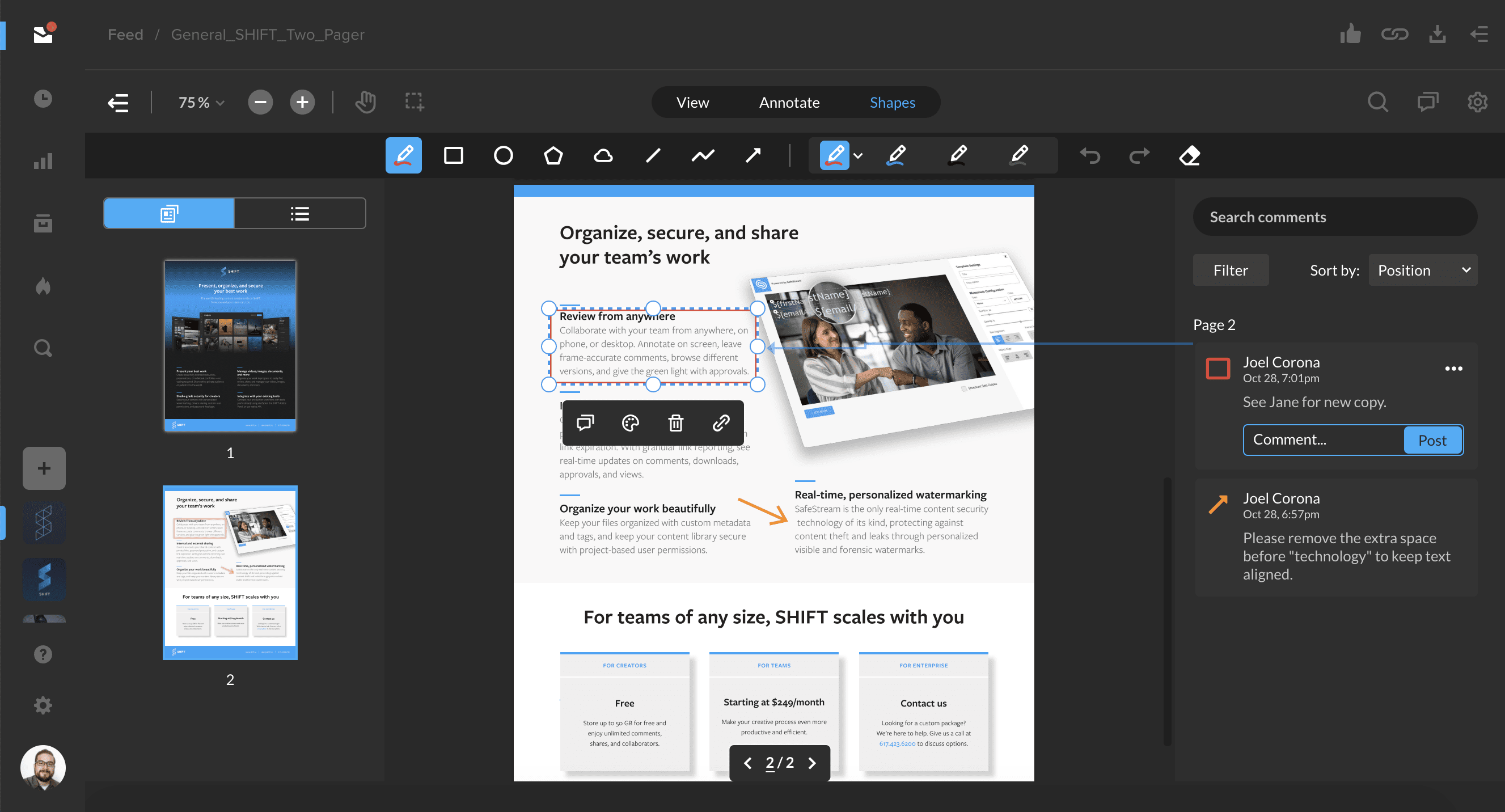
SHIFT now offers review and approval for document files! After sharing a document for review, you and your recipients can now annotate pages with comments, drawings, and a variety of customizable shapes.
Document review is supported for common file types, including PDF, Word Document (doc, docx), PowerPoint (ppt), and Rich Text Format (rtf) files.
Click below to learn all about document review functionality in SHIFT.
You’ll now be able to quickly search through your file metadata on the right-hand side of the Projects screen. With an asset selected, click the filter icon next to the “+” button to display the metadata search bar. Enter a search term to find custom metadata or metadata that is automatically extracted when you upload a file, such as bit rate and codec information.
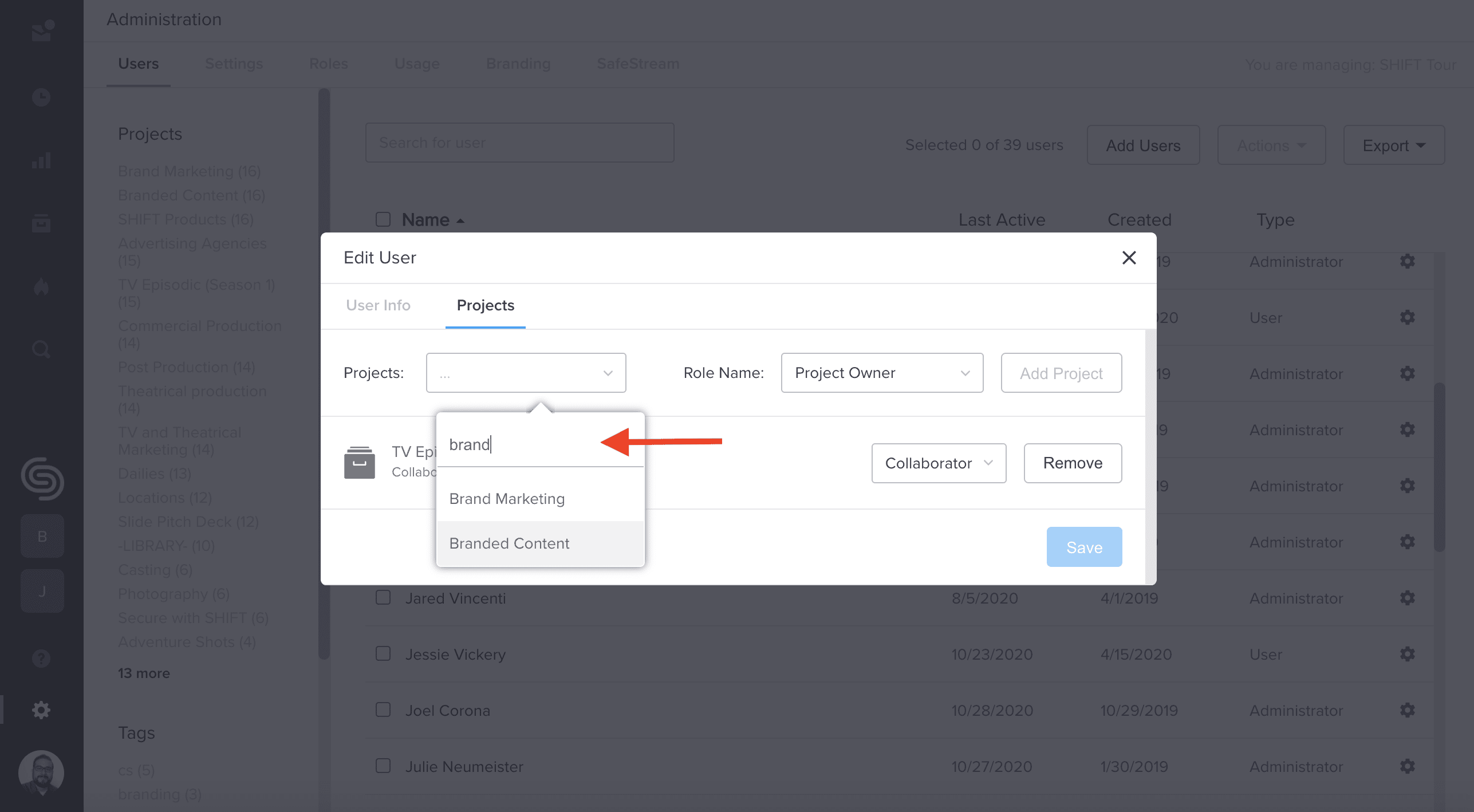
In addition, you can now search for projects in Administration. When assigning projects to new or existing users, you can now use the search bar to easily find specific projects.
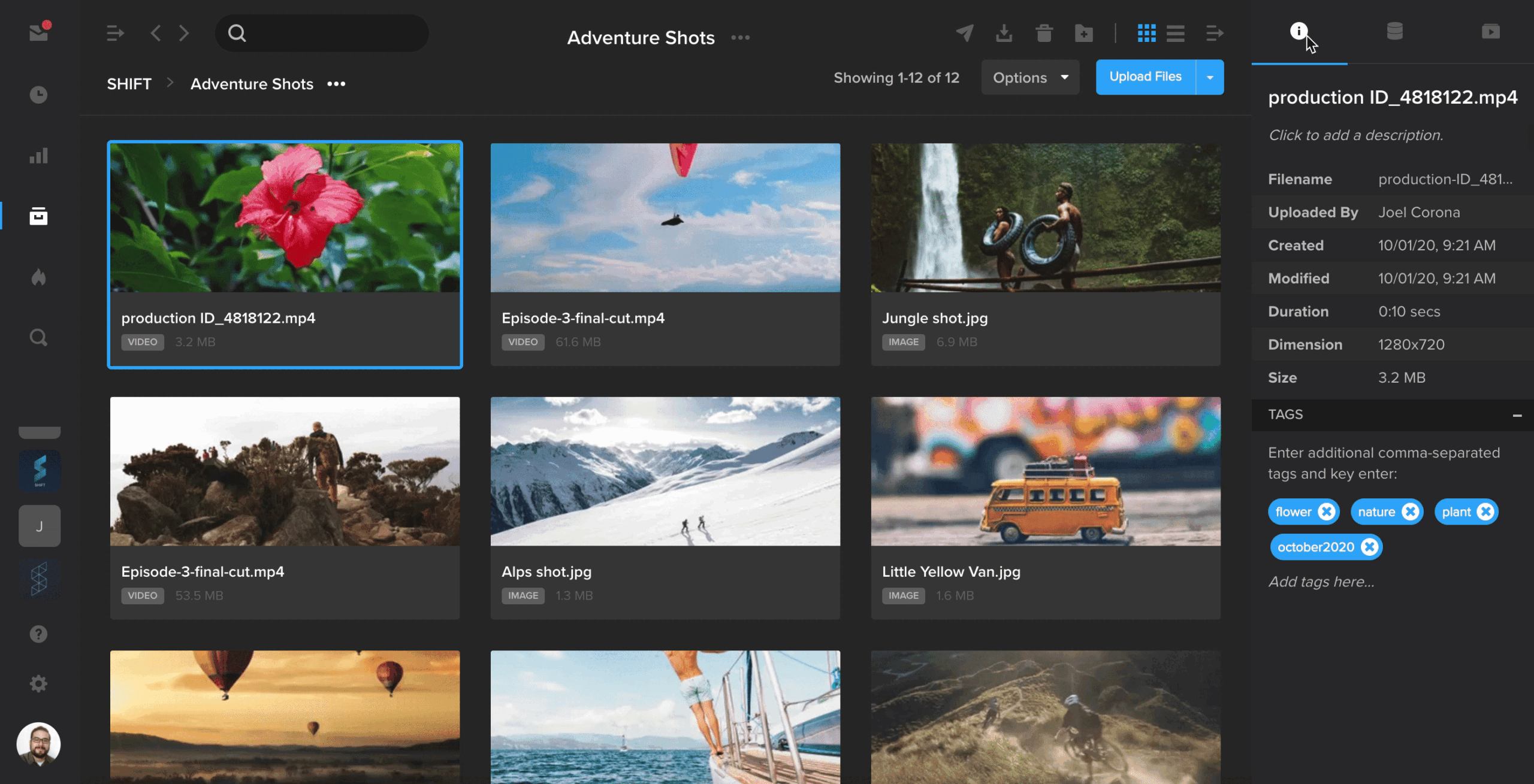
The right-hand drawer in Projects has been expanded to include a separate tab for metadata.
When you have an asset selected, click the first tab to view your asset tags and basic information about your file, including file size, dimensions, and the date and time it was uploaded.
Select the second tab to view all of your asset’s metadata, including the metadata that is automatically extracted when you upload a file. To enter custom metadata, click the blue “+” button and enter your metadata key and value.
Over the past year, we’ve received a ton of feedback from SHIFT users and customers of our legacy platforms MediaSilo and Wiredrive on what they’d like in a media management system. The most common themes were metadata file-tagging, better global search and navigation, and smaller file tiles to make better use of screen space.
Good news: We’ve solved for all of those requests — and more! Take a look at SHIFT’s new and improved Projects. It’s the most secure and user-friendly asset management platform you’ll find to manage your content at scale.
Here are the major improvements you’ll see in SHIFT:
New navigation, global search, and resizable sidebars
The first step to a productive workflow is a clean interface. You’ll notice that the project header collapses as you scroll, and folder tiles are now condensed. The new top navigation includes back and forward buttons, and the search bar helps you find what you need no matter which page you’re on in Projects. Plus, the left and right sidebars are resizable, so you can stretch your folder tree to reveal long folder names or hide it altogether for a more minimalist look and feel.
List view and resizable file tiles
List view is here! That’s right — now you can get a more compact view of your files. In both gallery and list view, you can customize your page size and the number of asset tiles that appear on the page. In gallery view, you can also adjust the size of asset tiles.
New upload manager
Here, we added the option to open a file’s asset detail page or its file location directly from the Upload Manager once the upload has finished processing. Other features remain intact: SHIFT still offers private network uploading, so you can enjoy faster upload speeds than the rest of the Internet.
Need to move or copy files between folders and projects? You can still do that by dragging single or multiple files and dropping them onto the folder tree.
Metadata tagging
When you have hundreds or thousands of files, it’s important for your team to know how to find the right ones at the right time. That’s why we introduced metadata tagging. In addition to plaintext tags, you can now create categories like location, director, and client. Set your categories and tags and quickly find files with the advanced search and filters on every page.
In-line Team and Settings tabs
To make things easier for admins and project owners, we took what previously lived in the Edit Project pop-up window and created a new home for it in your new Team and Settings tabs. Use the Team tab to view, add, or delete project members or to change their roles.
Settings is where you can brand your project thumbnail and banner images, as well as manage things like lifecycle policies and SafeStream (our real-time, personalized watermarking feature for keeping your content cybersecure) if you’re on a paid account.
Explore all these changes and more by logging into app.shift.io. Don’t have a SHIFT account yet? Sign up for a free account or reach out to sales@shift.io with any questions.
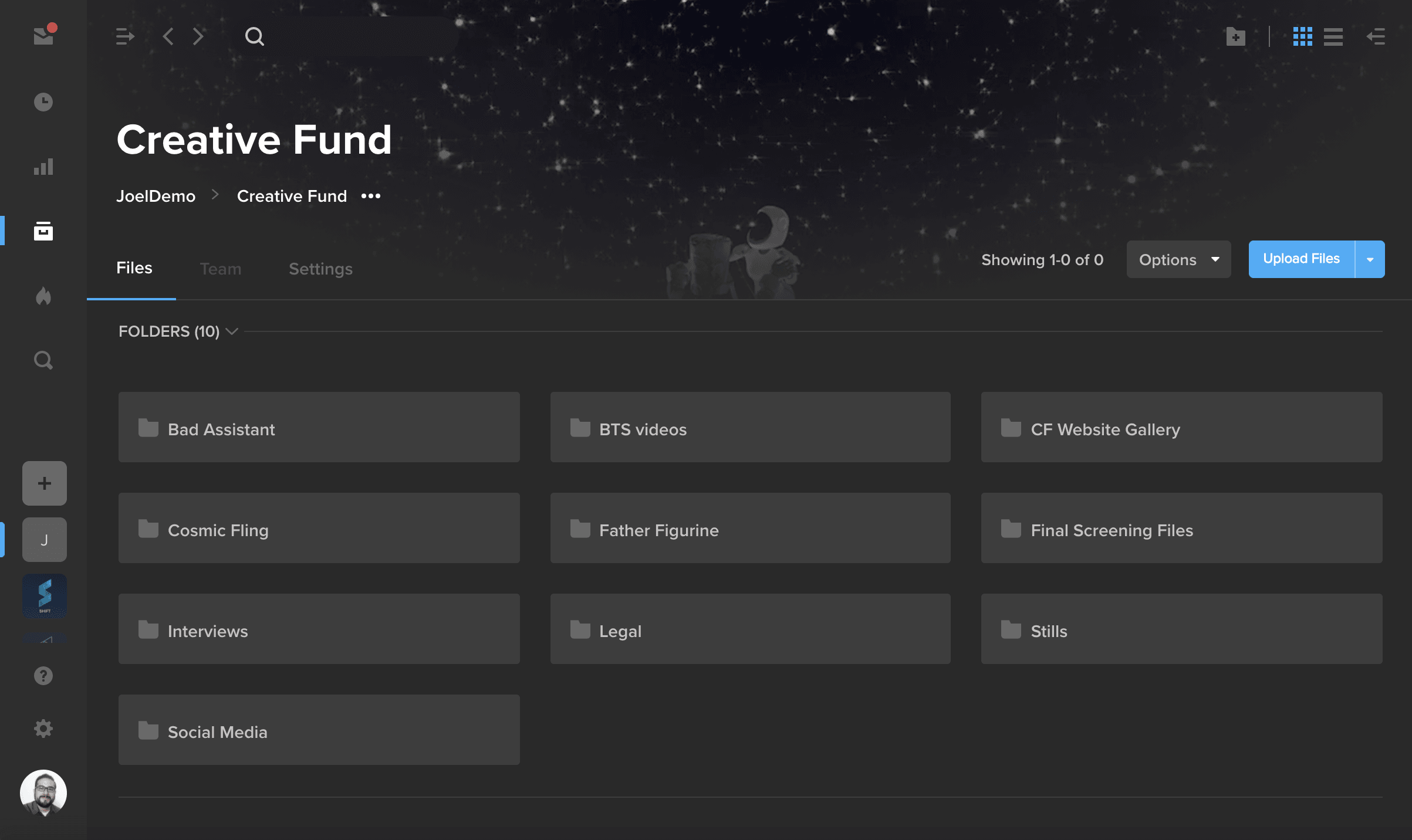
You can now use SHIFT’s SFTP integration to upload both files and folders.
To get started, right-click on any project or folder, go to the Advanced options, and select “Create SFTP Credentials.” Enter these credentials in your SFTP application, connect to SHIFT, and start uploading folders to your SHIFT projects.
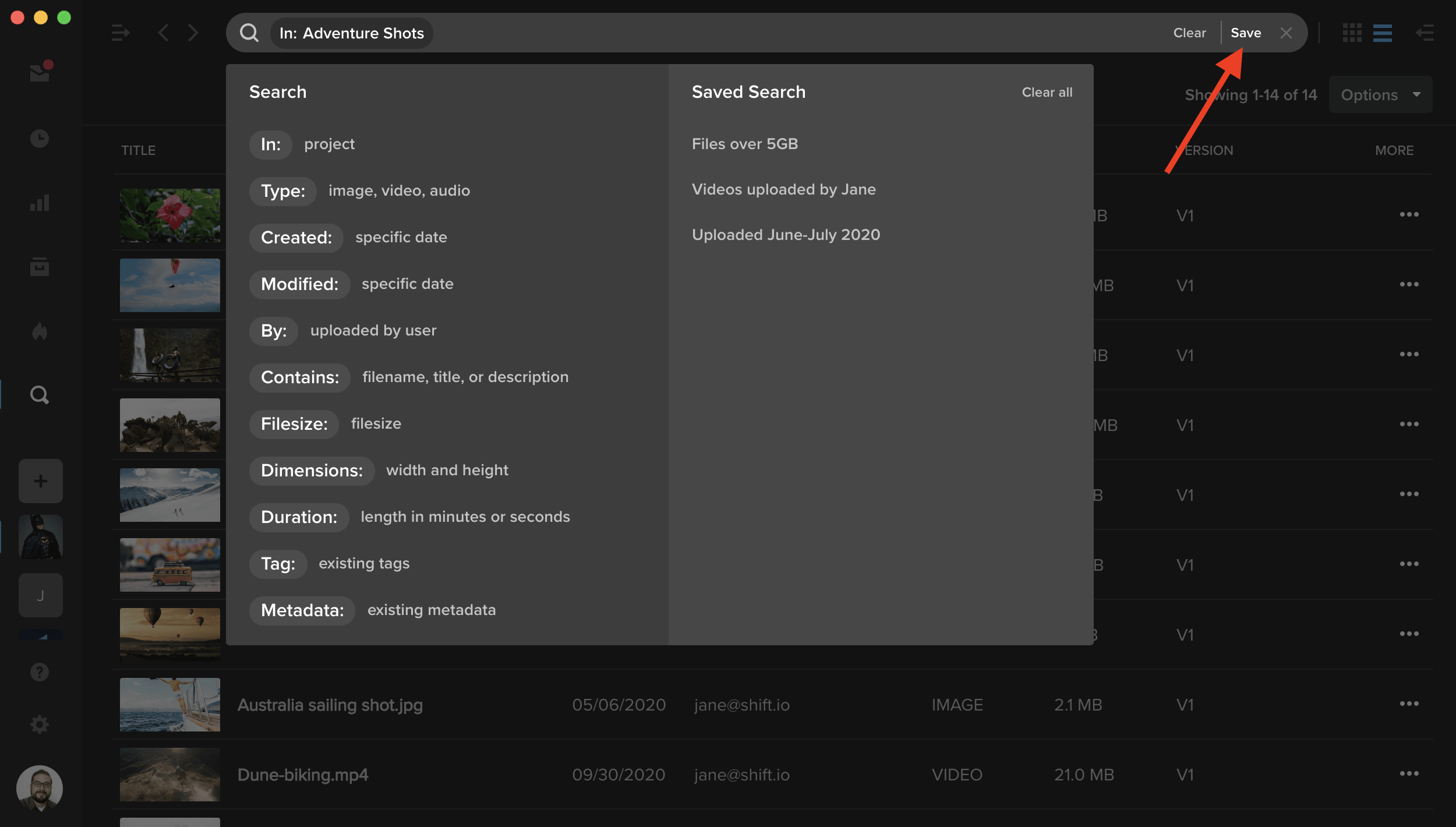
After you perform a search, you can now save the filters you used and reuse it at any time. Simply click the “Save” button on the right side of the search bar, and enter a name for your search. Whenever you access the search menu, your saved searches will appear in the right column.
Note: Searches are saved on a user basis. A saved search is only available to the user who created it.
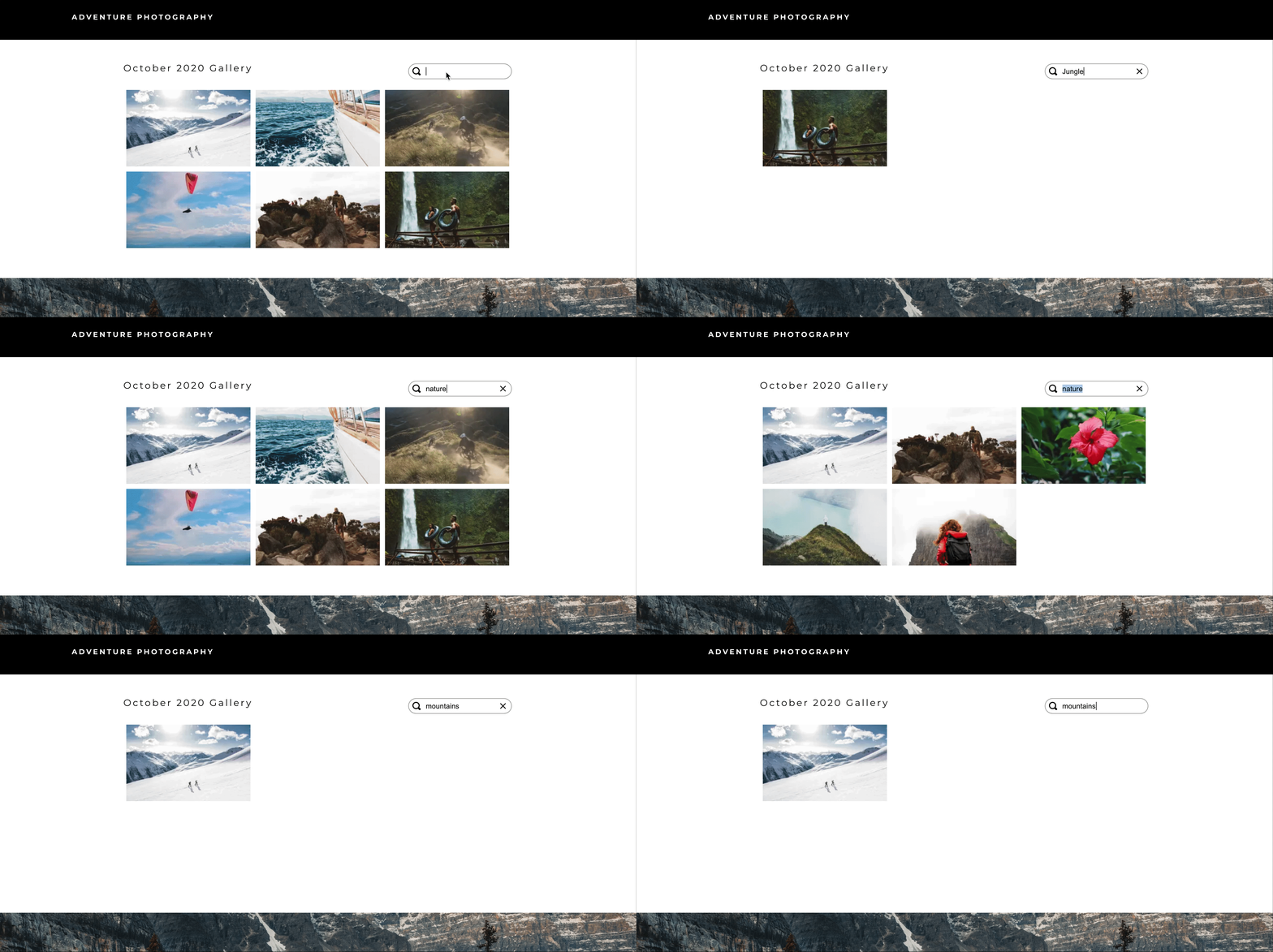
The Spotlight template builder now includes a “Search” element to make your galleries searchable.
- Add a search bar to your template and use the properties panel to link the search bar to a media gallery.
- When your audience enters text in the search bar, your gallery will display any item whose title, description, or tags matches the search term.
D&I is a marathon, not a sprint. We are in it for the long run.
When I first started in my career, I was a lot more forceful. I was the anomaly because I was always the young black female in a sea of white men, trying to get my point across. What I’ve learned over the years is that it’s not a sprint with D&I – it is absolutely a marathon. And, that marathon is far more than getting a certain percentage of underrepresented groups on your team. It’s about earning genuine buy-in from the top down, and broad-sweeping education to counter unconscious bias. This is how we bring about true D&I in the workplace.
While today we have more buy-in from leadership and acknowledgement of essential changes, we still have much work to do.
Our most valuable resource is people
Like most companies, it’s the talent that drives innovation and enables true creativity for EditShare. More and more we are seeing talent likely identify with multiple ethnicities or identify as gender fluid. As we move to a more diverse outlook on the world, the question of a lack of diverse talent in the workplace becomes more pertinent. So, when you extrapolate that notion amongst other diverse people, the question is: how much talent are you losing out on because you haven’t got a diverse workforce? A lack of diversity is destructive to your business.
EditShare journey – we are changing course
D&I is not an HR function. It needs to be embodied in the culture so that everyone is on the same journey. In the first few months since I have been at EditShare, we have rolled out a number of new D&I initiatives and brought forth flexible working policies.
Helping define and drive these initiatives and policies is EditShare’s new D&I working group, which is led by myself and the VP of Product, Sunil Mudholkar. It’s staffed by representatives from each major department to ensure that we have a good cross-section of individuals to brainstorm and soundboard ideas. Together we compile the facts, talk to our colleagues, define the goals and the important projects and partnerships that will help EditShare introduce and embrace authentic D&I initiatives. I am proud to say in the short time since I have been here, we are well on our way to:
- Diversifying the talent pool
- Shutting the door on the pay gap for every person
- Equal maternity and paternity leave for everyone
These programs are not elaborate. They are simple and measurable, and with every step forward, add immense value to our teams and deeper understanding of what it means to be included. It’s authentic, with ownership spread across the company.
Breaking old habits to make lasting change
While we have many exciting D&I projects in motion, there’s a long way to go. Today, 75% of EditShare employees are white males averaging 45 years of age. As an industry, unconscious bias plays can have a big impact on the diversity of your workforce. It’s fewer than six degrees of separation that ultimately can create a one-dimensional workforce; one that ultimately negatively impacts your employer branding to the incredible talent we want to attract.
These habits are hard to break. The first step is recognizing the pattern and stepping outside the comfort zone to mindfully build a diverse and inclusive workforce.
While we are at the beginning of this marathon, I am excited about the journey and about our future. We have amazing support from our CEO, Conrad Clemson, and the senior leadership team. We are small enough to make swift changes and implement policies that can be truly drafted and owned by the people who work here.
We are placing D&I at the core of our culture. It makes us stronger. We all feel it. The whole company is better because of it. I will be back to you in six months to report on the shifts and changes we made to move us forward to a brighter future.
About Jennifer Ashton
Jennifer helps shape the creative, diverse and inclusive culture that defines EditShare. Her talent development and people programs serve as the foundation for its global talent pool. Prior to joining EditShare in June 2020, Jennifer spearheaded D&I initiatives for Amazon, Sainsbury’s, Tesco and most recently the BBC where she was instrumental in supporting to reduce the gender pay gap.

Our guest Amanda Sayeg reflects on her own personal experiences often being the only woman on a film crew, and how female representation is most needed in positions of power on film productions.
The following interview is an excerpt from our video series, Production – In Conversation. To watch the full interview and see more video content, click here. Or you can listen to the Shift In Conversation podcast here.
——
Amanda Sayeg – Producer/Director
Grace Amodeo – Marketing Manager – Shift Media
Grace:
Tell us a little bit about yourself.
Amanda:
My name is Amanda Sayeg and I’m from San Paolo, Brazil. I’ve lived in LA for a little bit over six years now working on productions. Mainly music videos, commercials, short films and documentaries.
Grace:
For those not familiar with film production, would you say that it is a male-dominated industry?
Amanda:
Yes, absolutely. And I think we are moving forward, but we have a lot of work to do on that. Overall I think it depends on the production. I’ve worked on some smaller productions that were female-led, which is wonderful, but overall bigger-sized productions are 60-70% male.
Grace:
Why do you think that is?
I think it’s not, unfortunately, something exclusive to the film industry. I think it’s part of all industries, it’s part of the society we live in which is a male-dominated society.
Amanda:
I think it’s not, unfortunately, something exclusive to the film industry. I think it’s part of all industries, it’s part of the society we live in which is a male-dominated society. You see in positions of power not only just males, but white males — so it’s a racial question too. It’s part of a very archival concept that we are still breaking from. The industry that we work for works like any other one, you have a hierarchy of position and power and roles. But also as an industry that forms opinion, we create a very big impact in the society and in trends and behavior. So it makes sense that everything we have lived so far also has a lot of white male dominance.
Grace:
Have you ever had the experience of being the only woman on a film set? What was that like?
Amanda:
Yes, I have. Many times. And I’ve been lucky for the most part to work with amazing people, and amazing men that I admire and respect a lot. Many of them are role models to me. But it is different when you have a crew that is only male, and you can’t relate to anyone. When you see people that you look up to it’s very different when you see a man versus a woman. How do you see yourself in those positions? That’s a huge part of it, it’s very important to have representation on set. Production is problem-solving, 24/7. That’s what the role is. So by having different perspectives, that helps a lot.
Grace:
When you have a position of authority on a film set, like as director or producer, do you think people relate to you differently than they might relate to a man in the same position?
Amanda:
Yes. Coming from the structure we are coming from where it is a male-dominated industry, when you start to have women in positions of power there can be a lot of second-guessing the authority of a woman that’s in charge. Something that bothers me a lot is if you are strong and you know what you want and you are taking charge of the situation, for men those traits are respected and admired by everyone. But when you are a woman that can easily come across as being upset, or bossy, or loud. It can seem like something small or silly, but the impact that it has makes you rethink your behavior or think you are doing something wrong. There is so much pressure on women to be nice and to please everyone, and those things can’t work well together on a film set. This pressure is immensely bad for us.
There is so much pressure on women to be nice and to please everyone, and those things can’t work well together on a film set. This pressure is immensely bad for us.
It creates such a hostile environment to work in. That second-guessing feeling from the crew, and even from women too! It’s something that happens with us as well. It’s something we need to break too, the work is not just for men. I had an experience on set working with this woman that wore her hair up in a ponytail the whole time. At the end of the day I ran into her in the bathroom and she had this long, beautiful hair when it was down. I asked her why she always wore her hair up, and she said, “I feel that we are not really respected and listened to on set. So I just always wear a ponytail, so I kind of look more like a man”. That made me so sad, because I know it’s true and I know she had reasons to do that.
Grace:
Why do you think it is important that films have female directors and producers? What difference does it make?
Amanda:
Our job is to tell stories that represent our society. In order to tell the stories and in order to portray an accurate picture, we need to have diverse people behind the scenes. We’re slowly seeing diversity on camera, but it’s very important in order for the stories to be told right that we have representation behind the cameras too. Those are the people writing, those are the people crewing up, those are the people making decisions. There is so much more authenticity and truth when you not only see diverse actors on screen, but you have a whole crew of diverse people supporting that actor. It’s important to come from a place of truth. I can write any story I want, but the work we are doing is meant to connect people. I don’t think we can truly connect if it doesn’t come from a place of authenticity and truth.
Grace:
Do you think the audience can see that difference when they are sitting in the theater watching that film?
Amanda:
Absolutely. From women to women, we know what we go through. And we know what we are going to keep going through. When stories come from that place, as an audience you’re listening to and watching stories that you can relate to versus watching content that tells you what you should be based on some stereotype that society creates. There is such a difference in seeing big female directors and big producers and writers, because you can project and you can see yourself in positions like that too. The representation is so important to inspire young girls and adults at any age. When a little girl watches a movie and of course she thinks, “I can be an actress”. But if she sees an amazing female director, she knows that she can do that, or she can produce, or she can write, she can do absolutely anything. Until very recently we couldn’t really see that because there were just so few of us.
If a young girl sees an amazing female director, she knows that she can do that, or she can produce, or she can write, she can do absolutely anything.
Grace:
What is your vision for the future of representation in the film industry?
Amanda:
It definitely looks like a much more female-led industry. And of course there is space for men, there is space for everyone, but right now we are in a moment where we need to prioritize. Guarantee that there is female representation in all departments. We need to create more situations for female-led projects and fully female crews. There are so many associations and organizations doing a beautiful job on that, and it is so valuable. I know this is going to keep going because there is no way back right now, thankfully. There is still a lot of work to be done, but the future is much brighter for us. We’re going to get there. We’re also realizing as women that we don’t need to compete against each other. Society has made us believe that it’s a competition, but it’s not. I see women bringing other women on board and supporting each other, there’s such a beautiful sisterhood going on. The more we enjoy that the farther we are going to go together, there’s going to be more space for us at the table.
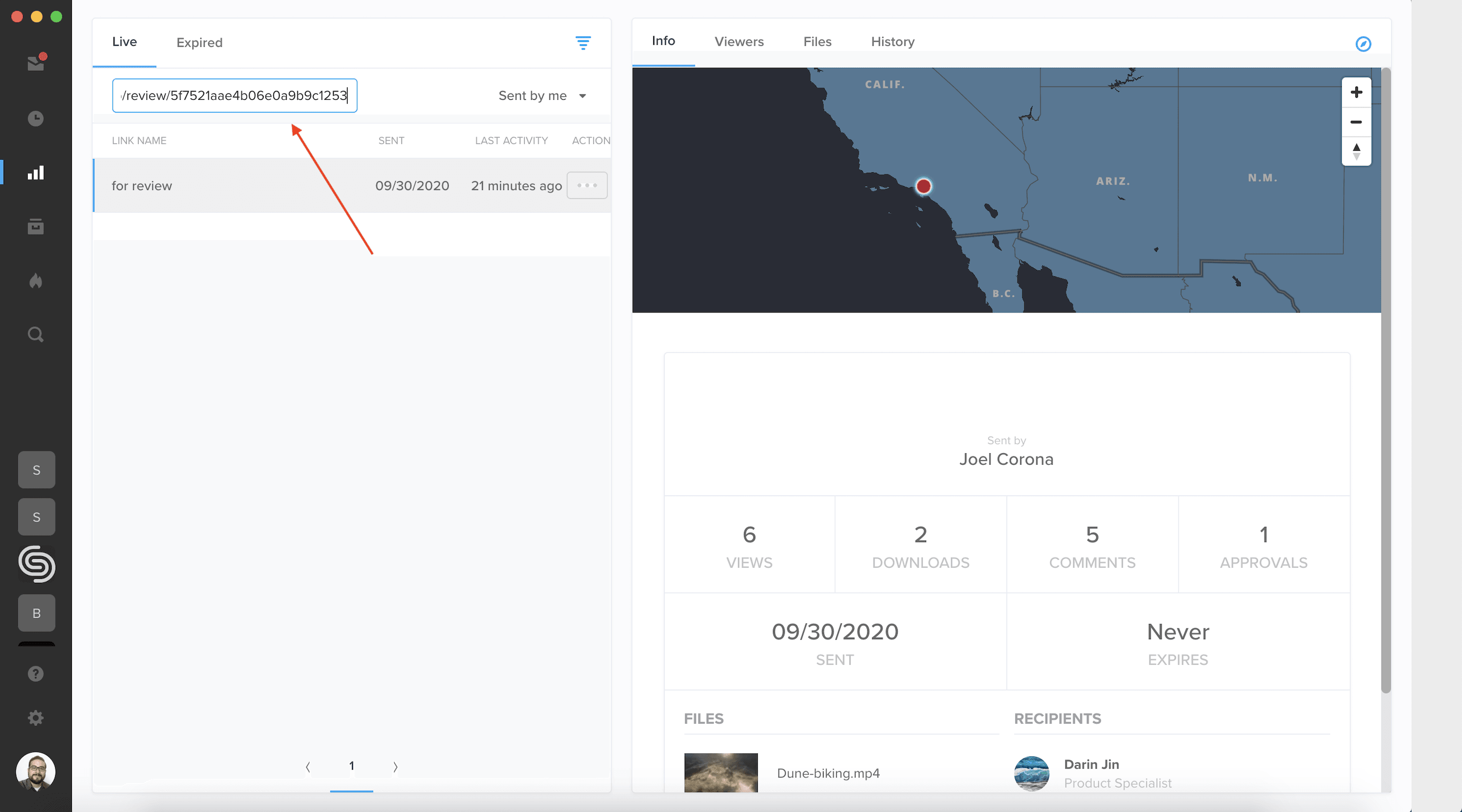
In addition to searching for a review link by its title, you can now search for your link by entering its URL. On the Reporting page, paste your URL in the search bar in the top-left to access your link’s view counts, viewer information, and other activity details.





