Marketing in the Non-Profit Sector with Diana Smith
Our guest Diana Smith is a marketer focused on non-profit organizations and the communities they serve. We discuss how “traditional” marketing tactics might change for this very specific audience, and how to measure their success.
The following interview is an excerpt from our video series, Marketing – In Conversation. To watch the full interview and see more video content, click here. Or you can listen to the Shift In Conversation podcast here.
Diana Smith – Director of Product Marketing and Brand – Twilio.org Grace Amodeo – Marketing Manager – Shift Media
Grace: Tell us a little bit about yourself and the work that you do.
Diana: I’m Diana, and currently I am the Director of Product Marketing and Brand for Twilio.org, which is Twilio’s social impact division. If you’re not familiar with Twilio, we’re what we call a customer engagement platform. We help organizations send out text messages, phone calls, video calls, and to help them connect with their customers and the people that they serve. The classic example many people think about is if your delivery driver shows up to your house and you get a text message that they’re there, that’s probably powered by Twilio. In similar instances there’s many relevant use cases for non-profits. Think about a Meals on Wheels scenario, the same exact type of use case would be useful. My responsibility is to grow the total number of non-profits that are using Twilio, and also to tell their amazing stories to help increase brand affinity for the company overall.
Grace: Why did Twilio as a company feel that it was important to start a .org division and do this type of work with non-profits?
Diana: Twilio is a really amazing company. And one of the reasons I chose to come work for Twilio is that from a very early stage, Twilio was investing in social impact. They took what’s called the 1% Pledge even before the company went public, which was kind of the first focus on social impact. And for those that aren’t familiar, the 1% Pledge is essentially pledging 1% of your equity and/or product and/or people’s time as a company to do social good. And very few companies actually do that before they go public. So Twilio is a leader in that space and over time grew out a team that I’m on now called Twilio.org. Twilio.org is actually a business unit within Twilio and our leader, the Chief Social Impact Officer Erin Reilly, reports directly into the CEO. There are other organizations who have impact divisions that are separate. At Twilio, because our product is so relevant for non-profits, we felt that threading it into the main business was actually the best way we could create impact.
Grace: Is there an ideal type of non-profit that you are looking for who would benefit from using Twilio?
Diana: It’s been so fascinating to me that there actually are a lot of different types of non-profit customers. We have anywhere from big global NGOs, for example the International Rescue Committee which focuses on refugee issues and humanitarian aid. They use Twilio to help connect people fleeing violence in El Salvador, for example, with someone who can give them information on where a safe house is, how to apply for asylum, those kinds of things. We also have what I’d call social enterprises or tech non-profits. And those organizations, their revenue stream actually contributes to social impact organizations. One of my favorite ones is Kinvolved, which helps communicate with parents in many different languages over SMS to help their kids stay involved in school and up-to-date on their latest assignments. Upsolve is an interesting one as well, where they make it easier for you to apply for bankruptcy. And then we have some small mom-and-pop non-profits as well. We don’t see as many, but there are lots of churches who engage with their congregation over SMS. There’s lots of non-profits out there that you may not think about.
Grace: Are use cases the same between your regular Twilio customers and your non-profit customers?
How the non-profits are measuring success is in impact, how many people they’ve been able to help, and the quality of help they’ve been able to provide.
Diana: What’s different is usually the outcome they are trying to drive. So in a corporate customer, they’re trying to drive customer loyalty, make more money, driving revenue. In the non-profit world, it’s just a little bit different. They are trying to engage donors to participate more and donate more, or get volunteers to sign up for events. A lot of it is around usage in their actual programs, so how do they get more folks to join for counseling sessions, for example. How the non-profits are measuring success is in impact, how many people they’ve been able to help, and the quality of help they’ve been able to provide. At the end of the day, the use cases are quite similar. So when you think about appointment reminders, any nail salon or hair salon needs appointment reminders, but we also work with organizations like City Harvest which is one of the biggest food donors in New York City. They enable folks to schedule an SMS appointment to come pick up their food, so they don’t have to wait outside in a long line of people. One of our big products is called Twilio Flex, which is when you call up someone like your bank and get routed through the menu to get connected to the right person. That technology is really relevant for a lot of non-profits as well. One of our customers, United Way, is using the same call center technology to help answer questions about how to apply for unemployment, or how to get tested for COVID.
Grace: How do you target and outreach to new non-profit organizations who might benefit from using Twilio?
Diana: It’s kind of like any marketing where you start to think about where do these folks congregate, what do they read online? And a lot of the way that we’ve been focusing on getting in front of net-new audiences who hadn’t heard about Twilio is through partner networks. Working with them, sponsoring content together, attending events. We also do a lot of work in telling our customer stories, how do we tell the stories of these amazing groups and find the right channels to get those in front of their peers. We also have what we call the Impact Fund where we give donations to grants and make investments in organizations. By promoting that and making sure that all of the partner networks understand that there is this opportunity, it helps us with awareness. And sometimes we do get folks who come through what I would call the regular marketing funnel, where they are just searching for an SMS solution or a video API and they find Twilio that way.
Grace: Once you’ve identified a new target or organization, does the actual marketing content differ from what we would consider “traditional” marketing?
In the typical B2B marketing world you’re talking about companies and customers and return on investment. And none of those words resonate with a non-profit.
Diana: I think it’s really about the language. In the typical B2B marketing world you’re talking about companies and customers and return on investment. And none of those words resonate with a non-profit.They have the people they serve, their community, their donors. They are an organization, not a business or a company. So you have to be really clear about the language. The other thing that’s really important is to pay attention to experts, because we are not the experts on this. Each issue area that we talk about, where we’re working with an organization on climate change or racial justice or Trans Lifeline, in every issue area there is so much nuance in the best way to talk about things. How do you make sure that you’re really putting the people, whoever is communicating with these non-profits, in a place of empowerment. It’s not about “helping these poor people”, the non-profits and the people that they serve are on equal footing. I think that’s really easy to miss if you’re not used to marketing in this space. It’s also more of a soft sell, it’s about building a long-term partnership and the non-profits want to know that you’re invested in their long-term success. They have a bullshit meter, if you’re just trying to do this to make your company look good or you don’t really care, they’re going to be able to tell. One thing that is unique to a non-profit, for example, is revenue stream. Funders are really important to how many non-profits work and that is where their revenue stream is. So the product that they sell to their funders is their impact. How many people they’ve been able to help. So when you’re talking to a new non-profit customer you need to ask where they are getting their funding, what is most important to their funders, what impact metrics are they trying to hit this year. It’s a totally different conversation then how you would frame it to a for-profit business.
Grace: What are your measures of success for your non-profit customers?
Our number one measure of success is the number of people that we help on Twilio.org, it’s totally focused on impact.
Diana: Our number one measure of success is the number of people that we help on Twilio.org, it’s totally focused on impact. If I’m Trans Lifeline and I had a call with one anonymous phone number, that is one person helped. That’s our North Star metric on Twilio.org. We’re hoping to get to a billion people helped over the next few years, we’re around 200 million right now which is pretty amazing. We do also look at revenue, because Twilio is a usage-based product so more revenue equals more impact. It means more of those conversations, more of those messages, more of those people getting connected. I will say that we are not looking at revenue in terms of how much can we squeeze out of these non-profits, that’s definitely not the approach. We’re really thoughtful with our pricing and making sure that it’s closer to the margins that we’re creating.
Grace: Do you have an example of a success story you can share with us?
Diana: I am really excited about Trans Lifeline. So Trans Lifeline is the only peer to peer support mental health crisis line for trans people staffed by trans people, which is really amazing. What I love about the Trans Lifeline story is that they wanted to make sure that their hotline could be anonymous, and with Twilio they were able to build that anonymity into the system. You don’t know who those folks are but you’re able to connect the calls. And to me, being able to connect folks who want to talk to someone who really understands, I think Trans Lifeline is an amazing example of an organization who is using communications to actually save people’s lives.
Grace: For an organization or employee who is inspired by this work, what is a good way for them to get themselves or their company more involved with giving back?
Diana: I think WePledge.org is a good place to start. You can do WePledge without even offering any matching, or you can invest the amount that makes sense for your business. Also taking the 1% Pledge is the first step that many organizations do. What I would really recommend is thinking about what are your company values and mission, what is your product and what do you really have to contribute that can extend into social impact. In Twilio’s case, that’s our product. If you’re a data company, maybe focusing on data privacy and data ethics. If you’re a retail company, environmentally friendly packaging and shipping is a really easy place to start. Think about what is connected to your organization and just start with some baby steps.
In the Elements panel in Spotlight, you’ll see a new Tabs element, which consolidates multiple playlists into one gallery.
Click the Tabs element to add tabs and a gallery to the page.
By default, each tab will display stock photos. Open the Playlists panel and drag your desired playlists onto the gallery.
Your playlist name will appear as the new tab name. Click a tab to see that playlist.
To customize your tabs, click the tabs on the page and open the properties drawer on the right. Here, you can choose between a horizontal or vertical layout, change your font, and adjust the text and background colors for all three selection states — default, hover, and selected.
To remove a tab or to choose a different playlist, click the gear icon at the top of the properties drawer. Hover over your list of tabs, and click the trash icon to remove a tab, or the pencil icon to edit the tab name or swap in a different playlist. You can also add tabs by clicking the blue plus icon.
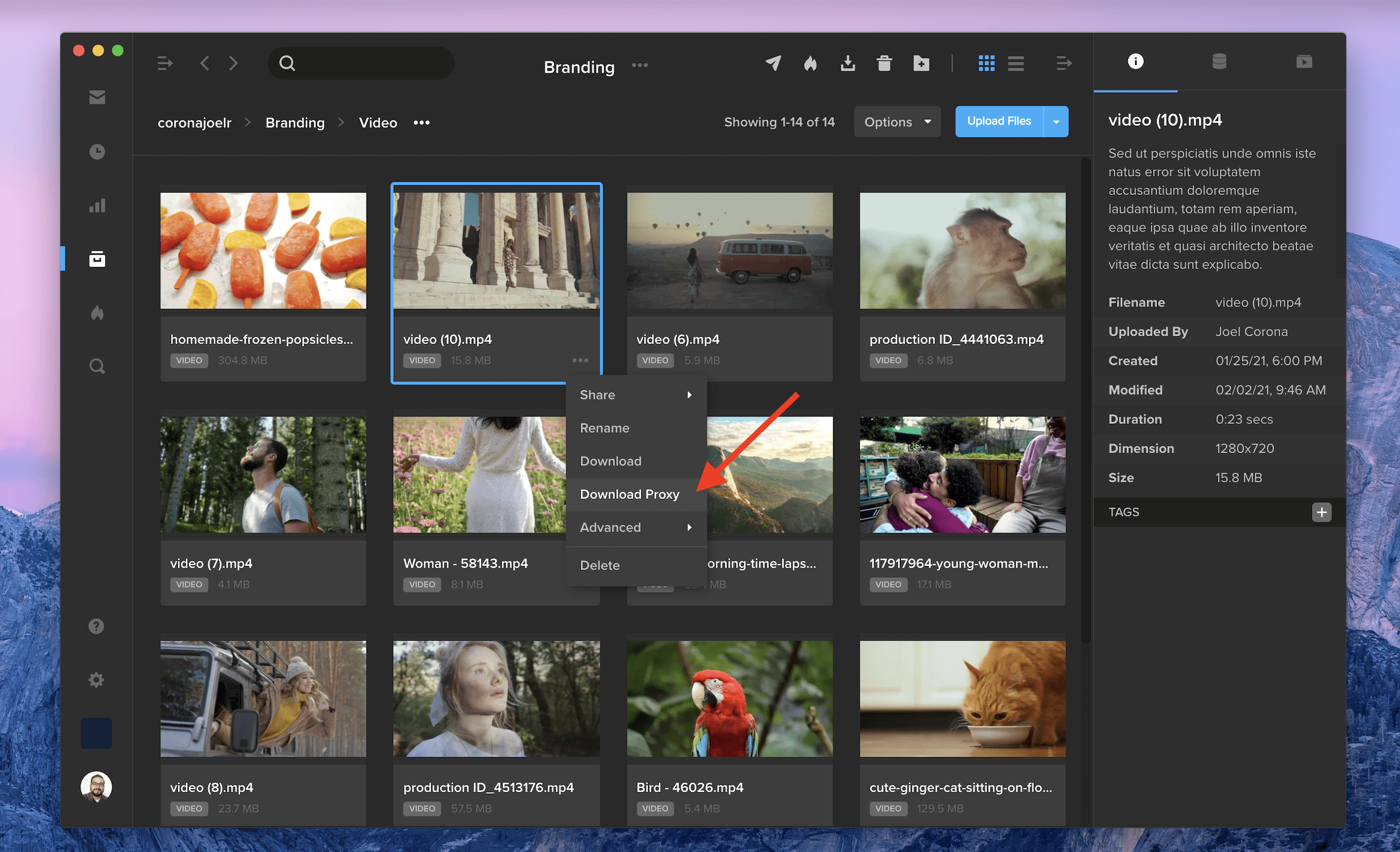
When you right-click on a video file, you now have the option to download its proxy. Click Download to download the original source file that was uploaded to SHIFT, or click Download Proxy to download the smaller, web-optimized proxy file that was automatically generated by SHIFT.
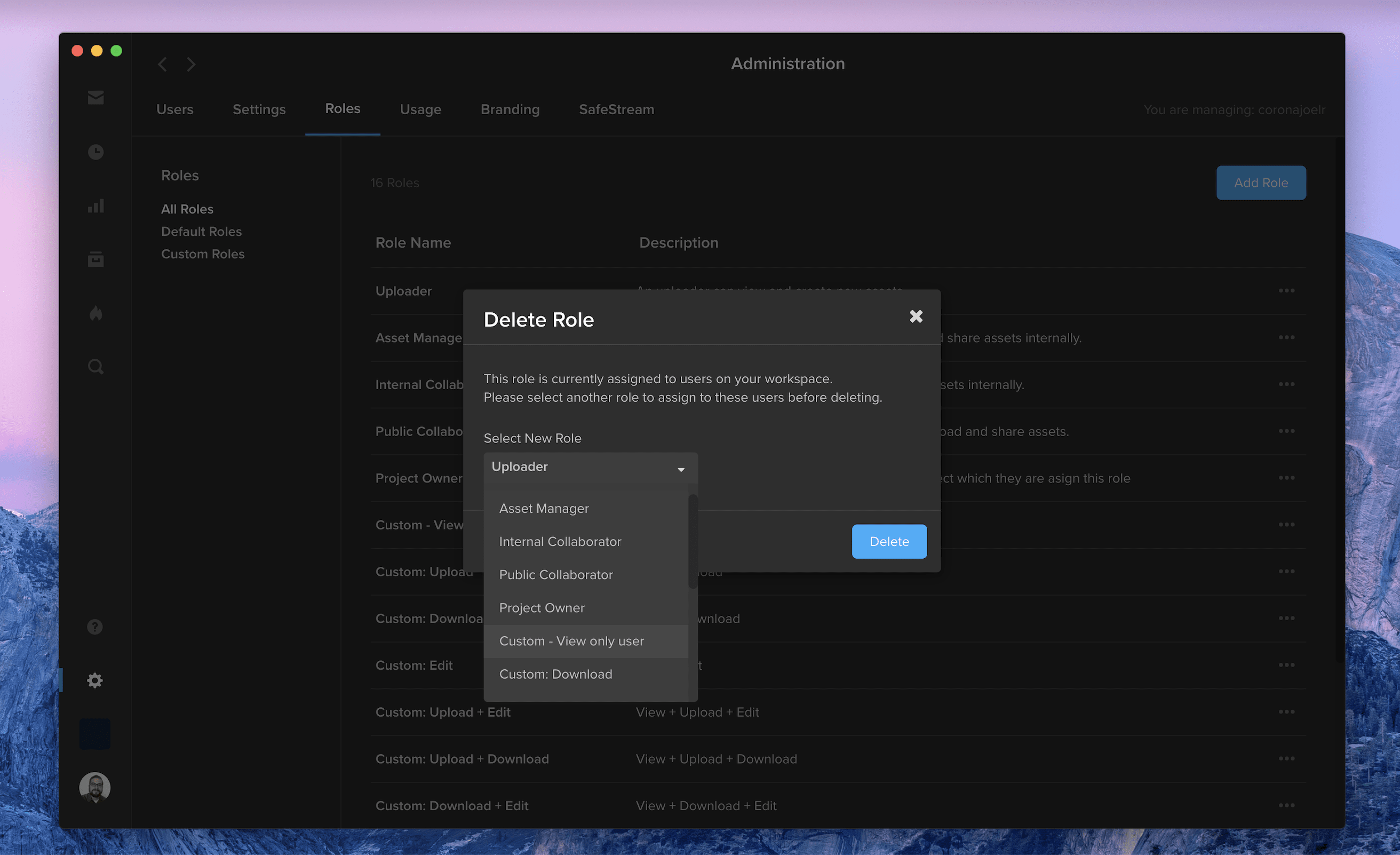
In the Roles section of Administration, you can now remove a role that’s currently in use and reassign those users to a different role.
Today’s content creation landscape is complicated. Media producers have to embrace new production workflows and increasingly diverse options for viewing video. In addition to traditional cable and satellite, streaming services (OTT) are claiming an ever-increasing share of viewers’ attention, often in new formats like HDR and 4K. There is no “one size fits all” solution. The best approach is an open solution that splits workflows into different layers, weaving best of breed technology to create an agile platform that simplifies and facilitates media creation, management and distribution while providing flexibility for growth.
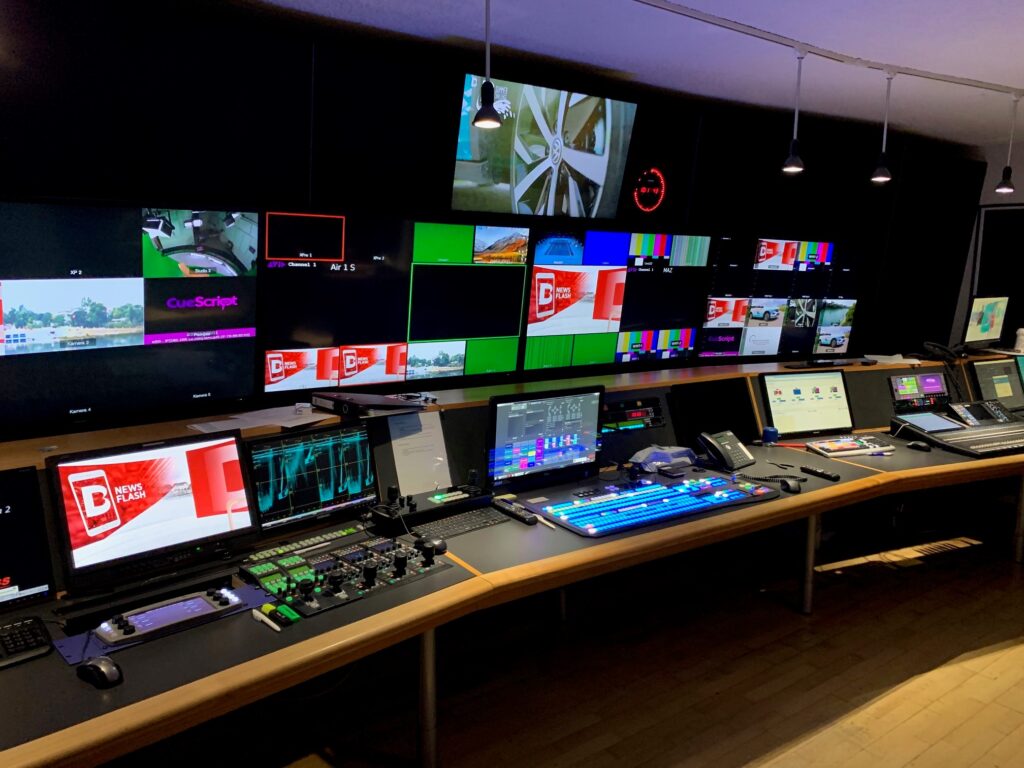
This approach is exemplified by the solution chosen for a complete overhaul at Telebasel, the oldest private broadcaster in Switzerland. The broadcaster’s goal was to create a future-proof infrastructure that would lead to dramatic improvements in cross-department collaboration and overall productivity. Importantly, Telebasel wanted to offer its Adobe Premiere Pro users a familiar experience while boosting efficiency across the media enterprise.
Interchangeable Media Content for Traditional, Social, & Digital Channels A key component of Telebasel’s programming is the “Newsblock,” a live news format show where news stories are developed and moderated in-house. News packages need to be visually engaging and contain the latest information. In addition to live news, Telebasel produces lifestyle shows and entertainment programs that run on a 24/7 loop as well as digital and social channels that need to keep sync with programs while promoting deeper engagement with audiences.
“Our material needs to remain flexible and adaptable, right up to the point of broadcast,” said Pascal Jacot, head of technology at Telebasel. “It’s important for us to be able to exchange content between our channels and react quickly to developing stories. We also need to include reaction from the audience in the form of video clips.”
Telebasel required a solution that would integrate its digital, social and linear channels under one seamless media production and distribution workflow. Off the shelf products were not suitable. What was needed were deeper level integrations that simplified complex tasks, enabling Telebasel to interact with audiences, customers, and external media outlets.
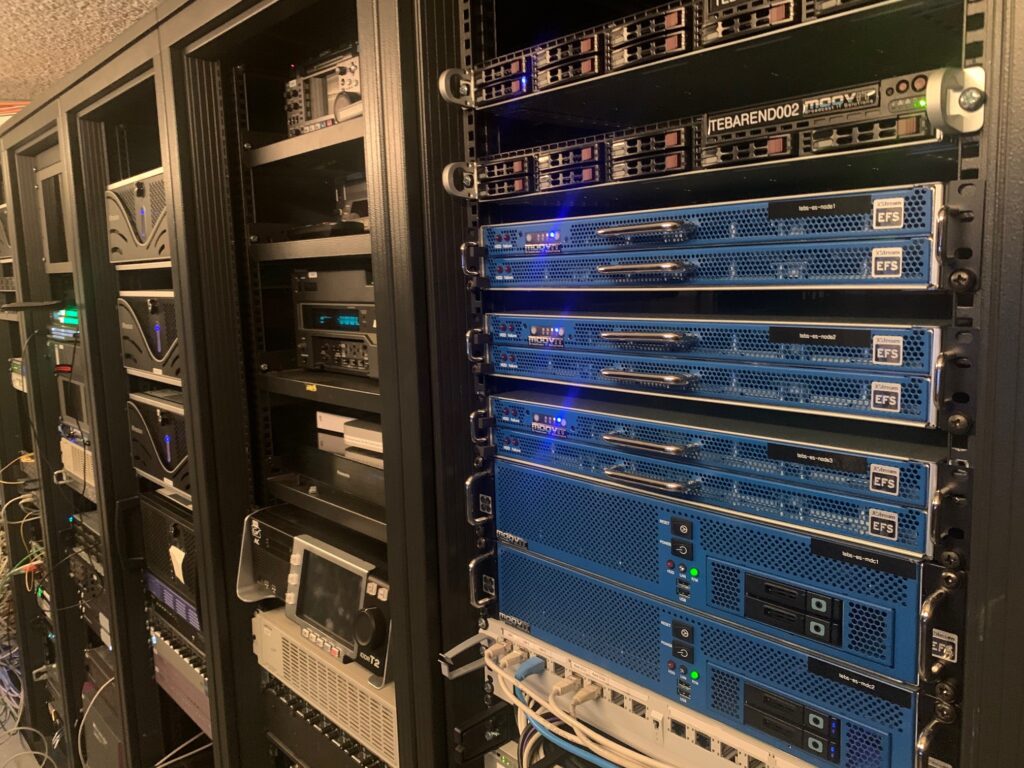
Open Solutions Integrate Channels and Remove Complexities for Storytellers| To connect its channels and simplify its enterprise workflows, Telebasel opted for open solutions from EditShare and MoovIT. Based on Adobe Premiere Pro, the new workflow is centralized around EditShare’s high performance, media optimized storage environment. With centralized storage in place, EditShare’s asset management platform, FLOW, and MoovIT’s workgroup administration tools, Helmut, combined to optimize the media creation process. They automated, simplified, or made unnecessary manual steps or complex procedures that were common during the sharing, creation, and distribution of content at Telebasel.
Open APIs, from EditShare and MoovIT, enabled Telebasel to not only integrate its channel workflows but customize them as well. The unique assignments and administrative structures are clearly defined while their finely tuned collaborative and technical processes are seamlessly automated, yielding powerful results.
The Adobe editing process is more open, collaborative, and interchangeable. With content centralized, Telebasel editors can view and edit video directly from their desks or remote external locations. Material is processed in real time, with editors accessing proxies in FLOW and Helmut, synchronizing the data for the high-res cuts in the background. Once editing is complete, Helmut automatically renders and adds clips to the channel’s schedule. All the media is stored centrally with rich metadata on EFS enabling control and administration of media assets at scale.
“The centralized management capabilities were crucial to the entire system,” Telebasel’s Jacot added. “The new workflows have helped us to quickly integrate live reports and news reports into the newly adapted transmission formats.”
The Telebasel rollout is a perfect template for other organizations, of any size, looking to deploy integrated centralized storage, “under the hood” administration and orchestration, and highly collaborative media and project management for Adobe enterprise workflows.
We spoke with the team at Endeavor Content to learn how Screeners.com exceeded their expectations as a virtual distribution platform for film festivals.
When you click into a file to view its asset detail page, you now have access to its action menu next to its filename. Click the three dots to see options to share, rename, download, or delete the file.
Click Advanced to see more options, like Make a Copy of the file and Create a new Playlist with the file. Select Copy Asset URL to share this direct file URL with other workspace users who have access to your SHIFT project.
Note: To copy a project or folder URL, simply click the action menu next to the project or folder name, select Advanced, then Copy URL.
This action menu is also available when you right-click on an asset in your main projects screens.
Our guests Steve Diamond and Jeff Beckerman bring two very unique perspectives to their agency work, one in creative and one in production. When two teams that are normally separated work together under the same roof, how does that change the advertising game?
The following interview is an excerpt from our video series, Advertising – In Conversation. To watch the full interview and see more video content, click here. Or you can listen to the Shift In Conversation podcast here.
Steve Diamond – Chief Creative Officer – Rain the Growth Agency Jeff Beckerman – Director of Production – Rain the Growth Agency Grace Amodeo – Marketing Manager – Shift Media
Grace: Can each of you introduce yourselves, and tell us about your career to this point?
Steve: My name is Steve Diamond, I’m the Chief Creative Officer at Rain the Growth Agency. I live in Portland, Oregon right now, which is also where the agency is headquartered. But most of my career I spent in New York working for agencies of varying sizes, some of which are Ogilvy, DDB and Hill Holliday.
Jeff: Hi, I’m Jeff Beckerman, Director of Production at Rain the Growth Agency. Similar to Steve, I spent most of my career in New York. I had my own production and post-production company there for 17 years. I crossed over to the agency side and worked with a handful of different agencies, then relocated to the Portland area to work at Rain the Growth Agency and help grow the production team.
Grace: Tell us a little bit about Rain the Growth Agency. What kind of company is it?
Steve: One thing I’ll say is that both Jeff and I, separately, moved to Portland to work for Rain for a reason. And that is because the company has got a business model that’s very different from any other agency that I’ve ever experienced. So the whole agency is set up to produce transformational growth for clients. We have all the resources within one agency, we have strategy and creative and then production and post-production. We even have a company that does duplication, distribution, and customization. And it’s the media management that’s really the secret sauce, so using analytics we are able to understand what’s happening every day with the media, and that is constantly optimized to produce the best result for the client.
Grace: How would you describe the more typical or “standard” advertising structure in the industry?
Steve: In a typical big agency or even a medium-sized one, you’re going to have a creative department and a production department. But the production team is going to be a department, not a company. Their job is usually to take the creative once it’s been sold and then find a production company to partner with. Our situation is different, because Jeff runs a production company. So when the creative is sold, we’ve already been talking about production before we even sold it. As soon as the client says yes, let’s go — we’re in production that day. Whereas at another agency, they would first start shopping the idea around to find the right production company.
When the creative is sold, we’ve already been talking about production before we even sold it. As soon as the client says yes, let’s go — we’re in production that day.
Jeff: Usually at an agency, the creative and production teams are very separate. So a lot of times creative comes up with an idea, and production has to figure out how to make that work. Here it’s very different because we are the production company about 80% of the time, we’re handling the entire production shoot. There are other instances where we do work with a production partner, depending on needs. But by executing the creative and production together, there’s a lot of efficiencies that happen and we never get into a situation where we’re told that we have to figure out how to make this work. We’re partners together.
Grace: Have you seen a significant change in the advertising industry overall in the past few years? If so, why do you think that is?
Steve: Well, it’s definitely happening. And we have our model, but lots of other agencies have created similar, but not the same, solutions. There are big agencies that have created their own production companies, and there are medium-sized agencies that have developed their own production companies, and there are production companies that have developed their own creative teams. It’s all shifting around.
Jeff: I think it’s also shifting because of where the dollars come from. Budgets are much smaller than they once were. There’s a lot of things changing in that respect. And that’s why sometimes a production company is the creative arm of a brand, sometimes they go directly to the brands — a lot of brand direct that’s happening. And in some ways we’re kind of an extension of the brand, we become that brand direct because we’re working so closely with the clients.
Grace: Tell us about how your two teams, Creative and Production, really work together on any given project.
Steve: Production is involved right at the beginning of the kickoff. Meaning, we get an assignment from a client and at that time we let Jeff and his team know that we are developing some new concepts and that they will go into production in six, eight, ten weeks from now. Sometimes two weeks from now. We’ll talk in general about the parameters, budget, timing, things like that. And then the creative team will get to work on the concepts, with some knowledge from production about what’s possible. At the same time, production has the heads up that this is coming. And then when we get closer to what we might be presenting to the clients, we’ll share them again with Jeff’s team to make sure we are still within the time and budget that we have.
Jeff: A lot of times the creative team will show us, say, four concepts that we’re about ready to pitch the client and ask if they can work within the budget. And sometimes we’ll say these two can, these two can’t. We’ve even had conversations that none of them can work in the budget. And then it’s about what we can do differently to make it work. A lot of times those conversations are happening before presentations are made so that the creative is adjusted to the budget needs, and that’s how we work together to make it happen.
Grace: What are the specific benefits to the client or the brand in having your two teams working so closely together?
Steve: One of the biggest advantages is that we know what our objective is from the beginning, and that objective is to produce creative that helps the client get a return on their investment. It’s not to make a certain individual at the agency famous, it’s not to win an award. And that has a big effect on our working relationship with the client. We have a client who told us about an experience with another agency and another production company. The client approached the producer and director and asked if they could frame the shot a little wider. The director turned and said to the client, I’m not going to do that. If I frame this wide, you’re going to put a logo or a phone number at the bottom and that’s going to ruin the shot. And the client was furious, they were paying for this. So everyone involved in our productions knows why we’re making the spot, and that’s from the directors and producers all the way through to every single person on that set and eventually our team in post. We’re all playing towards the same goal.
One of the biggest advantages is that we know what our objective is from the beginning, and that objective is to produce creative that helps the client get a return on their investment.
Grace: How has COVID affected your productions, both in what you can produce and the types of spots that you can pitch?
Jeff: The amazing thing about the agency is we didn’t lose a beat, and we got right back into production. Early on we were doing these types of self shooting projects, where we would send cameras, tripods, and lights and we would direct people from their own homes. That changed at the end of May, and we started going back to location production. The thing that has changed is how strict we have to be about COVID safety, we work with COVID consultancies, health safety officers and set medics. There’s a lot of explanation to the clients about testing, why we have to do testing, and how we are doing all of the COVID safety protocols. Obviously there is a cost factor to that, and we also have to explain that to clients. There’s a lot of education to do going forward, and that’s something the production team is very involved with.
Steve: The other thing is when we’re writing, we think in terms of not having five or six or ten people in a shot together. Not only would it not look relevant these days, but it would be hard for us to shoot it. Recently we did a production where we had small groups of people, couples or a few roommates, and when we did casting for that week we just cast actual couples. We found actors who were married to other actors, we found roommates who live together who are all actors. So there was no discomfort or risk in having them perform together. I would also say that we are more conservative than a lot of people are. For instance, we don’t have anyone travel by airplane, even though sometimes they are willing to. We recently had a production that was multi-city, and we found a director and DP in each city. They shot with the same camera and lenses and coordinated with the style, but we didn’t move them from one city to the next.
Jeff: We felt that was the safest way to go by it. We are shooting in different locations for multiple reasons, but not the reasons we had in the past. If we shoot in a location it’s because maybe the director is located there, maybe there’s a particular celebrity or actor we found there. Maybe the client wants us to be close to their location. So we’ve adjusted to that.
Steve: One of the interesting things about production in the age of COVID is how much it has revolved around casting and location. We want to make sure people have other family members or roommates they live with who can help. We want to make sure there’s good broadband. Because we use these drop kits which come on a card, so we’re also looking at getting that cart into the house without a lot of steps. So the location is important as well as the technology and also the family structure. All kinds of interesting things that you never had to think about before.
Jeff: And Steve’s talking about these remote-style shoots, but we’ve also gone back to full production where we have crews of 40 or 60 and we’re in studios or we’re shooting on location. We’re doing both at the same time, directed by the creative or the client’s request.
Grace: Do you have any specific success stories you can point to of your teams working really well together?
Steve: We just finished a campaign for Mercari which is a marketplace where you can buy and sell things using an app. They’ve been a client for two years now, and this is our third campaign for them. When we started talking about what this campaign could be and should be, Jeff and I had a conversation about whether we would produce it ourselves or use a production partner. We realized it would require some sophisticated visual effects, so we wanted a partner to help us work those things out. We started working with a company that Jeff recommended called The Artery. That decision right there was very important because, as Jeff said earlier, somewhere between 70-90% of the time we are the production company. But in this case Jeff had no problem saying, for this one let’s work with a partner.
Jeff: And that was a good way to put it, partner. Because we really did partner up with them. Creative came up with this incredible concept, but how do we make the concept get from the storyboard stage to the executional stage? We had just over two months from the point of concept, it was a very tight timeline. We needed that support and help. They were a great partner to have, they were presenting wire frames, ideas, concepts, look boards, we were going back and forth with them. And then go into a two-day shoot in a studio with a large size crew, and then through the whole post process to get it done in an incredibly short timeline.
Grace: What is your vision or hope for the future of the advertising industry? What do you think might go back to normal, or will everything always be different?
We’re all going to work as hard as we can to just keep creating and having fun with it, coming up with solutions and moving forward to do some great creative.
Steve: I think the key is flexibility and resiliency, because I don’t think we’re going to know from month to month or year to year what exactly the conditions or the technology is going to be. This was a good example of this past year, the teams that we worked with were resilient, flexible, imaginative and innovative.
Jeff: I do think that production and creative is going to be very different than it was in the past. We’re going to continue practicing extreme safety measures, that will never end no matter what type of world we’re living in. I don’t think we’re going to have the big sets anymore, people are not going to be flying to shoot anymore. We’ve learned how we can do a lot of this remotely. It’s working really well to be able to see right through the camera, multiple cameras, and also have the conversation. The video village has changed and I think that’s going to continue to go forward in the future. We’re all going to work as hard as we can to just keep creating and having fun with it, coming up with solutions and moving forward to do some great creative.
Our guests Wyatt Rogowski and Avner Shiloah take us through the process of editing Bryan Fogel’s ambitious new documentary film, “The Dissident”. From editing in three languages to creating incredible animated sequences, this team really had their work cut out for them.
The following interview is an excerpt from our video series, Production – In Conversation. To watch the full interview and see more video content, click here. Or you can listen to the Shift In Conversation podcast here.
Wyatt Rogowski – Editor – “The Dissident” Avner Shiloah – Editor – “The Dissident” Grace Amodeo – Marketing Manager – Shift Media
Grace: For those who haven’t seen “The Dissident”, can you give us an overview of the film?
Avner: It’s quite literally an investigation into the death of Jamal Khashoggi, who was a Saudi Arabian journalist who worked for the Washington Post and was murdered in the Saudi consulate in Turkey. So the film is first and foremost an examination of what happened to lead to that event and what happened on that day, in the immediate aftermath, as well as a study of who Jamal Khashoggi was and what led him to that moment. Beyond that it also follows his fiance, Hatice Cengiz, who was with him that day outside the consulate. As well as a friend of his Omar Abdulaziz who is a Saudi dissident and they were collaborating together. So those are the three people that the documentary kind of focuses on and tells their story.
Grace: Talk me through your workflow as a documentary editor on a film of this size and scope.
Wyatt: First of all, this was the largest documentary as far as crew and as far as topic I’ve ever worked on. Whether it’s a large crew like this, or if it was just myself and the director, the process can kind of start the same. It really starts with creating a story map and the story beats. With documentary editing, you’re kind of one of the writers because you’re forming the story afterwards. On this film we worked closely with Mark Monroe, the writer. He formulated the story beats and basically an arc for the whole film. I like to say documentary editing is almost like having a sculpture. You start off with a big mound of clay and the first rough cut is just figuring out what the shape is. Then slowly as you keep going, you keep refining. You get to the point where you have your fine cut, and it’s like you can see the lines of the face. Then you get to the lock cut and it’s a beautiful sculpture, but it’s still plain. And then you get to the finishing process with color and sounds, and that’s where you do the paint and it looks beautiful.
I like to say documentary editing is almost like having a sculpture. You start off with a big mound of clay and the first rough cut is just figuring out what the shape is. Then slowly as you keep going, you keep refining.
Grace: As an editor, how do you deal with footage that is not in English and needs to be translated?
Avner: So much of the film is in Arabic, as well as Turkish, so we actually had to edit the movie in three different languages. Part of the general process for most documentaries these days is that every interview is transcribed and you work off of those transcriptions in order to build that skeleton that Wyatt mentioned. The translation is just one element of it, but we also needed a crew around us of people who actually apple these languages. We had a team of associate producers, both Turkish and Arabic speaking, and they really helped us shape this and put these interviews together.
Wyatt: And I would also add that sometimes we wanted to condense a sentence or condense a long bite for a scene, it’s called “Franken-biting”. You chop up the clip and take a word from here and a word from there to make a more clear sentence. For things like tone and inflection, we have zero idea. Sometimes I would do an edit on paper of what we wanted them to say, and then give that to one of our researchers and translators and they would help string out a proper sentence.
Grace: There are three distinct types of footage in this film — interviews, archival footage, and VFX sequences. Can you talk about how you had to treat all of these different types of footage differently?
Avner: So the first group that we have is the shot footage that was shot by the production, which we can probably divide into interviews and vérité footage — vérité meaning that we are actually following along some of our subjects as they are experiencing things. So for instance, Jamal’s fiance Hatice maybe addresses European parliament or the UN. To me personally, that’s always some of the most engaging footage, for an audience it’s very visceral. The other aspect is the interviews, which is kind of the backbone of everything. The interviews are telling you the story. The big challenge for this is that we didn’t have any vérité footage with Jamal Khashoggi, who is one of the main subjects of the film. So our trick was to find as much archival footage of him as possible and try to create these emotional moments and draw his personality through those. What we needed to do was to bring Jamal to life through this footage. Otherwise, archival footage is usually there to support the facts that you’re trying to communicate. It tends to be a little bit less emotional, a little bit less immediate. It was always like digging for treasure in terms of these archival moments of Jamal, and trying to make them as engaging as the vérité footage.
The big challenge for this is that we didn’t have any vérité footage with Jamal Khashoggi. So our trick was to find as much archival footage of him as possible . . . to bring Jamal to life through this footage.
Wyatt: For the VFX, Bryan was looking for one of the editors to be more VFX focused. I can mess around with After Effects and do some small stuff myself, but I’m not very talented with 3D programs. There’s a ton of graphics in this film, and we eventually brought on an agency, The Office of Design and Development (ODD) from New York, and I worked closely with them. So I would do really rough Avid graphics just to show exactly the placement of things on the screen and how it should all work, trying to envision that myself. And then I would send it to ODD. There’s everything from newspaper graphics all the way to an entire Pixar-level film right in the middle of the film. It was an adventure, but it was fun and we made it all happen.
Grace: You are two of a team of four editors that worked on this film, what is it like to work collaboratively on an editing team like that?
Avner: The other two editors on the film were James Leche and Scott Hanson, two brilliant editors as well. This was pre-pandemic, so we were fortunate enough to all be in the same office and collaborate together. Very quickly it was a situation where we were all in the trenches together, we have very little time to execute this and we’re all on the same team. Let’s just make the best movie we can and have each other’s back. Mark, the writer, would have the marching orders for the week to get this story beat done or this scene done, and he would assign one to each of us. So each of us would take a first pass at something, and then usually continue on that scene for the second and third pass as well. But occasionally another editor would ask to take a crack at it. And this is where it’s really useful to check your ego at the door, and let them go ahead and do it. The goal is always to make the best movie we can, it’s not about any one of us shining through – it’s about just serving the narrative. It’s also useful to have that sounding board of the other three editors, and be very honest with each other. It’s so helpful to the creative process to have people that you trust and who know what the process is. When you are the single editor working in a vacuum, sometimes it gets really difficult to know if you are on the right track.
The goal is always to make the best movie we can, it’s not about any one of us shining through – it’s about just serving the narrative.
Grace: What was the collaboration like between you and the director, Bryan Fogel?
Wyatt: The relationship between director and editor is completely different on every film. I’ve had films where the director is over your shoulder telling you exactly when to cut, which can be good for the vision of the film but at the same time can be a little bit much. Bryan was actively out directing the film while we were editing, but he was always there to give us his input and help us on the way. He gave all the editors a lot of agency and he trusted us, and Mark, a lot. It was definitely a collaborative process. Bryan has a very specific style, he always said it’s kind of like a “Jason Bourne” type of film, even in a documentary. From the very first scene you’re feeling that tension and that energy, all the way until the end.
Grace: How do elements like sound design and music get added into the edit? Are you working with that right from the beginning, or is it all added later?
Avner: The quick answer is, we’re not working in a vacuum. We can’t afford to wait until we’re in the finishing process to add either music or sound design, we have to tackle those ahead. And it goes hand-in-hand with the construction of the scene. You might begin just working on what we call a “radio edit”, which is just the sound from the footage and the interview bites, but pretty quickly you have to incorporate music and sound design into that. The common practice is to start off with what we call temp music, which is music from different types of scores that seem appropriate for the tone of the film or the tone of any specific scene that we’re working on. We were fortunate to have our composer, Adam Peters, on board early on, so he was able to come in and discuss tone with us. He handed us a large folder of demos, from past projects and pieces he had lying around, so we could work with those and incorporate those in. That makes his job a little easier when he has to come in and finally score the final film.
We can’t afford to wait until we’re in the finishing process to add either music or sound design, we have to tackle those ahead. And it goes hand-in-hand with the construction of the scene.
Wyatt: To piggyback off that, the music and the sound design in general can really help tell you if the scene is going to work. If you have no sound design it can feel very bland and blank, you don’t feel the energy of it. Especially if you’re trying to make it a thriller, for it to be successful you need all of those elements to be in there. For sound design, every editor usually works with a big library of different sound effects. Especially for the big animation sequences, if there was no sound design then you wouldn’t feel like you’re actually in it. With vérité footage, you have natural sound that makes you feel like you’re there. For VFX we need to build it from the ground up. Let’s say there’s a tiny little animated battle scene with the bees and the flies, every single little tiny leg that hits the ground needs it’s own little sound. You can have tons and tons of tracks for just one second of footage, it’s pretty crazy.
Avner: And this is just our preliminary work, when it’s in the final sound mix that’s when our partners at Skywalker take it and kick it up a notch. They really elevate it because they know what they’re doing, so what ends up on screen is of a higher quality than what we deal with, but we still try to do the best we can. And it’s pretty fun.
Grace: How did your opinion of this subject and these events change as you were working on the film, and what do you hope the audience will take away from the film when they see it?
Wyatt: So I generally didn’t have too much knowledge on the geopolitical situation in the Middle East, so this has taught me a lot. Especially with the history of Saudi and the US’s relationship. I’d say the main takeaway is for the audience to really see the human rights abuses in the world. Bryan brought on the Human Rights Foundation to be a sponsor of the film, and it really sheds light on certain regimes and governments in the world. For governments to look past these human rights abuses and for the audience to actually see that, and think about these things when it comes to voting in the next round of leadership.
I just hope that people come away with more of an understanding of the actual people who were involved in this, who are more than just a headline or a statistic. Jamal was a real person with aspirations and dreams whose life was cut short.
Avner: I had some knowledge of the region and some idea of what happened with Jamal, but I was shocked to find how blatant the evidence and the actions of Mohammed bin Salman and Saudi Arabia were. The other thing that’s very surprising is how complicit the Western governments are in their relationship with Saudi Arabia. What I would want an audience to come away with is basically that we need to hold our elected officials to task for how they treat this government and other governments. No matter which party it is, all different administrations throughout US history have been very complicit in the behavior of Saudi Arabia. Whoever the leadership is has to be held accountable for what they do. Beyond that, I just hope that people come away with more of an understanding of the actual people who were involved in this, who are more than just a headline or a statistic. Jamal was a real person with aspirations and dreams whose life was cut short. Hatice, his fiance, was left with this emptiness, this has defined the rest of her life. Omar is a Saudi dissident who can never go home again because of this regime. And he will always live in fear that they will try to do the same thing to him as they did to Jamal. These are real people who are affected by these horrible actions, I hope audiences come away being touched by that aspect.
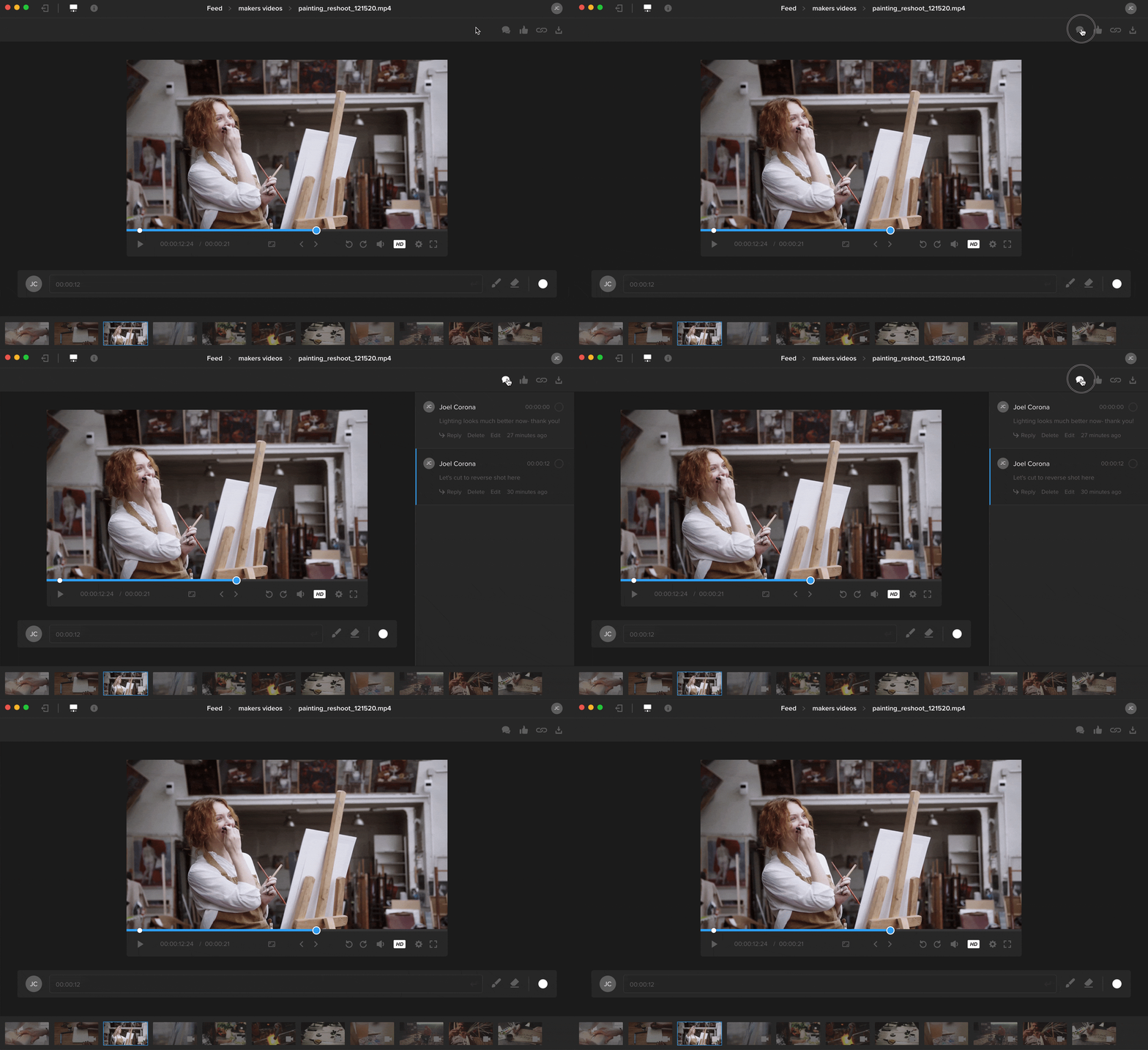
The review screen has been redesigned for an improved review and approval experience.
First, you’ll see that the left-side navigation bar is hidden to make more room for the viewing experience. To return to your Feed, click “Feed” at the top of your screen or click the arrow in the top-left corner.
The files in the link now appear in a carousel along the bottom of the screen. To hide the carousel, click the carousel button in the top-left corner.
Comments appear in the right-side drawer. Click the speech-bubble icon in the top right to view and hide comments.
Click the information (“i”) icon in the top left to display additional information about the asset you’re viewing, such as dimensions, file size, and any tags that have been added.