





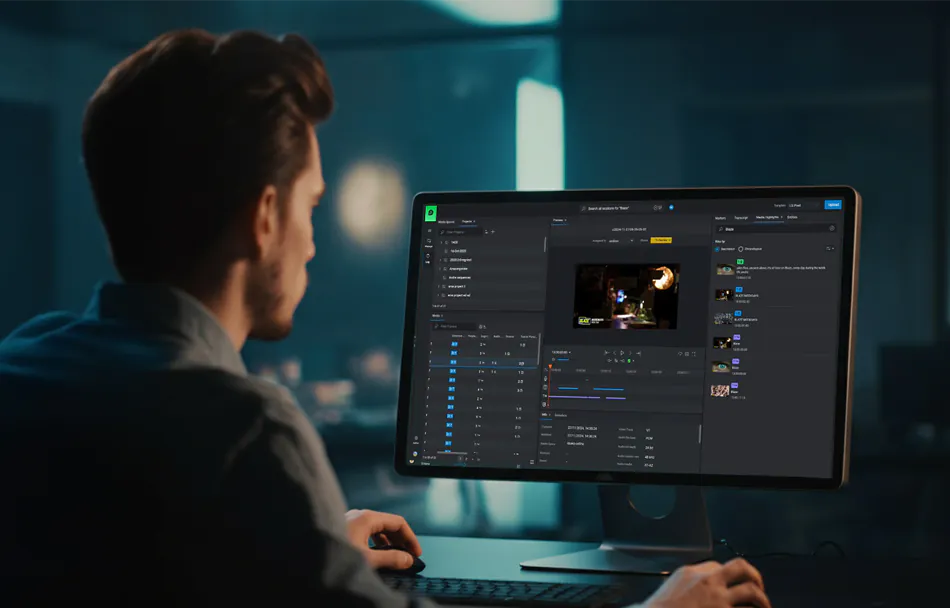
Finding a specific moment in your library, a jersey logo, a crowd reaction, or a specific interview setup often feels like digital archaeology. When a producer remembers a shot but can’t locate it, the result is hours of manual scrubbing that drains creative momentum. Because video is unstructured data, there is no inherent metadata that tells you what is happening on-screen. Historically, the only solution was manual logging, which is slow, expensive, and rarely complete.
At NAB this year, we’ll be showing off FLOW AI, our new analytical AI engine designed to bring intelligence directly into media management and workflow automation. It does the unsexy but essential work: finding logos, recognizing faces, describing scenes, and adding the context needed for true semantic search inside our core FLOW asset management interface. It’s a major step forward in how EditShare customer teams can understand, organize, and move faster with the content they create every day.
We have some previous experience with audio and video AI processing. Our generation one offering was expensive, slow, and required two different products to actually accomplish most tasks. We learned from that experience.
We could have treated the next version of AI as a web-based integration: sending files to AWS or Google, pulling results back, and stitching it into the UI. But that approach creates exactly the kind of fragile, multi-vendor complexity media teams are trying to escape (and failed the first time). Our customers don’t want another system to configure or another support boundary when deadlines hit: they want intelligence that’s native to the workflow they already trust. That’s why we made AI a core part of FLOW, building on the broader platform transformation we described in The Rebirth of FLOW. Along the way, we also strengthened FLOW’s underlying search performance, because sophisticated customers managing millions of assets were pushing the platform to its limits. We optimized for that scale.
This approach does come with a trade-off today: AI video processing requires a dedicated GPU server, adding additional entry costs. We built the first version for serious editing teams and media management professionals who aren’t dabbling with a few clips, but need to analyze and organize 500+ hours of content every year, like reality TV productions, large corporate marketing teams, and sports organizations.
Over time, we’ll fold GPU capability into our core server architecture to eliminate extra hardware and reduce friction, and we’re also focused on displaying FLOW AI results inside DaVinci Resolve or Adobe Premiere.
We’re building AI that actually works in real media operations, not demos.
Book a 1:1 demo or stop by booth N1251 to see how these tools perform in real-world media operations and how native intelligence can turn your archive into a functional, searchable asset.

