





NAB 2026 is shaping up to be the “AI Show,” but for most video editors and post-production supervisors, the excitement is mixed with a healthy dose of skepticism. Between the ecosystem friction found in once-seamless tools and the constant noise of new plugins, it’s hard to tell what will actually save you three hours on a Tuesday and what is just a shiny toy.
Before you hit the floor, here is a guide to the four kinds of AI you’ll encounter, and how to spot the real problem solvers.
1. The Generative “Shiny Toys”
These are the booths with the longest lines. They show you how to swap a background or generate a voiceover in seconds. It’s impressive technology, but for many high-end pros, these are silver medal features. They are fun to play with, but they don’t solve the digital archaeology of digging through thousands of folders just to find one three-second soundbite.
- The Reality Check: If it’s cool for a demo but doesn’t fit into a secure, professional delivery workflow, it might just be a toy.
2. The “Black Box” Harvesters
Many AI tools operate by sending your content to a third-party cloud for processing. This often comes with “fine print” that allows them to use your footage to train their machine learning models, which is a massive dealbreaker for corporate and legal teams concerned about biometric data and intellectual property.
- The Problem Solver: Look for “white-glove” security. AI should happen inside a secure, private cloud environment where your content is never used to train someone else’s model. Full stop.
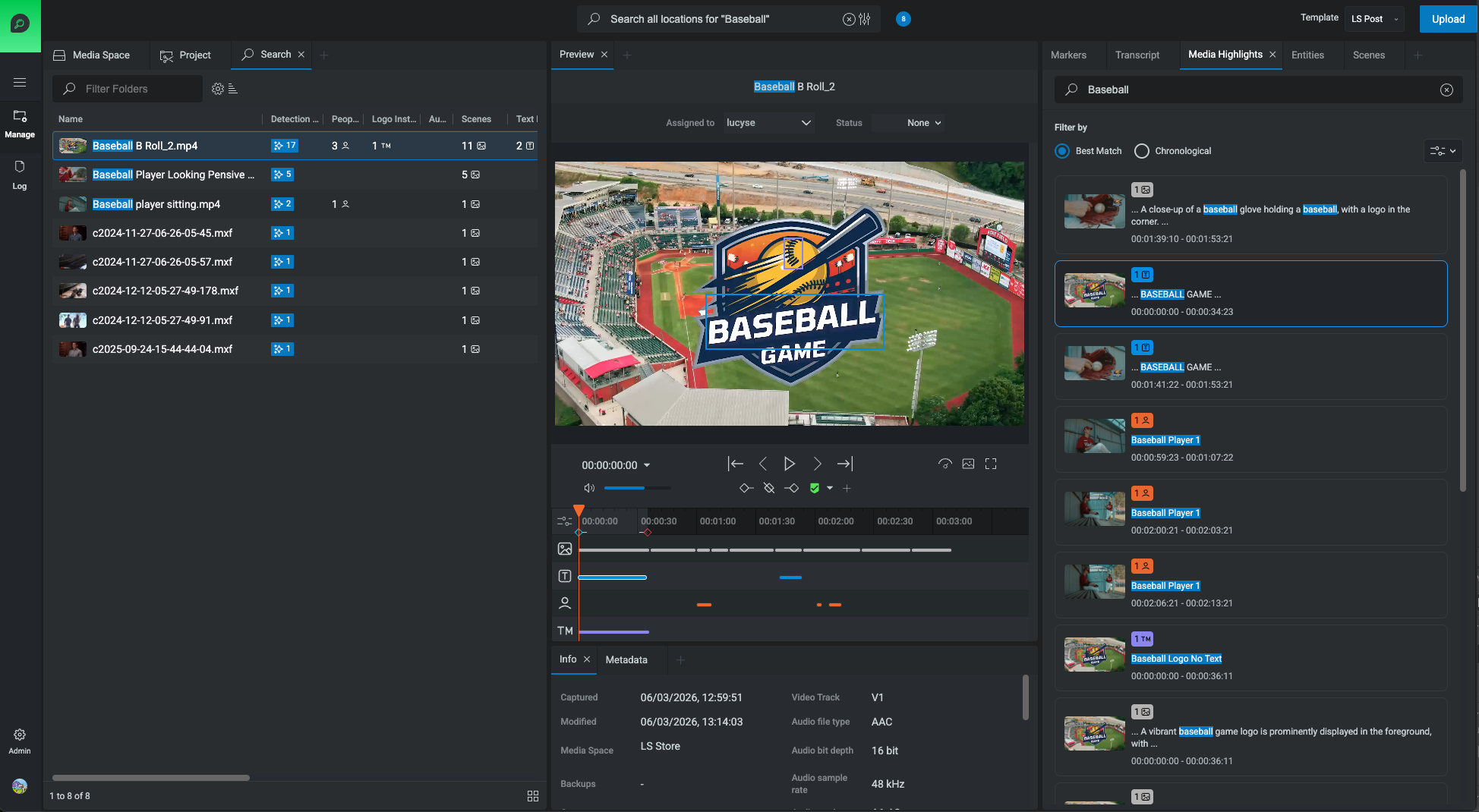
3. The Creative’s Brain (FLOW AI)
For production teams managing massive amounts of media and cold storage, the real problem is the archive. FLOW AI acts as a Production Asset Management (PAM) powerhouse designed for the rigors of on-premise hardware.
- Massive Indexing: FLOW AI is built to search through 100TB+ of storage including archives, turning years of current and old footage into searchable assets.
- Frame-Accurate Discovery: Because FLOW is the “Editor’s Companion,” it provides sub-second precision (e.g., finding a face at exactly the right place) because that’s where you need to make the cut.
- Future-Proofed: The upcoming release includes more 3rd-party storage integrations to help you truly own and extract value from your archive.
4. The Library Gateway (MediaSilo AI)
While FLOW handles the archive, MediaSilo AI is designed for your library: the active and past projects you are currently sharing for review, approval and delivery.
- The “Gold Medal” Feature: Automatic Transcription and Captioning. It replaces expensive, slow third-party services with instant SRT/VTT generation on ingest.
- Enhanced Discovery: It isn’t just about the frame; it’s about the content. MediaSilo makes it easy to manage and share assets without enterprise overhead or clunky workflows.
- Remote Workflow Hero: It allows remote editors to instantly grab transcripts and captions the moment a file is uploaded, ready to be brought straight into the NLE.
Making Sense of the Ecosystem: One Engine, Two Missions
At the EditShare booth, we’re showcasing how these two systems work together while serving unique purposes.
FLOW for the surgical, on-prem production management and archive
MediaSilo for the collaborative, cloud-based library and transcription
Because they share the same engine, your intelligence, including face, logo, and speech detection, remain consistent and secure from the first ingest to the final archival search.
Stop by Booth N1251 at NAB
Don’t get distracted by the shiny toys. Come see how we’re solving the digital archaeology problem and making media libraries usable again.
Would you like to see the gold medal AI in action?

